How Waterproof Ratings Work on Rain Gear
Confused by water column numbers and breathability ratings? This guide explains what those specs mean so you can choose rain gear that keeps you dry without overheating.
 By Delia Cochran
Updated September 16, 2026
By Delia Cochran
Updated September 16, 2026
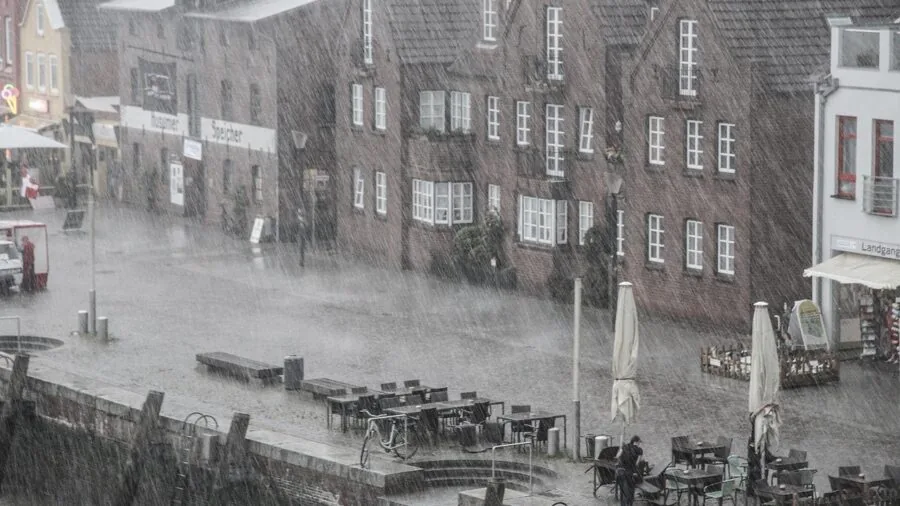
You have probably seen numbers like “10,000mm” or “20,000mm” printed on rain jackets and wondered what they actually mean. Between water column ratings, breathability numbers, seam sealing, and DWR finishes, the jargon can feel overwhelming.
This article breaks down each component in plain language so you can compare rain gear with confidence and pick the right level of protection for how you plan to use it.
For a broader look at options, visit our rain gear section.
What the Water Column Rating Tells You
The water column rating is the most common way manufacturers measure a fabric’s resistance to water penetration. In simple terms, it evaluations how high a column of water the material can hold before a single drop passes through.
The result is expressed in millimeters: a higher number means the fabric can withstand greater water pressure.
What does that mean for real-world use? Jackets designed for light showers typically have lower ratings; those built for heavy, sustained downpours or alpine conditions feature much higher numbers.
Keep in mind that no rating guarantees you will stay completely dry forever: the evaluation is done on brand-new fabric, and factors like wear, dirt, and DWR degradation affect performance over time.
Use the rating as a comparative tool, not an absolute promise.
Breathability: Staying Dry From the Inside
A fully waterproof jacket is useless if you end up soaked in sweat. That is where breathability ratings come in.
Measured in grams per square meter per 24 hours (g/m²/24h), this number estimates how much moisture vapor can escape through the fabric in a day.
A higher breathability rating indicates that the material releases internal moisture more effectively, reducing the buildup of condensation during aerobic activities like hiking or trail running.
Breathability and waterproofness often trade off against each other. A very high water column rating may come at the cost of lower breathability, and vice versa.
Consider your activity level: a shell for high-output sports should prioritize breathability, while a jacket for static use in heavy rain can focus on waterproofing without sacrificing comfort.
If you also need waterproof footwear, our guide to the non-slip rain boots covers options designed to keep your feet dry during wet conditions.
The Role of Seam Sealing
Even the most waterproof fabric will leak if the seams are not properly sealed. Needle holes created during stitching are natural entry points for water.
That is why quality rain gear uses seam sealing, which involves applying a waterproof tape or glue over the inside of the seams to block moisture.
The standard to look for is “fully taped seams,” meaning every seam in the garment has been sealed. Some budget-friendly jackets use “critically taped” seams, covering only the most vulnerable areas such as the shoulders and hood.
For long-lasting protection in sustained wet weather, fully taped seams are a worthwhile investment. The same principle applies to boots, which also rely on sealed seams to keep water out. You can find more information on waterproof construction in our boots selection.
DWR Coating: The First Line of Defense
Before water ever touches the fabric membrane, it first meets a durable water repellent (DWR) coating applied to the outer face. This treatment causes water to bead up and roll off rather than soak into the fabric.
Without a functional DWR, the outer layer can become saturated, which reduces breathability and forces the membrane to work harder.
DWR is not permanent. Over time it wears off due to friction, dirt, and laundering. Fortunately, you can restore it by cleaning the jacket thoroughly and applying a spray-on or wash-in DWR treatment from an outdoor retailer.
Pay attention to beading: if water no longer forms round droplets on the surface, it is time to refresh the coating.
For those who need a waterproof pack to keep gear dry, our roundup of the everyday backpacks includes models with integrated rain covers and water-resistant fabrics.
Frequently Asked Questions
What does a higher water column rating mean?
It indicates the fabric can withstand more water pressure before leaking. Higher ratings are better for heavy, prolonged rain, while lower ratings suffice for light showers.
How breathability affects comfort during activity?
A higher breathability rating allows more moisture vapor to escape, reducing the chance of getting damp from sweat. For active use, prioritize a jacket with a good balance between waterproofness and breathability.
Is seam sealing important even in a rain jacket?
Yes. Seam sealing prevents water from seeping through needle holes. Fully taped seams offer the best protection, especially in persistent wet conditions.
How often should I reapply DWR?
It depends on use and washing frequency. Generally, if the outer fabric no longer beads water, it is time to clean and reapply a DWR treatment.
About the author
Delia is BestProducts's shopping editor, covering seasonal price cycles, sales events, and the fine print behind return policies, warranties, and store hours. She digs into the timing and the rules that decide whether a listed discount is a real one.