How to Avoid Gate Checking: A Guide to Carry On Size Rules
Learn the real carry on size rules for major airlines, why wheels and handles count, and practical tips to avoid having your bag gate checked at the last minute.
 By Delia Cochran
Updated September 16, 2026
By Delia Cochran
Updated September 16, 2026
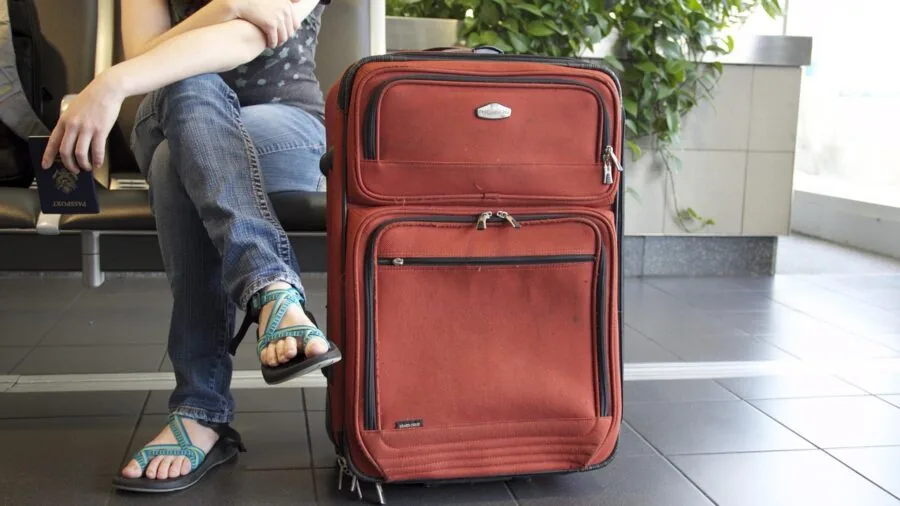
You have waited in line, finally reached the boarding gate, and then you hear those dreaded words: “We need to gate check a few carry ons.” Your heart sinks as the gate agent points to your suitcase.
This scenario is all too common, but it does not have to be your fate.
Understanding the real carry on size rules enforced by airlines, including the often overlooked fact that wheels and handles count, is the first step to keeping your bag with you in the cabin.
This guide breaks down how dimensions are measured, why your bag might be singled out, and practical packing strategies to avoid gate checking.
Understanding Airline Size Limits for Carry On and Personal Item
Every airline publishes maximum dimensions for carry on luggage and personal items. While there is variation, a common standard for carry on bags is 22 inches tall, 14 inches wide, and 9 inches deep (including wheels and handles).
Personal items, such as a purse or small backpack, typically must fit under the seat in front of you, with size limits around 18 by 14 by 8 inches.
However, the key detail many travelers miss is that these measurements include everything protruding from the bag.
A suitcase with oversized wheels or an extended handle can push your bag a few inches over the limit, making it too large for the sizer. Before you fly, always check the current rules on your airline’s website.
For a broader overview of what to look for in a compliant bag, refer to our carry on luggage guidelines.
Why Wheels and Handles Matter and How to Measure Correctly
Many travelers assume that if the main body of their suitcase fits the dimensions, they are safe. Airlines, however, measure the total outer dimensions including wheels, handles, and any external pockets.
A bag listed as 21 inches tall can become 22.5 inches once you add roller blades and a telescopic handle. To avoid a surprise at the gate, evaluation your bag at home.
Use a tape measure to check the height from the floor to the highest point of the handle, the width from wheel edge to wheel edge, and the depth including front pockets. Compare these numbers with your airline’s published limits.
If you prefer a more flexible option, a duffel bag often avoids these issues because it lacks rigid wheels and frames.
Many travelers find that a travel duffel bag is easier to squeeze into an overhead bin when full, and some even fit under the seat.
Smart Packing Strategies to Fit Within the Limits
Even if your bag is technically within size limits, overstuffing can cause it to bulge and exceed the allowed depth. Airlines pay attention to how full a bin looks, and a bulging bag is a prime candidate for gate checking.
To maximize space without exceeding dimensions, roll your clothes instead of folding, use compression packing cubes, and wear your bulkiest layers on the plane. Limit yourself to one or two pairs of shoes and place them at the bottom.
If you are using a soft sided duffel, you can often compress it further by pressing out air.
For longer trips, consider a larger bag that compresses well, such as those featured in our guide to large duffel bags, but be sure it fits the carry on sizer before you leave home.
How to Avoid Being Selected for Gate Checking
Some gate checks are simply due to a full flight, but often bags are selected because they look oversized. Avoid hard sided suitcases with sharp corners that look large even if they fit.
Soft sided bags, especially those made of fabric, appear more pliable and less intimidating. Boarding early can also help, as gate agents tend to target later boarding groups when overhead bin space is limited.
If you know your bag is a tight fit, consider volunteering to gate check it before being asked; doing so allows you to keep it until the jet bridge and often retrieve it immediately upon deplaning.
For trips where you want maximum flexibility, a backpack duffel bag offers the best of both worlds: a structured carry option that can be worn on your back, making it easier to navigate crowded aisles and less likely to be tagged.
The Personal Item: Your Secret Weapon
Your personal item is usually not subject to the same strict sizing scrutiny as a carry on, provided it fits under the seat. Use this to your advantage.
Place heavy or bulky items like a laptop, tablet, a change of clothes, and toiletries in your personal item.
This not only keeps valuables with you but also reduces the bulk of your carry on, making it more likely to fit without issue.
Choose a personal item that is structured but not rigid, such as a tote or a small backpack.
If you need additional storage, a duffel bag designed for travel can sometimes serve as a personal item if it is small enough, but always confirm dimensions with your airline.
Frequently Asked Questions
What happens if my carry on is too big at the gate?
The gate agent will likely require you to gate check the bag. You will receive a tag and place it on the jet bridge or at the aircraft door.
Your bag will be loaded into the cargo hold and returned to you at the gate upon arrival. This can cause delays and risk damage, so it is best to avoid this situation.
Do airlines really measure bags?
Yes, especially at the gate. While check in agents may overlook a slightly oversized bag, gate agents have sizers and can ask you to demonstrate that your bag fits. Budget airlines are particularly strict. It is wise to measure your bag at home before flying.
Can I use a duffel bag as a carry on?
Absolutely. In fact, duffel bags are often easier to fit into overhead bins because they are flexible. However, ensure that when fully packed, the duffel does not exceed the airline’s size limits.
Soft sided duffels can be compressed to fit, but be careful not to overstuff.
What is the difference between carry on and personal item dimensions?
Carry on bags must fit in the overhead bin, typically around 22 x 14 x 9 inches. Personal items must fit under the seat in front of you, often around 18 x 14 x 8 inches. Personal items are generally smaller and include purses, laptops, or small backpacks.
How can I tell if my bag will fit without measuring?
The most reliable method is to use an airline sizer, but you can also evaluation your bag at home using a cardboard box of the same dimensions.
Another trick is to see if your bag fits in an overhead bin simulation, such as the ones sometimes available in airport terminals. When in doubt, measure.
About the author
Delia is BestProducts's shopping editor, covering seasonal price cycles, sales events, and the fine print behind return policies, warranties, and store hours. She digs into the timing and the rules that decide whether a listed discount is a real one.