The Best Small Portable Generator
We researched the best small portable generators, evaluating power output, portability, noise, and safety. Our top picks include battery and gas models for camping, home backup, and more.
 By Katherine Henderson
Updated September 12, 2026
By Katherine Henderson
Updated September 12, 2026
When the power goes out or you’re heading off-grid, a small portable generator can be a lifesaver.
Whether you need to keep your refrigerator running during a blackout, charge devices while camping, or power tools at a job site, the right compact generator delivers reliable electricity without taking up much space.
In this guide, we’ve researched and scored the best small portable generator options available in 2026, evaluating each model on power output, portability, noise level, fuel efficiency, and safety features.
Our top picks range from lightweight battery power stations to fuel-efficient inverter gas generators, so you can find the perfect match for your needs. Read on to discover our top recommendations.
Our evaluation process combines expert review consensus, verified buyer feedback, and published specifications to assign each product a BP Score out of 10.
We focus on what matters most for a small portable generator: real-world runtime, ease of transport, outlet variety, and safety certifications.
Below, you’ll find our curated list of the best models, followed by a detailed buying guide to help you make an informed decision.
| Award | Product | BP Score About BP ScoreThe BP Score is our own rating from 0 to 10, based on performance, design and build, ease of use, and value. It reflects independent research and is never influenced by manufacturers, retailers, or affiliate commissions. Learn more › | Price | |
|---|---|---|---|---|
| Best Overall |
 Jackery Explorer 300 292Wh Power Station
|
9.9/10 | $259.00 | Buy |
| Best Value |
 Oxseryn 2800W Portable Inverter Generator
|
9.9/10 | $339.99 | Buy |
| Best Premium |
 WEN 56360i RV-Ready Inverter Generator
|
9.8/10 | $548.31 | Buy |
 Oxseryn 4400W Inverter Generator
|
9.8/10 | $309.99 | Buy | |
 Anker SOLIX S2000 2,010Wh Power Station
|
9.8/10 | $649.99 | Buy | |
| Best Budget |
 ZeroKor 300W Solar Generator
|
9.6/10 | $189.97 | Buy |
 AIVOLT 1600W Super Quiet Inverter Generator 28lbs
|
9.6/10 | $329.39 | Buy | |
 POXURIO 2450W Portable Inverter Generator
|
9.5/10 | $189.99 | Buy | |
 Westinghouse 4650 Peak Watt Portable Generator
|
9.5/10 | $349.00 | Buy |
Jackery Explorer 300 292Wh Power Station
The Jackery Explorer 300 is a lightweight portable power station with a 292Wh capacity and LiFePO4 battery that lasts over 4,000 charge cycles. It can power up to six devices simultaneously, including laptops and drones, and supports fast solar charging for off-grid use.
Pros
- Very lightweight for its capacity
- LiFePO4 battery lasts thousands of cycles
- Fast solar charging capability
- Multiple ports for diverse devices
- Compact and portable design
Cons
- No built-in display for detailed status
- Limited to 300W continuous output
- Solar panels sold separately
Oxseryn 2800W Portable Inverter Generator
The Oxseryn 2800W inverter generator delivers 2800 peak watts and 2000 running watts from a compact 40-pound frame. With less than 3% THD and noise under 58 dBA, it safely powers sensitive electronics during camping or home outages. Multiple ports including USB and Type-C add convenience, and the ECO mode extends runtime up to 9 hours at 25% load.
Pros
- Lightweight at 40 pounds with built-in handle
- Quiet operation under 58 dBA from 23 feet
- Low THD (<3%) safe for sensitive electronics
- Multiple output ports including USB and Type-C
- Parallel function and ECO mode for flexibility
Cons
- Requires separate high-altitude kit above 4000 feet
WEN 56360i RV-Ready Inverter Generator
This portable inverter generator packs 2900 rated watts of clean power into a lightweight 46-pound frame, making it easy to transport for camping or emergency backup. The fuel shutoff feature helps prolong engine life by running the carburetor dry before shutdown.
Pros
- Ultralight at 46 pounds
- Produces clean power for sensitive electronics
- Fuel shutoff extends generator lifespan
- RV-ready with TT-30R receptacle
Cons
- Rated output of 2900 watts limits high-power use
Oxseryn 4400W Inverter Generator
This portable inverter generator offers 4400 peak watts and 3400 running watts for RV camping and home backup. It combines a quiet 72 dBA noise level with up to 14 hours runtime in ECO mode, and includes an RV port, making it a solid mid-range choice.
Pros
- Quiet for an open frame generator
- Long run time with ECO mode
- Comes ready for RV use
- Easy to move compared to typical
- Includes DC port for battery charging
Cons
- Limited to 3400 running watts for
- Open frame may not suit quiet areas
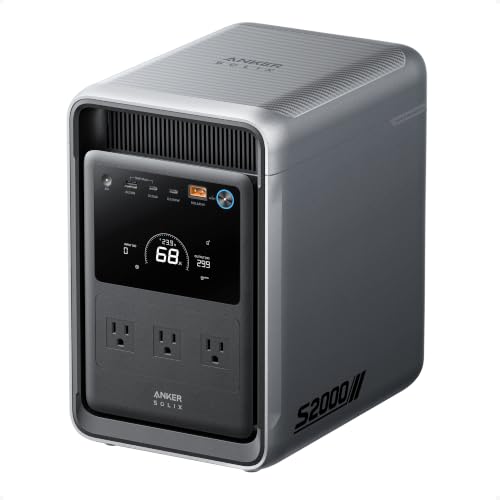
Anker SOLIX S2000 2,010Wh Power Station
The Anker SOLIX S2000 portable power station delivers a generous 2,010Wh capacity with a durable LFP battery rated for 10,000 charge cycles. It keeps a refrigerator running for up to 35 hours, and its compact, lightweight build (35.7 lbs) makes it easier to move than many competing models. This station is a solid choice for home backup or off-grid use, especially if you value long battery life and flexible recharging options.
Pros
- Very low idle power consumption
- Long-lasting LFP battery (10,000 cycles)
- Compact and lightweight for its capacity
- High 3,000W peak output
- Multiple recharging options
Cons
- No 12V DC port
ZeroKor 300W Solar Generator
The ZeroKor 300W Solar Generator combines a compact power station with a 60W foldable solar panel, offering versatile charging for smartphones, laptops, and camping gear. Its built-in BMS and cooling fan ensure safe operation, while the included solar panel enables off-grid recharging. However, it cannot handle high-wattage devices like hair dryers or coffee makers.
Pros
- Includes 60W solar panel
- Multiple charging outlets
- BMS and cooling fan for safety
- Lightweight and portable
- Foldable solar panel with high efficiency
Cons
- Cannot power devices over 300W
- Battery needs regular charging to avoid protection mode
- Solar panel junction box not waterproof
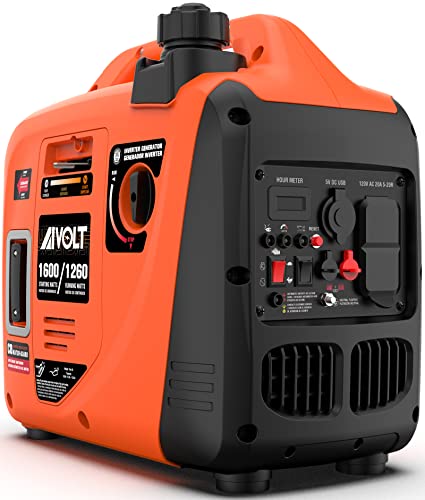
AIVOLT 1600W Super Quiet Inverter Generator 28lbs
This ultra-quiet inverter generator weighs just 28 pounds and delivers clean power (THD under 3%) for sensitive electronics. With a 57 dBA noise level and parallel capability, it's a practical choice for camping, RV trips, and home backup.
Pros
- Very lightweight at 28 lbs
- Quiet operation at 57 dBA
- Clean power for sensitive electronics
- Parallel capability for more power
- CO safety shutdown feature
Cons
- Only 1260 running watts may limit larger devices
- Short runtime of 2 hours at full load
- No parallel kit included
POXURIO 2450W Portable Inverter Generator
If you need a quiet and portable generator for camping or home backup, the POXURIO 2450W delivers clean inverter power for sensitive electronics. Its 59 dB noise level keeps things peaceful, and the 1.6-gallon tank provides up to 10 hours of runtime at a light load.
Pros
- Clean sine wave for sensitive electronics
- Quiet operation at 59 dB
- Up to 10 hours runtime at 25% load
- Relatively lightweight at 43 pounds
- EPA compliant for legal use
Cons
- No electric start, recoil only
- 43-pound weight still requires lifting
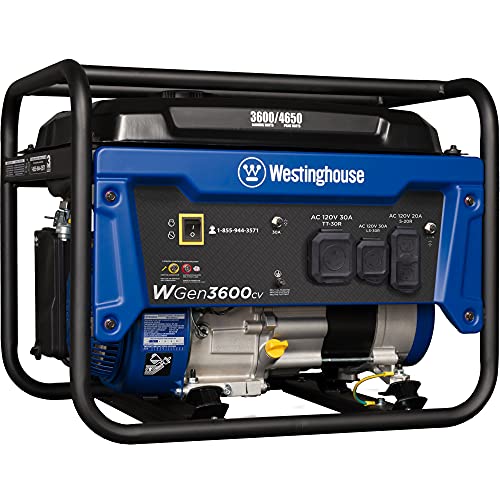
Westinghouse 4650 Peak Watt Portable Generator
This portable generator delivers 3600 running watts and 4650 peak watts from a 212cc engine, with up to 14 hours of runtime per tank. It includes an RV-ready 30A outlet and a CO sensor for automatic shutdown, making it a practical choice for camping or home backup.
Pros
- Long runtime per tank
- Built-in CO sensor for added safety
- RV-ready 30A outlet with rubber covers
- Durable cast iron sleeve engine
- Includes accessories for quick setup
Cons
- Must use pull cord and gasoline
- Weighs 100.6 pounds, not lightweight
- Factory inspection may cause residual oil smell
Best Small Portable Generator Buying Guide
Power Output and Starting Watts
The power rating of a small portable generator is typically measured in running watts and peak (starting) watts.
Running watts indicate the continuous load the generator can handle, while peak watts cover the extra surge needed to start appliances like refrigerators or air conditioners.
For most camping or emergency home backup needs, a generator with 1,000 to 2,000 running watts is sufficient. If you plan to power sensitive electronics, look for an inverter generator that produces clean, stable power.
When comparing models, consider both numbers. A generator with 2,000 running watts and 2,400 peak watts can handle a small refrigerator, a few lights, and a phone charger.
For heavier loads like a sump pump or microwave, you’ll need at least 3,000 running watts. Our top picks include options from 300Wh battery stations to 4,400-watt gas generators, so you can choose the right capacity for your situation.
For larger power needs, you might also consider a large portable generator.
Portability and Weight
One of the main advantages of a small generator is its portability. Weight and dimensions determine how easily you can move it from the garage to the campsite or store it in a compact space.
Battery power stations like the Jackery Explorer 300 weigh under 10 pounds and can be carried with one hand. Gas inverter generators typically range from 28 to 50 pounds, often featuring built-in handles or wheels for easier transport.
When evaluating portability, also consider the generator’s footprint and whether it fits in your vehicle or storage area. If you plan to take it camping frequently, a lightweight model under 40 pounds is ideal.
For occasional home backup, a slightly heavier model with wheels may be acceptable. Our roundup of the best portable generators for every situation includes both ultralight and wheeled options.
Fuel Type and Runtime
Small portable generators come in two main fuel types: gasoline and battery (solar or AC rechargeable). Gas generators offer longer runtimes and higher power output but require fuel storage and regular maintenance.
Battery power stations are silent, emission-free, and require no fuel, but their runtime is limited by capacity.
For example, a 300Wh battery can run a small fridge for a few hours, while a 2,000Wh station can last a day or more.
Runtime is also affected by load. Most gas generators run 6, 12 hours on a full tank at 50% load. Look for models with eco-mode that adjusts engine speed to save fuel.
If you need extended backup, consider a generator with a larger fuel tank or the ability to connect an external source. For emergency preparedness, a portable generator for emergency backup should have sufficient runtime to get you through an outage.
Noise Level and ECO Mode
Noise is a critical factor, especially for camping or residential use. Traditional open-frame generators can be loud (70, 80 dB), while inverter generators are much quieter (50, 60 dB).
Battery power stations are virtually silent, making them ideal for campsites where quiet hours are enforced. Many inverter generators also feature an ECO mode that reduces engine speed under light load, cutting noise and fuel consumption.
When shopping, check the decibel rating at 25% load. A generator operating at 55 dB is about as loud as a normal conversation. For the quietest experience, a battery power station is unbeatable.
If you need gas power, models like the WEN 56360i are known for their quiet operation. You can compare noise levels in our quality portable generator guide.
Outlets and Safety Features
The number and type of outlets determine what devices you can power simultaneously.
Look for generators with at least two 120V household outlets, a USB port for charging phones and tablets, and an RV-ready 30A outlet if you plan to power a camper.
Some models also include a 12V DC port for car accessories. Battery power stations often feature multiple USB-A, USB-C, and AC outlets.
Safety features are equally important. Carbon monoxide (CO) sensors automatically shut off the generator if CO levels become dangerous, a must for indoor or garage use. Low-oil shutoff prevents engine damage, and overload protection safeguards connected devices.
For home backup, a generator with a CO sensor and GFCI outlets is recommended. Our best portable generator for reliable backup power article covers these features in depth.
Why You Should Trust Us
BestProducts is an independent review site dedicated to helping you find the best products. We do not conduct our own product trials; our evaluations are grounded in research, published data, expert review consensus, and verified buyer feedback.
Each product is scored on our 0 to 10 BP Score based on a consistent set of criteria tailored to the category. For small portable generators, we analyze power output, portability, noise, runtime, safety features, and overall value.
Our team continuously monitors the market to ensure our recommendations remain current and trustworthy.
We earn a commission if you purchase through our links, but this does not influence our ratings. Our goal is to provide unbiased, thoroughly researched advice so you can shop with confidence. For more on how we evaluate, see our Tools & Home Improvement category.
Final Thoughts
After evaluating the top models, here are our award picks for the best small portable generator in 2026.
- Best Overall: Jackery Explorer 300 Portable Power Station, With a BP Score of 9.9/10, this lightweight battery generator offers 292Wh of clean, silent power, perfect for camping, tailgating, and emergency charging. Its compact size and multiple output ports make it incredibly versatile.
- Best for Extended Use: Oxseryn 2800-Watt Portable Inverter Generator, Also scoring 9.9/10, this gas-powered inverter generator provides 2,800 peak watts and runs up to 8.3 hours on a full tank. Its quiet operation and fuel shut-off make it a reliable companion for longer trips or home backup.
- Best Budget Pick: POXURIO 2450-Watt Portable Inverter Generator, With a BP Score of 9.5/10, this affordable generator delivers 2,450 peak watts and 1,500 running watts, ideal for light camping or emergency use without breaking the bank.
- Best for Home Backup: Anker SOLIX S2000 Portable Power Station, Scoring 9.8/10, this 2,010Wh power station can run essential home appliances for hours. Its 3,000W peak output and fast recharging make it a top choice for serious backup power. For more options, see our portable generator for home use guide.
Frequently Asked Questions
How many watts do I need for camping?
For basic camping needs like lighting, charging phones, and running a small cooler, a generator with 300, 500 running watts (or a battery station of similar capacity) is sufficient.
If you want to power a small electric stove or a CPAP machine, aim for 1,000, 1,500 running watts. Inverter generators in the 1,600, 2,000 watt range are popular for RV camping. For more on sizing, check our best portable generator under $500 article.
Can a small generator power a refrigerator?
Yes, many small generators can power a refrigerator. A typical refrigerator draws 600, 800 running watts and may need up to 2,000 peak watts to start. A generator with at least 1,500 running watts and 2,000 peak watts should handle it.
Battery power stations with 300, 500Wh may only run a fridge for a few hours, while larger stations (2,000Wh+) can power it for a day. Always check the refrigerator’s startup surge.
What’s the difference between a power station and a gas generator?
A power station (or solar generator) stores electricity in a battery and can be recharged via AC outlet, car charger, or solar panels. It is silent, emission-free, and requires no fuel.
A gas generator burns gasoline to produce electricity, offering higher power output and longer runtime but with noise, fumes, and maintenance. Power stations are best for light, short-term use; gas generators are better for heavy loads and extended outages.
For a comparison, see our 13000 watt portable generator guide (though that focuses on larger units).
How loud are small portable generators?
Noise levels vary widely. Battery power stations are silent. Inverter gas generators typically produce 50, 60 dB at 25% load, about as loud as a normal conversation. Open-frame gas generators can reach 70, 80 dB, similar to a vacuum cleaner.
For camping, a generator under 60 dB is recommended. Many inverter models have an ECO mode that reduces noise further. Always check the manufacturer’s decibel rating.
Do I need an inverter generator for electronics?
Yes, if you plan to power sensitive electronics like laptops, smartphones, or medical devices, an inverter generator is strongly recommended. Inverter generators produce clean, stable power with low total harmonic distortion (THD), similar to utility power.
Conventional generators can produce dirty power that may damage electronics. Battery power stations inherently provide clean power. For reliable backup, consider an inverter model from our best portable generator for backup power list.
What safety features should I look for?
Key safety features include a carbon monoxide (CO) sensor that automatically shuts off the generator if CO levels become dangerous, low-oil shutdown to prevent engine damage, overload protection to safeguard connected devices, and GFCI outlets for shock protection.
For indoor or garage use, a CO sensor is essential. Also look for a sturdy frame and spark arrestor for outdoor use. Many modern generators include these as standard.
About the author
Katherine covers ladders, portable generators, and work lights for BestProducts, weighing load ratings, runtime, brightness, and safety certification. She helps readers work safely above the ground and through an outage.