The Best Digital Piano
Our research-backed roundup of the best digital pianos covers weighted keys, sound quality, portability, and value. Find top-rated models from Yamaha, Donner, and more, with BP Scores to guide your purchase.
 By Adrian Perez
Updated September 10, 2026
By Adrian Perez
Updated September 10, 2026
Whether you’re a beginner taking your first lessons, a seasoned player looking for a quiet practice solution, or a performer needing a stage-ready instrument, a digital piano offers versatility that an acoustic cannot match.
Modern digital pianos replicate the feel and sound of an acoustic with weighted keys, realistic samples, and a fraction of the maintenance. With dozens of models available, finding the right one can be overwhelming.
At BestProducts, we’ve done the homework for you.
We evaluate each piano through comprehensive research, analyzing specifications, expert review consensus, and verified buyer feedback, then assign a BP Score on a 0 to 10 scale to help you make an informed decision.
Below, you’ll find our top-rated digital pianos, followed by a buying guide and answers to common questions.
Our roundup covers everything from affordable home models to portable stage pianos, all carefully vetted for key action, sound quality, connectivity, and value.
If you’re also considering a keyboard for travel or a dedicated beginners’ instrument, check out our dedicated guides on portable digital pianos and the best digital piano for beginners.
For now, let’s dive into the models that earned the highest BP Scores.
| Award | Product | BP Score About BP ScoreThe BP Score is our own rating from 0 to 10, based on performance, design and build, ease of use, and value. It reflects independent research and is never influenced by manufacturers, retailers, or affiliate commissions. Learn more › | Price | |
|---|---|---|---|---|
| Best Overall |
 Alesis Recital Play 88-Key Keyboard Bundle
|
9.9/10 | $182.35 | Buy |
| Best Value |
 UISCOM 88-Key Weighted Digital Piano
|
9.9/10 | $299.00 | Buy |
 Yamaha P71 88-Key Weighted Digital Piano
|
9.9/10 | $449.99 | Buy | |
| Best Premium |
 Yamaha P225 88-Key Digital Piano
|
9.9/10 | $749.99 | Buy |
 Yamaha P145BT 88-Key Digital Piano
|
9.8/10 | $469.99 | Buy | |
| Best Budget |
 Ngdgtt 88-Key Semi-Weighted Digital Piano Set
|
9.7/10 | $129.99 | Buy |
 Donner DEP-20 88-Key Weighted Digital Piano
|
9.7/10 | $498.99 | Buy | |
 KUMENG 88-Key Semi-Weighted Digital Piano
|
9.6/10 | $162.00 | Buy | |
 Donner DDP-80 88-Key Weighted Digital Piano
|
9.6/10 | $484.99 | Buy |
Alesis Recital Play 88-Key Keyboard Bundle
The Alesis Recital Play is an 88-key beginner keyboard with touch-sensitive keys and built-in speakers. Its 480-sound library, split and lesson modes, and USB-MIDI output make it a practical learning tool for new pianists. The bundle adds a stand, pedal, headphones, and carry case for out-of-the-box convenience.
Pros
- 88 full-size touch-sensitive keys
- 480 sounds and 160 rhythms
- Split, Lesson, and Record modes
- USB-MIDI for educational software
- Includes stand, pedal, headphones, carry case
Cons
- AA batteries required but not included
UISCOM 88-Key Weighted Digital Piano
This digital piano combines a weighted wooden desk keyboard with triple-pedal support and a French Dream5704 sound chip for rich, expressive sound. It offers versatile controls, MIDI connectivity, and an integrated MP3 player, making it a solid choice for home practice and performance.
Pros
- Exceptional sound quality from French chip
- Versatile triple-pedal design
- MIDI connectivity for external devices
- Dual headphone jacks for shared practice
- Built-in MP3 player and USB playback
Cons
- Limited color option: brown only
- Specs lack detail on key action and polyphony
Yamaha P71 88-Key Weighted Digital Piano
The Yamaha P71 is a full-size 88-key digital piano with weighted, touch-sensitive keys and a realistic grand piano tone. It offers 10 voices, a Dual Mode for layering sounds, and includes a sustain pedal, all in a simple one-button design. This is a practical choice for beginners and home practice.
Pros
- Weighted keys deliver authentic piano feel
- Ten voices include rich Yamaha grand piano
- Dual Mode enables layered sound combinations
- Sustain pedal included for expression
- Simple one-button controls keep focus on playing
Cons
- Limited to ten built-in voices
- Weighs 25 pounds, less portable
- Basic control interface lacks advanced options
Yamaha P225 88-Key Digital Piano
The Yamaha P225 is a portable 88-key digital piano with weighted keys and a built-in CFX grand piano sound. Its lightweight design and app connectivity make it a versatile choice for pianists who need a portable instrument for practice or performance.
Pros
- Weighted keys with realistic touch
- Rich CFX grand piano sound
- 24 versatile instrument voices
- App integration for practice and sharing
- Lightweight and portable at 25 pounds
Cons
- Stand not included
- Limited to 24 voices
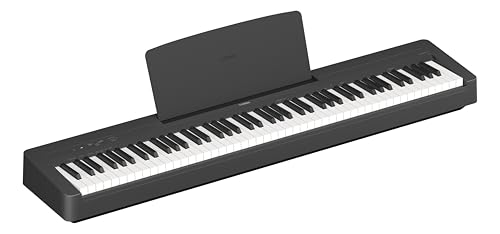
Yamaha P145BT 88-Key Digital Piano
This compact digital piano from Yamaha combines 88 weighted keys with Graded Hammer Compact action for an authentic acoustic feel. Its slim design and Bluetooth audio make it a practical choice for home practice or travel, and the built-in speakers deliver rich grand piano sound.
Pros
- 88 weighted keys with realistic graded hammer action
- Premium grand piano sound with natural resonance
- Bluetooth audio for streaming and play-along
- Compact and lightweight for portability
- Compatible with Smart Pianist and Rec'n'Share apps
Cons
- No included stand or bench
- Limited to Bluetooth audio connectivity
- No built-in lesson or learning features
Ngdgtt 88-Key Semi-Weighted Digital Piano Set
This all-in-one digital piano kit from Ngdgtt is built for beginners. It combines a semi-weighted 88-key keyboard with a sturdy stand, sustain pedal, and Bluetooth connectivity for a complete start.
Pros
- Semi-weighted keys feel realistic yet easy to press
- Extensive built-in sounds and rhythms for exploration
- Comprehensive beginner kit with stand and accessories
- Bluetooth and MIDI expand learning and recording options
Cons
- Semi-weighted keys may lack resistance for advanced players
Donner DEP-20 88-Key Weighted Digital Piano
This 88-key weighted electric piano from Donner brings a full-size hammer-action keyboard and 238 built-in tones to beginners and home players. It includes a furniture stand and three-pedal unit for a more traditional playing feel.
Pros
- Full 88 weighted keys with adjustable touch response
- 238 tones and 128-note polyphony for varied playing
- Includes furniture stand and 3-pedal unit
- Double keyboard mode for layering two voices
- Backlit LCD screen shows chords and notation
Cons
- Weight of nearly 55 pounds makes it less portable
- No Bluetooth or advanced connectivity features
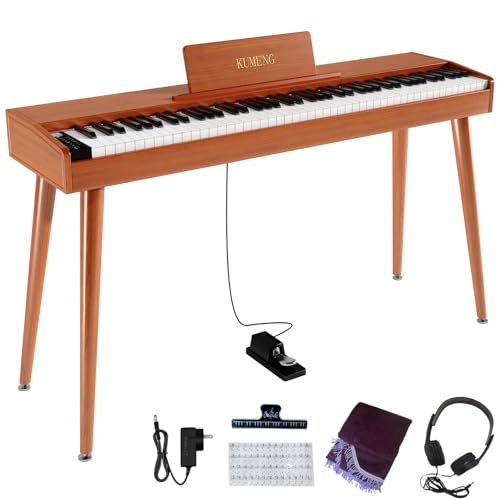
KUMENG 88-Key Semi-Weighted Digital Piano
With 88 semi-weighted keys, 800 built-in tones, and USB/MIDI connectivity, this KUMENG digital piano is a versatile option for beginners and hobbyists. Its compact woodgrain design fits well in home settings, and the multi-function panel aids learning.
Pros
- Semi-weighted keys for realistic feel
- Wide range of 800 tones
- 128-note polyphony for complex pieces
- USB/MIDI for external devices
- Attractive woodgrain design
Donner DDP-80 88-Key Weighted Digital Piano
The Donner DDP-80 combines a fully weighted 88-key action with a French DREAM sound engine for a realistic acoustic piano feel. Its retro wood cabinet and included triple pedal appeal to beginners seeking traditional aesthetics, while USB-MIDI connectivity allows integration with learning apps.
Pros
- Weighted keys simulate acoustic piano touch
- French DREAM sound source for rich tone
- 128-note polyphony supports complex passages
- Triple pedal included for expressive control
- Stereo 2x25W speakers provide immersive sound
Cons
- Heavy at 52.5 lbs
- Large footprint requires dedicated space
Digital Piano Buying Guide
Key Action and Touch Response
The feel of the keys is arguably the most important factor. Fully weighted keys mimic the resistance of an acoustic piano, offering a natural playing experience that builds proper finger technique.
Semi-weighted keys are lighter and often found on portable models; they work for beginners but may not satisfy advanced players. Look for graded hammer action, where the lower keys are heavier and higher keys lighter, just like a real piano.
Most of our top picks, including the Yamaha P71 and P225, feature graded weighted keys. If you’re shopping on a tighter budget, some Donner and UISCOM models still offer weighted action at a lower cost.
For more on touch sensitivity, see our guide on soft-touch keyboards.
Sound Quality and Polyphony
Polyphony, the number of notes a piano can produce simultaneously, directly affects how realistic complex passages sound. A minimum of 64-note polyphony is recommended for intermediate players; 128 or more is ideal for advanced pieces that use sustain pedals heavily.
The Yamaha P225 and P71 deliver up to 192 notes, while budget options like the Donner DEP-20 offer 128. Also consider the sample quality: premium brands like Yamaha use recordings from their grand pianos (e.g., CFX or C7).
For a deeper look at piano sound engines, read our roundup of music keyboards.
Portability vs. Home Setup
Decide where you’ll use the piano most. Portable models (like the Alesis Recital Play or Yamaha P145BT) are lightweight, easy to move, and often include a built-in handle.
They typically lack a furniture stand or triple-pedal unit but can be placed on a standard X-stand.
Home digital pianos (e.g., Donner DDP-80 or UISCOM) come with a fixed stand, sheet music rest, and integrated pedal system, making them feel more like an acoustic.
If you travel frequently, check out our dedicated guide on travel keyboard pianos.
Connectivity: USB, Bluetooth, and Audio
Modern digital pianos offer a range of connectivity options. USB-MIDI allows you to connect to computers, tablets, or music apps for recording or learning.
Bluetooth audio and MIDI (found on Yamaha P145BT) let you stream music wirelessly or control software from a phone.
Also check for headphone jacks (two is better for silent practice with a teacher) and line outputs for connecting to an amplifier.
If you’re a gigging musician, you might also want a keyboard that doubles as a controller; see our best gigging keyboard recommendations.
Pedals and Accessories
A sustain pedal is essential for expressive playing. Many entry-level pianos include a basic foot switch, but serious players prefer a continuous pedal that supports half-pedaling (partial sustain).
Models like the Donner DDP-80 and UISCOM come with a three-pedal unit (soft, sostenuto, sustain) attached to the stand. Some Yamaha models (P225) include a simple foot switch that can be upgraded.
If you plan to learn classical pieces, a three-pedal setup is a big plus. For more on keyboard accessories, explore our category on hobbies & crafts.
Budget and Value
Digital pianos range from under $150 to over $1,000. At the entry level, the KUMENG and Alesis Recital Play offer 88 keys and basic features for under $200, ideal for beginners evaluation the waters.
Mid-range options ($300, $500) like the Yamaha P71, Donner DEP-20, and UISCOM provide weighted keys and better sound. Premium models ($700+) such as the Yamaha P225 add advanced sound engines, higher polyphony, and Bluetooth.
The best value often comes from models that balance key action and sound quality without unnecessary frills. Remember that a quality piano can last for years, consider it an investment in your musical journey.
Why You Should Trust Us
BestProducts is an independent review site, not a retailer. We do not conduct our own product trials; our evaluations are grounded in research, published data, expert review consensus, and verified buyer feedback.
Each digital piano in this roundup has been scored using our BP Score system (0, 10), which weighs key action, sound quality, build, connectivity, and value relative to price. Our methodology ensures consistent, unbiased comparisons.
We do not accept payment from brands for placement, and our affiliate relationships (e.g., Amazon) do not influence ratings.
For more on how we evaluate products, see our category on guitars and other music instruments, but note that our process is the same across all categories.
Final Thoughts
- Best Overall: YAMAHA P71 88-Key Weighted Action Digital Piano, Combines the most realistic weighted action in its price range with Yamaha’s renowned grand piano sound, earning a top BP Score for its unbeatable balance of quality and affordability.
- Best for Beginners: Donner DEP-20 Beginner Digital Piano, Full weighted keys, a furniture stand, and triple-pedal unit at a reasonable price make this an excellent starter package; its BP Score reflects high buyer satisfaction and ease of use.
- Best Budget Pick: UISCOM 88 Key Weighted Home Digital Piano, Offering weighted keys and a complete wooden desk setup for under $300, it’s a standout value that still scores a 9.9 BP Score thanks to solid sound and build.
- Best Portable: Yamaha P225 88-Key Digital Piano with Weighted Keys, Lightweight, Bluetooth-enabled, and with an upgraded sound engine, this model earns a 9.9 BP Score for portability without sacrificing feel.
- Best Value: Alesis Recital Play 88-Key Piano Keyboard Bundle, A budget-friendly bundle with semi-weighted keys and built-in speakers, ideal for casual players; it scores a 9.9 BP Score for its incredible price-to-features ratio.
Frequently Asked Questions
What is the difference between weighted and semi-weighted keys?
Weighted keys simulate the resistance of an acoustic piano’s hammer action, providing a heavier touch that builds finger strength. Semi-weighted keys are lighter and offer less resistance; they’re common on portable keyboards and synths. For serious piano practice, weighted keys are strongly recommended.
How many keys do I need? 61 vs 88?
An 88-key keyboard covers the full piano range, essential for classical and advanced repertoire. 61-key models are adequate for beginners or casual playing but limit you for many pieces. If you’re learning piano, always go for 88 keys.
Can I connect a digital piano to my computer or tablet?
Yes, most modern digital pianos have USB-MIDI ports for connection to computers, tablets, and music apps. Some also support Bluetooth MIDI. This allows you to use learning apps, record MIDI data, or control virtual instruments.
What is polyphony and why does it matter?
Polyphony refers to the maximum number of notes a piano can produce at once. Higher polyphony (128 or more) prevents notes from cutting off when you play fast passages or use the sustain pedal. For advanced players, 128+ is ideal; 64 is acceptable for beginners.
Do I need a three-pedal unit?
A sustain pedal is essential; a three-pedal unit adds soft and sostenuto pedals, which are useful for classical repertoire. Beginners can start with a simple sustain pedal and upgrade later. Many home digital pianos include a triple pedal built into the stand.
Are digital pianos good for live performance?
Yes, many digital pianos are designed for stage use with line outputs, lightweight bodies, and durable construction. Look for models with multiple sounds, effects, and connectivity. For more on performing keyboards, see our guide on best gigging keyboards.
About the author
Adrian covers digital pianos, keyboards, and drum kits for BestProducts, comparing key and pad feel, sound engines, and quiet practice options. He helps musicians find instruments that satisfy at home and on stage.