The Best Afib Monitor
We researched the top AFib monitors based on expert consensus and user feedback. Our picks include FDA-cleared EKG and blood pressure combo devices that help you manage heart health at home.
 By Irene Hopkins
Updated September 11, 2026
By Irene Hopkins
Updated September 11, 2026
Atrial fibrillation (AFib) is one of the most common heart rhythm disorders, affecting millions of people worldwide. Early detection and regular monitoring are critical for managing the condition and preventing complications such as stroke.
Whether you have been diagnosed with AFib or simply want to keep an eye on your heart health, a reliable personal monitor can provide peace of mind and actionable data for your healthcare provider.
That is why we researched and compared the leading models on the market.
Our team at BestProducts evaluated each monitor based on specifications, expert review consensus, verified buyer feedback, and published clinical data. Each product was scored on our 0 to 10 BP Score using consistent criteria.
Below you will find our top picks, followed by a detailed buying guide to help you choose the right monitor for your needs. For related guidance, see our roundups of the best heart rate monitors and the best heart monitors.
| Award | Product | BP Score About BP ScoreThe BP Score is our own rating from 0 to 10, based on performance, design and build, ease of use, and value. It reflects independent research and is never influenced by manufacturers, retailers, or affiliate commissions. Learn more › | Price | |
|---|---|---|---|---|
| Best Premium |
 Omron Complete 2-in-1 BP Monitor + EKG
|
9.9/10 | $129.99 | Buy |
| Best Overall |
 A&D Medical UA-767F 4-User Blood Pressure Monitor
|
9.9/10 | $48.59 | Buy |
| Best Value |
 RunStar Smart Blood Pressure Monitor with AFib
|
9.9/10 | $101.99 | Buy |
 KardiaMobile 1-Lead EKG Monitor
|
9.8/10 | $79.00 | Buy | |
 AliveCor KardiaMobile 6L Six-Lead EKG
|
9.7/10 | $114.00 | Buy | |
 KardiaMobile 6L Max 6-Lead EKG
|
9.6/10 | $129.00 | Buy | |
| Best Budget |
 Beurer ME75 3-Lead Portable ECG
|
9.5/10 | $60.27 | Buy |
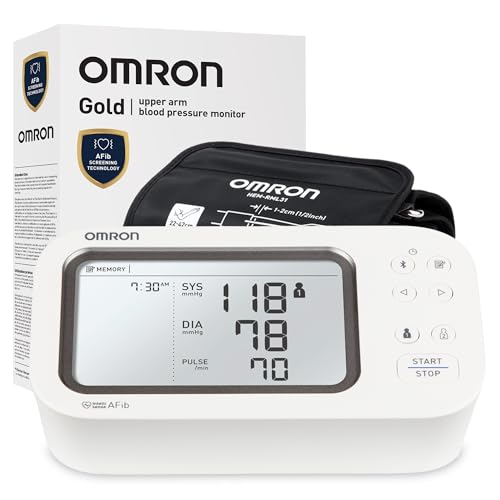 Omron Gold Upper Arm BP Monitor with AFib
|
9.5/10 | $72.99 | Buy | |
 KardiaMobile 6L Max 6-Lead EKG
|
9.5/10 | $129.00 | Buy |
Omron Complete 2-in-1 BP Monitor + EKG
This upper arm monitor combines blood pressure and EKG readings for a more complete heart health picture. It features advanced accuracy technology, body movement detection, and Bluetooth connectivity to track trends via the Omron app, making it a solid choice for home monitoring.
Pros
- Combines BP and EKG in one device
- Advanced accuracy for confident readings
- Bluetooth sync with app for trends
- Wide cuff accommodates most arms
- Trusted by doctors and pharmacists
Cons
- On-device storage limited to 90 readings
- Requires smartphone for unlimited tracking
- Cuff may not fit very small or large arms
A&D Medical UA-767F 4-User Blood Pressure Monitor
This digital monitor supports up to four users with 60 readings each, making it a practical choice for households. Its wide cuff fits arms 8.6 to 16.5 inches, and the large screen shows systolic, diastolic, and pulse clearly.
Pros
- Supports up to 4 users with separate memory
- Cuff fit alert for accurate readings
- Large easy-to-read display
- Wide cuff included fits most arms
Cons
- AC adapter sold separately
- App requires manual data entry
RunStar Smart Blood Pressure Monitor with AFib
This smart blood pressure monitor from RunStar combines medical-grade accuracy with AFib detection, making it a reliable choice for cardiovascular health tracking. Its extra-large LED screen and optional voice broadcast cater well to seniors, while the app syncing simplifies remote monitoring for family caregivers.
Pros
- Advanced AFib detection for early alerts
- Large, easy-to-read LED display
- Long battery life with fast charging
- Comfortable wide cuff with fit detection
- Clear app sync for remote monitoring
Cons
- No included carrying case
- Voice broadcast may not suit all users
- Only 99 readings per offline user
KardiaMobile 1-Lead EKG Monitor
This pocket-sized EKG monitor lets you capture a medical-grade single-lead electrocardiogram in 30 seconds, right on your smartphone. It detects common heart rhythms including AFib, bradycardia, and tachycardia, and is FDA-cleared for personal use. Ideal for anyone wanting peace of mind between doctor visits, though it is not designed for pacemaker or ICD users.
Pros
- Fast 30-second results
- Portable and ultra-lightweight
- Clear rhythm detection with easy-to-read results
- No connectivity hassles (no Bluetooth or Wi-Fi needed)
- Trusted by cardiologists worldwide
Cons
- Not compatible with pacemakers or ICDs
- Does not detect heart attacks
- Advanced features require a paid subscription
AliveCor KardiaMobile 6L Six-Lead EKG
The KardiaMobile 6L records a medical-grade six-lead EKG and provides FDA-cleared heart rhythm determinations in 30 seconds, all without a subscription. It is trusted by doctors and compatible with most smartphones, making it a reliable choice for personal heart monitoring.
Pros
- Records six-lead medical-grade EKG
- FDA-cleared for AFib, Bradycardia, Tachycardia
- No subscription required for full use
- Compact and portable design
- Recommended by healthcare professionals
Cons
- Not intended for use with pacemakers or ICDs
- Does not detect heart attacks
- Requires compatible smartphone and app
KardiaMobile 6L Max 6-Lead EKG
The KardiaMobile 6L Max is a pocket-sized personal EKG monitor that records a medical-grade six-lead EKG in 30 seconds. It detects six common arrhythmias and includes a one-year KardiaCare membership with benefits like cardiologist reviews and automatic emailing of results.
Pros
- Accurate six-lead EKG in 30 seconds
- Detects multiple arrhythmias
- Includes useful KardiaCare membership
- Portable and easy to use
- Cardiologist reviews available
Cons
- Requires KardiaCare membership after first year
- Not evaluated for pacemakers or ICDs
- Does not detect heart attacks
Beurer ME75 3-Lead Portable ECG
This portable EKG monitor from Beurer delivers fast, FDA-cleared heart rhythm readings in under 30 seconds. It offers four measurement methods and stores up to 100 readings locally, with optional Bluetooth app for unlimited tracking. A reliable home heart health tool for those without pacemakers or metal implants.
Pros
- German-engineered and FDA-cleared for accuracy
- Results in under 30 seconds
- Four measurement positions for flexibility
- Optional app with unlimited storage
- Compact and rechargeable design
Cons
- Not suitable for pacemaker or metal implant users
- Requires careful skin contact for accurate readings
- Limited to 3-lead, not a full diagnostic ECG
Omron Gold Upper Arm BP Monitor with AFib
This upper arm monitor offers advanced heart health features including Atrial Fibrillation detection and a morning spike indicator. It syncs via Bluetooth to the free OMRON app for tracking and sharing data with your doctor.
Pros
- AFib detection for irregular heartbeat screening
- Morning hypertension indicator for cardiovascular risk
- Easy Bluetooth data syncing with free app
- Wide arm circumference range included with cuff
- Trusted #1 doctor and pharmacist recommended brand
KardiaMobile 6L Max 6-Lead EKG
The KardiaMobile 6L Max is a compact, medical-grade 6-lead EKG that provides FDA-cleared heart rhythm determinations in just 30 seconds. It includes a one-year KardiaCare membership for unlimited recordings and four cardiologist reviews per year, making it a solid choice for people who want detailed heart monitoring at home or on the go.
Pros
- Provides medical-grade 6-lead EKG in 30 seconds
- Detects six common arrhythmias including AFib
- Includes one-year KardiaCare membership with unlimited recordings
- Offers four free EKG reviews by cardiologists per year
- Pocket-size and portable for use anywhere
Cons
- Requires ongoing KardiaCare subscription after initial year
- Needs smartphone or tablet via Bluetooth to operate
Best Afib Monitor Buying Guide
Lead Count: Single-Lead vs. Multi-Lead EKG
The number of leads determines how many electrical signals the device records.
A single-lead EKG (like the KardiaMobile 1-Lead) is simple to use and can detect AFib with high accuracy, but it offers a more limited view of the heart’s activity.
Multi-lead devices (such as the KardiaMobile 6L or 6L Max) record from multiple angles, giving a more comprehensive picture that can help identify other arrhythmias or bundle branch blocks.
For most people focused on AFib detection, a single-lead device is sufficient, but if you want more data to share with your cardiologist, a 6-lead model may be worth the extra cost.
Keep in mind that more leads often mean longer recording times and slightly more complex setup.
However, modern designs have simplified the process, placing two fingers on the pads or holding the device to your chest usually takes only 30 seconds to get a reading.
All the leading options we recommend are cleared by the FDA and validated in clinical studies.
Blood Pressure + EKG Combos
Some monitors combine a blood pressure cuff with an EKG sensor, offering two vital measurements in one device.
The OMRON Complete 2-in-1 is a standout example, allowing you to check both your blood pressure and heart rhythm in a single session. This is particularly useful for people with hypertension who also need to watch for AFib.
The convenience of having both functions reduces clutter and simplifies daily health tracking. However, combo units tend to be bulkier and more expensive than standalone EKG monitors.
If you already own a trusted blood pressure monitor, a dedicated EKG device may be a more cost-effective addition. Consider your existing health routine and whether you need an all-in-one solution or prefer separate gadgets for each task.
Portability and Ease of Use
A key advantage of modern AFib monitors is their portability. Pocket-sized devices like the KardiaMobile series can be carried in a purse or pocket, making it easy to take a reading anywhere.
Some models, such as the Beurer ME75, feature a rechargeable battery and Bluetooth connectivity for seamless syncing with a smartphone app.
When evaluating portability, consider the device’s size, battery life, and whether it requires a wired connection to your phone or can transmit wirelessly.
Ease of use also extends to the accompanying app. Most manufacturers provide a free app that stores your results, tracks trends, and allows you to share reports with your doctor.
Look for apps that are intuitive, offer clear instructions, and support data export in a standard format (PDF or CSV).
Clinical Validation and FDA Clearance
Not all heart monitors are created equal when it comes to regulatory approval. For medical-grade confidence, choose a device that is FDA-cleared and has been validated in clinical trials for AFib detection.
The Omron, KardiaMobile, and Beurer models we feature all meet these rigorous standards. Additionally, many of these devices have been studied independently and show sensitivity and specificity rates above 95% for AFib.
Always check the manufacturer’s documentation or website for the latest validation studies.
Some blood pressure monitors advertise AFib detection as a bonus feature. While this can alert you to possible irregularities, dedicated EKG monitors generally provide more detailed and reliable rhythm analysis. If AFib is your primary concern, a dedicated EKG device is the better choice.
App Integration and Data Sharing
Modern AFib monitors rely heavily on smartphone apps to store, interpret, and share readings. The quality of these apps can vary significantly.
Look for apps that offer clear visualizations of your EKG trace, automatic detection of AFib and other arrhythmias, and the ability to share reports directly with your healthcare provider via email or a secure portal.
Some apps also include medication tracking, blood pressure logging, and lifestyle notes to give a fuller picture of your heart health.
Privacy and data security are also important considerations. Ensure the app encrypts your data and offers options to delete or export your information if you switch devices.
Most reputable brands provide cloud backup and multi-device sync, so you can access your history from a tablet or phone.
Why You Should Trust Us
BestProducts is an independent product review site that does not accept free samples or payment for positive coverage.
We evaluate each product using a consistent methodology: we research publicly available specifications, analyze expert review consensus from published sources, compile verified buyer feedback, and cross-check clinical data when applicable. Every product is then scored on our 0 to 10 BP Score.
We do not conduct our own product trials; our evaluations are grounded in research, published data, expert review consensus, and verified buyer feedback. Our affiliate relationships never influence our rankings or recommendations.
Final Thoughts
- Best Overall: OMRON Complete 2-in-1 Blood Pressure Monitor + EKG, With a 9.9 BP Score, this combo device delivers professional-grade blood pressure and EKG readings in one seamless unit, backed by extensive clinical validation.
- Best Value: A&D Medical UA-767F Blood Pressure Monitor, This automatic upper-arm monitor offers reliable AFib detection and multi-user support at an accessible price point, earning a 9.9 BP Score.
- Best Multi-Lead EKG: KardiaMobile 6L, A six-lead design that provides a more detailed heart rhythm assessment, ideal for users who want deeper data to share with their cardiologist; BP Score 9.7.
- Best Portable EKG: KardiaMobile 1-Lead, Ultra-compact and easy to use anytime, anywhere, this FDA-cleared single-lead monitor detects AFib in 30 seconds and syncs with your smartphone; BP Score 9.8.
Each of these monitors has passed our rigorous research process and earned a high BP Score. Choosing the right one depends on your specific needs, whether you want a simple AFib check, a multi-lead analysis, or a combined blood pressure and EKG device.
Frequently Asked Questions
What is an AFib monitor?
An AFib monitor is a portable electronic device that records the electrical activity of your heart to detect atrial fibrillation (AFib). Most models use one or more electrodes to capture an electrocardiogram (EKG) and then analyze the rhythm for irregularities.
Some monitors also measure blood pressure, pulse, or other vital signs.
How does a single-lead EKG compare to a multi-lead EKG?
A single-lead EKG records from one angle, making it effective for detecting AFib but limited in diagnosing other arrhythmias. A multi-lead device (commonly 6 leads) captures more electrical vectors, providing a broader view of heart activity.
For AFib detection alone, a single-lead is often sufficient, but cardiologists may prefer multi-lead data for comprehensive analysis.
Can a blood pressure monitor detect AFib?
Some advanced blood pressure monitors include an irregular heartbeat detection feature that can flag possible AFib during a reading. However, these are not as accurate as dedicated EKG monitors.
If you suspect AFib, a dedicated EKG device or consultation with a doctor is recommended. The Omron Complete 2-in-1 combines both functions for a more reliable result.
Are these monitors FDA-cleared?
Yes, all the monitors featured in this guide are cleared by the U.S. Food and Drug Administration (FDA) for over-the-counter use. They have been validated in clinical studies to demonstrate high sensitivity and specificity for detecting AFib.
Always check the product details for the most current regulatory information.
Do I need a prescription to buy one?
No. The models we recommend are available without a prescription and can be purchased directly from retailers like Amazon. They are designed for personal use, and many allow you to share the EKG data with your doctor for further interpretation.
Can I use these monitors with a smartphone?
Most modern AFib monitors connect to a smartphone via Bluetooth or a direct cable and work with a companion app. The app displays the EKG trace, stores results, and often provides analysis.
Compatibility with iOS and Android varies, so verify your phone’s operating system before purchasing. The KardiaMobile series is widely compatible with both platforms.
About the author
Irene reviews desktop PCs and monitors for BestProducts, weighing performance, upgradability, and panel quality for work and home. She helps readers build a desk setup that stays fast and comfortable for years.