The Best Graphics Card
We evaluated top graphics cards from NVIDIA and AMD based on specs, expert reviews, and buyer feedback. Find the right GPU for gaming, content creation, or everyday use in 2026.
 By Irene Hopkins
Updated September 10, 2026
By Irene Hopkins
Updated September 10, 2026
Choosing the right graphics card is the most impactful decision for any PC build, whether you’re aiming for silky-smooth 4K gaming, fast video rendering, or a reliable upgrade for your existing system.
With new generations from NVIDIA (GeForce RTX 50 series) and AMD (Radeon RX 9000 series) hitting the market, the options can feel overwhelming.
Our team has analyzed specifications, expert review consensus, and verified buyer feedback to bring you a curated list of the best graphics card options available in 2026.
We evaluated each model against consistent criteria, performance per dollar, thermal management, feature set, and build compatibility, and scored them on our 0-to-10 BP Score. Below, you’ll find our top picks, from entry-level upgrades to flagship powerhouses, all backed by research rather than hype.
| Award | Product | BP Score About BP ScoreThe BP Score is our own rating from 0 to 10, based on performance, design and build, ease of use, and value. It reflects independent research and is never influenced by manufacturers, retailers, or affiliate commissions. Learn more › | Price | |
|---|---|---|---|---|
| Best Overall |
 Asus Prime RTX 5070 OC 12GB
|
9.9/10 | $856.99 | Buy |
| Best Premium |
 MSI RTX 5080 SUPRIM SOC 16GB
|
9.9/10 | $1,803.63 | Buy |
 ASUS Dual RX 9060 XT 16GB
|
9.8/10 | $479.00 | Buy | |
| Best Budget |
 ASRock RX 7700 XT Challenger 12GB
|
9.8/10 | $429.99 | Buy |
 ASUS TUF Gaming RTX 5080 OC 16GB
|
9.8/10 | $1,779.99 | Buy | |
 ASUS ROG Astral RTX 5080 16GB
|
9.8/10 | $1,849.99 | Buy | |
| Best Value |
 ASUS RTX 5060 Ti 16GB Graphics Card
|
9.7/10 | $788.50 | Buy |
 ASRock RX 9060 XT Challenger 16GB
|
9.6/10 | $519.99 | Buy | |
 GIGABYTE RX 9070 XT Gaming OC 16GB
|
9.6/10 | $749.99 | Buy | |
 GIGABYTE GeForce RTX 5070 Ti Gaming OC 16GB
|
9.6/10 | $1,249.99 | Buy | |
 ASUS Dual RTX 5060 Ti 16GB GDDR7
|
9.7/10 | $789.99 | Buy | |
 ASUS TUF Gaming RTX 5070 OC 12GB GDDR7
|
9.6/10 | $937.39 | Buy |
Asus Prime RTX 5070 OC 12GB
For compact builds demanding high-end performance, the Asus Prime RTX 5070 OC combines NVIDIA's Blackwell architecture with a SFF-friendly 2.5-slot design. Its axial-tech fans and dual BIOS provide efficient cooling and flexibility, making it a strong choice for enthusiasts seeking a powerful GPU in a small footprint.
Pros
- SFF-ready for compact builds
- 1005 AI TOPS performance
- Dual BIOS for quiet or performance
- Axial-tech fans with 0dB mode
- Durable dual-ball bearings
Cons
- 2.5-slot design limits compatibility with some SFF cases
MSI RTX 5080 SUPRIM SOC 16GB
For gamers and creators demanding top-tier performance, the MSI RTX 5080 SUPRIM SOC delivers extreme clock speeds and next-gen connectivity. Its 16GB GDDR7 memory and Blackwell architecture handle 4K and 8K workloads with ease.
Pros
- High boost clock for exceptional gaming performance
- Ample 16GB GDDR7 VRAM for future titles
- Modern connectivity with DisplayPort 2.1a and HDMI 2.1b
- Supports 8K resolution output
Cons
- Large physical size may not fit compact cases
- Heavy at 6.77 pounds, requires sturdy support
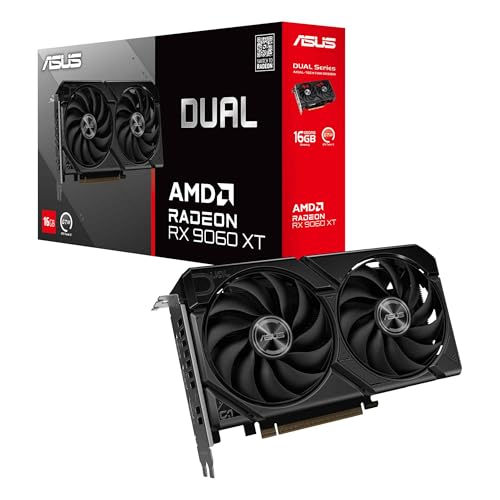
ASUS Dual RX 9060 XT 16GB
The ASUS Dual RX 9060 XT 16GB is a graphics card built for quiet and efficient gaming. Its axial-tech fans and dual BIOS let you choose between silent operation and maximum performance. With a 2.5-slot design, it fits in many builds while delivering high clock speeds up to 3250 MHz.
Pros
- Axial-tech fans with barrier ring for high static pressure
- 2.5-slot design for broad case compatibility
- 0dB technology for silent light gaming
- Dual BIOS for quiet or performance modes
- Dual ball bearings for longer lifespan
ASRock RX 7700 XT Challenger 12GB
The ASRock Radeon RX 7700 XT Challenger delivers strong 1440p gaming performance with AMD's RDNA 3 architecture and 12GB of GDDR6 memory. Its dual-fan cooling system with 0dB silent mode keeps noise low during lighter tasks.
Pros
- High-performance RDNA 3 architecture
- Fast boost clock up to 2584 MHz
- 12GB GDDR6 memory for demanding games
- 0dB silent cooling at low temperatures
- Durable metal backplate and DisplayPort 2.1 outputs
Cons
- Compatibility limited for pre-built systems; requires verification of PSU, chassis, and motherboard
ASUS TUF Gaming RTX 5080 OC 16GB
A robust OC edition of NVIDIA's Blackwell GPU with DLSS 4, built with military-grade components and a massive 3.6-slot cooler for sustained gaming performance. Ideal for enthusiasts who prioritize durability and out-of-the-box overclocking.
Pros
- Military-grade components and PCB coating
- Excellent thermal management with phase-change pad
- Factory overclocked for extra performance
- Auto-Extreme manufacturing ensures reliability
Cons
- Large 3.6-slot size requires ample case space
- Requires 850W PSU with 12V-2x6 connector
- Weighs 5 pounds, may need extra support
ASUS ROG Astral RTX 5080 16GB
This flagship graphics card from ASUS leverages NVIDIA's Blackwell architecture and DLSS 4 for cutting-edge performance. Its quad-fan design and patented vapor chamber deliver exceptional cooling, making it a top choice for enthusiasts building a high-end gaming or creative workstation.
Pros
- Quad-fan design boosts airflow up to 20%
- Patented vapor chamber with milled heatspreader
- Phase-change GPU thermal pad for better heat transfer
- 80-amp MOSFETs for enhanced overclocking stability
- Protective PCB coating guards against moisture and dust
Cons
- Bulky 3.8-slot design limits case compatibility
- Heavy at 6.3 lbs, requires included GPU bracket
- Needs 850W PSU with 16-pin 12V-2x6 connector
ASUS RTX 5060 Ti 16GB Graphics Card
For gamers and creators needing Blackwell architecture and DLSS 4, the ASUS RTX 5060 Ti 16GB delivers high AI compute with 758 TOPS. Its SFF-Ready form factor and 2.5-slot cooling make it a strong choice for smaller builds, while the dual BIOS and 0dB technology offer flexible quiet operation.
Pros
- 758 AI TOPS for advanced AI tasks
- SFF-Ready design fits compact cases
- Dual-ball fan bearings for durability
- 0dB technology for silent operation
- Dual BIOS switch for performance profiles
ASRock RX 9060 XT Challenger 16GB
Built on AMD's RDNA 4 architecture, the ASRock RX 9060 XT Challenger targets smooth 1440p gaming with a 3290 MHz boost clock and 16GB of GDDR6 memory. Its dual-fan design supports 0dB silent operation for quiet performance in lighter tasks.
Pros
- High boost clock up to 3290 MHz
- 16GB GDDR6 memory for modern game textures
- 0dB Silent mode for quiet operation
- RDNA 4 with updated ray tracing and AI
Cons
- 128-bit memory bus is narrow for 16GB
- Requires 550W PSU and careful case clearance
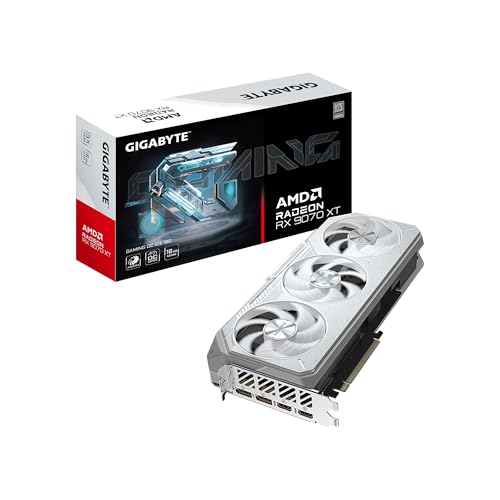
GIGABYTE RX 9070 XT Gaming OC 16GB
The GIGABYTE RX 9070 XT Gaming OC ICE stands out with its white design and robust WINDFORCE cooling, which uses server-grade thermal gel and dual BIOS for performance or silent operation. It's built for high-resolution gaming on AMD AM5 platforms, offering PCIe 5.0 and DisplayPort 2.1 support for future-proof connectivity.
Pros
- Powerful WINDFORCE cooling with server-grade thermal gel
- Dual BIOS for performance or silent operation
- Reinforced metal backplate for structural integrity
- Supports PCIe 5.0 and DisplayPort 2.1
- Customizable RGB lighting via GIGABYTE CONTROL CENTER
Cons
- Large 2.7-slot design may limit case compatibility
- White color scheme may not suit all PC builds
GIGABYTE GeForce RTX 5070 Ti Gaming OC 16GB
The GIGABYTE RTX 5070 Ti Gaming OC leverages NVIDIA's Blackwell architecture and DLSS 4 with 16GB of GDDR7 memory on a 256-bit interface, while the WINDFORCE cooling system aims to keep temperatures in check. It's a performance-oriented card for 4K gaming and GPU-intensive creative work.
Pros
- 16GB GDDR7 memory on 256-bit bus
- NVIDIA Blackwell and DLSS 4 support
- WINDFORCE cooling system
- PCIe 5.0 interface
Cons
- Large dimensions (13.46 x 5.59 x 2.76 inches) may limit case fit
- Heavy at 3.92 pounds, may need support bracket
ASUS Dual RTX 5060 Ti 16GB GDDR7
The ASUS Dual RTX 5060 Ti is a mid-range graphics card powered by NVIDIA's Blackwell architecture and DLSS 4, offering 767 AI TOPS for high-performance gaming and AI workloads. Its axial-tech fan design and 2.5-slot profile deliver efficient cooling in compact builds, while 0dB technology keeps fan noise down during light use.
Pros
- 767 AI TOPS for strong AI and gaming performance
- DLSS 4 support for improved image upscaling
- Axial-tech fans with barrier ring for better airflow
- 0dB mode enables silent operation at low loads
- Dual ball bearings last up to twice as long
ASUS TUF Gaming RTX 5070 OC 12GB GDDR7
Built for gamers who demand durability, the ASUS TUF Gaming RTX 5070 OC Edition combines NVIDIA's Blackwell architecture with military-grade components and a robust cooling system. Its 3.125-slot design, three Axial-tech fans, and phase-change GPU pad ensure stable performance under heavy loads.
Pros
- Military-grade components and protective PCB coating improve reliability
- Phase-change GPU thermal pad outlasts traditional paste under load
- Auto-Extreme manufacturing enhances overall build quality
- GPU Tweak III software offers intuitive overclocking and thermal controls
- ASUS GPU Guard and bracket reduce risk of GPU cracks
Cons
- 3.125-slot size may limit case compatibility
- OC mode boost clock (2640 MHz) offers modest gains over default
Best Graphics Card Buying Guide
Performance and Resolution
The primary job of a graphics card is to render frames at your target resolution and refresh rate. For 1080p gaming, even mid-range cards like the RTX 5060 Ti or RX 9060 XT handle modern titles at high settings.
Stepping up to 1440p demands more VRAM and core power; cards with 12GB or more, such as the RTX 5070 or RX 7700 XT, strike an excellent balance.
For 4K or high-refresh-rate 1440p, flagship GPUs like the RTX 5080 or RX 9070 XT are necessary to maintain fluid motion without compromising visual quality. Pairing your GPU with a capable gaming monitor ensures you get the most out of your investment.
Ray tracing and upscaling technologies (DLSS, FSR) also play a role. NVIDIA’s RTX 50 series brings improved ray tracing cores and DLSS 4, while AMD’s RDNA 4 architecture offers competitive rasterization and FSR 4 support. Your choice should align with the games you play most.
VRAM and Memory Bandwidth
Video RAM (VRAM) directly affects texture quality and the ability to run high-resolution assets. For 2026, 12GB is the baseline for comfortable 1440p gaming, while 16GB or more is recommended for 4K, content creation, or heavy modding.
GDDR7 memory, featured on RTX 50-series cards, delivers higher bandwidth than GDDR6, reducing bottlenecks in memory-intensive scenes. Cards like the RTX 5070 Ti with 16GB GDDR7 offer future-proofing for upcoming titles.
Memory bus width also matters: a 256-bit bus (common on high-end cards) provides more throughput than 128-bit designs. When comparing similar VRAM capacities, prioritize wider buses for sustained performance at higher resolutions.
Cooling and Noise
Graphics cards generate substantial heat under load, so cooler design impacts both performance and acoustics. Triple-fan solutions like the ASUS TUF Gaming or GIGABYTE WINDFORCE series excel at keeping temperatures low while maintaining quiet operation.
Dual-fan cards (e.g., ASRock Challenger) are compact but may run louder at peak loads. Look for features like 0dB mode (fans stop at idle) and large heatsinks.
If you plan to overclock or live in a warm climate, a robust cooling system is essential for sustained boost clocks.
Noise levels are often overlooked but matter for immersive gaming or quiet work environments. Expert reviews consistently highlight that premium coolers from ASUS, MSI, and GIGABYTE offer the best balance of thermal performance and low noise.
Connectivity and Features
Modern GPUs come with DisplayPort 2.1 and HDMI 2.1 outputs, enabling high refresh rates at 4K and beyond. Ensure your monitor supports these standards to take full advantage. Multi-monitor setups benefit from cards with three or more DisplayPorts.
Additionally, features like Dual BIOS (on some ASUS models) let you switch between performance and silent modes without software. RGB lighting and metal backplates are aesthetic bonuses but don’t affect performance.
For SFF (small form factor) builds, compact cards like the ASUS Prime RTX 5070 are specifically designed to fit tighter spaces while still delivering strong performance.
PCIe 5.0 support is now standard on new GPUs, but it’s backward compatible with PCIe 4.0 motherboards. If you’re building a new desktop PC, opting for a PCIe 5.0 board ensures you can leverage future bandwidth improvements.
Power Supply and Physical Size
High-end graphics cards draw significant power; the RTX 5080 can exceed 350W under load. Always check the recommended PSU wattage (often 750W or higher for flagship models) and ensure your power supply has the necessary PCIe connectors.
AMD’s RX 9070 XT and NVIDIA’s RTX 5070 are more power-efficient, typically requiring 650, 750W. Physical dimensions matter too: some cards are over 330mm long and 3-slot thick, so measure your case clearance before buying.
The ASUS SFF-Ready Prime series is a great choice for compact builds without sacrificing performance.
We recommend consulting your PSU’s specifications and comparing them to the GPU’s requirements. A quality power supply with 80+ Gold efficiency ensures stable delivery and longevity.
Why You Should Trust Us
At BestProducts, our mission is to help you make informed purchasing decisions with confidence. We do not conduct our own product trials; our evaluations are grounded in research, published data, expert review consensus, and verified buyer feedback.
Each graphics card in this guide has been assessed against a consistent set of criteria, including performance benchmarks, thermal efficiency, build quality, feature set, and value, and assigned a BP Score from 0 to 10.
Our team of editors continuously monitors market trends and user experiences to keep recommendations current and trustworthy.
We are independently owned and may earn a commission when you purchase through our links, but this does not influence our scoring or editorial choices.
Final Thoughts
- Best Overall: ASUS SFF-Ready Prime NVIDIA GeForce RTX 5070 OC Edition, With a BP Score of 9.9, this card delivers exceptional 1440p performance, a compact 2.5-slot design, and Dual BIOS for flexibility. It’s the top choice for most gamers and builders seeking a powerful yet space-efficient GPU.
- Best Premium Performance: MSI Gaming RTX 5080 16G SUPRIM SOC, Also scoring 9.9, this flagship offers blistering 4K speeds, advanced cooling, and a premium build. Ideal for enthusiasts who demand the highest frame rates and ray tracing fidelity.
- Best Value 1440p: ASRock Radeon RX 7700 XT Challenger 12GB, With a 9.8 BP Score, it provides excellent rasterization performance and 12GB VRAM at a mid-range price, making it a smart pick for high-refresh-rate 1440p gaming.
- Best for Content Creation: ASUS TUF Gaming GeForce RTX 5080 16GB OC Edition, Scoring 9.8, this card combines 16GB GDDR7, robust cooling, and NVIDIA’s encoder suite for smooth video editing and 3D rendering workflows.
- Best Entry-Level Upgrade: ASUS Prime GeForce RTX 5060 Ti 16GB GDDR7, A 9.7 BP Score reflects its outstanding value for 1080p and light 1440p gaming, with 16GB VRAM ensuring longevity for modern titles.
Frequently Asked Questions
How much VRAM do I need for gaming in 2026?
For 1080p gaming, 8GB is still sufficient for most titles, but 12GB is becoming the recommended baseline for high textures and future-proofing. At 1440p, 12, 16GB is ideal, while 4K gaming and content creation benefit from 16GB or more.
Cards like the RTX 5070 (12GB) and RX 7700 XT (12GB) handle 1440p well, while the RTX 5080 (16GB) excels at 4K.
Should I choose NVIDIA GeForce or AMD Radeon?
Both offer excellent options. NVIDIA’s RTX 50 series leads in ray tracing, DLSS upscaling, and content creation features (CUDA, NVENC). AMD’s Radeon RX 9000 and 7000 series provide strong rasterization performance and often better value at mid-range price points.
Your choice should depend on your priority: if you want the best ray tracing and upscaling, go NVIDIA; if raw performance per dollar matters more, consider AMD.
What power supply do I need for a new graphics card?
Check the manufacturer’s recommended wattage. Entry-level cards (RTX 5060 Ti) typically need 550, 650W, mid-range (RTX 5070, RX 7700 XT) require 650, 750W, and high-end (RTX 5080, RX 9070 XT) need 750, 850W or more. Also ensure your PSU has the required PCIe connectors (6+2 pin or 12VHPWR).
Using a quality power supply is crucial for stability.
Can I use a graphics card with PCIe 5.0 on a PCIe 4.0 motherboard?
Yes, all PCIe generations are backward and forward compatible. A PCIe 5.0 graphics card will work in a PCIe 4.0 slot, though it will run at PCIe 4.0 speeds. For most games, the performance difference is negligible.
If you’re building a new system, a PCIe 5.0 motherboard offers future-proofing for next-generation GPUs and SSDs.
How important is the graphics card brand or model (e.g., ASUS vs. MSI)?
The core GPU chip (e.g., RTX 5070) is the same across brands, but cooling, build quality, noise levels, and warranty vary. ASUS, MSI, GIGABYTE, and ASRock all offer reliable cards with different cooler designs.
Our picks include models that excel in thermal performance and user satisfaction. Choose based on your case size, noise tolerance, and budget.
Is it worth buying a previous-generation graphics card to save money?
Previous-gen cards like the RTX 40 series or RX 7000 series can offer good deals, especially in the used market. However, they lack the latest features (DLSS 4, FSR 4, improved ray tracing) and may have higher power draw.
For new builds, we recommend sticking with current-gen cards for longer software support and better efficiency. If budget is tight, consider the RTX 5060 Ti or RX 9060 XT as affordable entry points into the latest architectures.
About the author
Irene reviews desktop PCs and monitors for BestProducts, weighing performance, upgradability, and panel quality for work and home. She helps readers build a desk setup that stays fast and comfortable for years.