The Best Compressible Sleeping Bag
We researched the top compressible sleeping bags, evaluating compression, warmth, weight, and value. Our picks include models from MalloMe, ECOOPRO, VENTURE 4TH, and TETON Sports to help you pack light and sleep well.
 By Catherine Arnold
Updated September 12, 2026
By Catherine Arnold
Updated September 12, 2026
When you’re planning a backpacking trip or a weekend camping adventure, every ounce and cubic inch matters.
A compressible sleeping bag that packs down small can free up valuable space in your pack for other essentials, making it a critical piece of gear for anyone who wants to travel light without sacrificing a good night’s sleep.
The best compressible sleeping bag balances warmth, weight, and packability, so you can carry it comfortably and sleep soundly in a range of conditions.
At BestProducts, we’ve researched the market thoroughly to help you find the right bag. Our team analyzes specifications, expert review consensus, verified buyer feedback, and published data to score each model on our 0 to 10 BP Score.
Below, you’ll find our top picks for the best compressible sleeping bag, chosen for their compression performance, warmth-to-weight ratio, and overall value.
| Award | Product | BP Score About BP ScoreThe BP Score is our own rating from 0 to 10, based on performance, design and build, ease of use, and value. It reflects independent research and is never influenced by manufacturers, retailers, or affiliate commissions. Learn more › | Price | |
|---|---|---|---|---|
| Best Overall |
 MalloMe 3-Season Sleeping Bag (50-80°F)
|
9.9/10 | $23.39 | Buy |
| Best Budget |
 ECOOPRO Lightweight Waterproof Sleeping Bag
|
9.9/10 | $25.19 | Buy |
| Best Value |
 VENTURE 4TH 3-Season XXL Sleeping Bag
|
9.9/10 | $54.95 | Buy |
 ECOOPRO Warm Weather Sleeping Bag 83x30 inch
|
9.8/10 | $24.69 | Buy | |
 Naturehike Ultralight 32°F Sleeping Bag
|
9.7/10 | $36.99 | Buy | |
| Best Premium |
 TETON Sports Trailhead 20F Mummy Bag
|
9.5/10 | $69.99 | Buy |
 TETON Sports Celsius Regular 0-Degree Sleeping Bag
|
9.5/10 | $84.99 | Buy |
MalloMe 3-Season Sleeping Bag (50-80°F)
MalloMe's 3-season sleeping bag offers a waterproof hex-tech shell and synthetic fill for comfort in temperatures from 50 to 80°F. Weighing under 3 pounds and fitting adults up to 6 feet, it's a versatile option for family camping and backpacking.
Pros
- Lightweight at 2.86 pounds
- Waterproof hex-tech outer shell
- Machine washable for easy cleaning
- Double-sided snag-free zippers
- Fits adults up to 6 feet tall
Cons
- Not designed for temperatures below 50°F
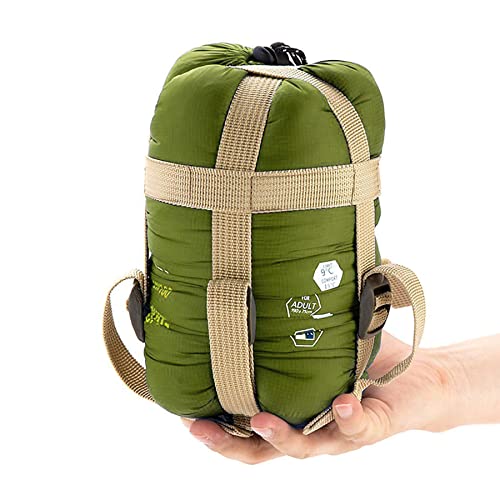
ECOOPRO Lightweight Waterproof Sleeping Bag
This ECOOPRO sleeping bag is a lightweight and waterproof option for camping and backpacking. It measures 83x30 inches, fits most adults or two children, and compresses to 11 inches for easy carrying. The polyester lining is breathable and skin-friendly, with a temperature range of 55-60°F.
Pros
- Waterproof outer shell
- Ultra-lightweight at 1.7 lbs
- Compresses to 11 inches
- Breathable and skin-friendly lining
Cons
- Limited to warm weather (55-60°F)
- Single size may not fit very tall individuals
VENTURE 4TH 3-Season XXL Sleeping Bag
This extra-large sleeping bag from VENTURE 4TH offers generous space for tall campers, with a 3-season design suitable for temperatures from 30 to 70°F. It comes with a lifetime replacement guarantee and packs down compactly for portability.
Pros
- Lifetime replacement guarantee
- XXL size for tall campers
- 3-season warmth 30-70°F
- Water-resistant and durable shell
- Lightweight and packable with compression sack
Cons
- Not rated for temperatures below 30°F
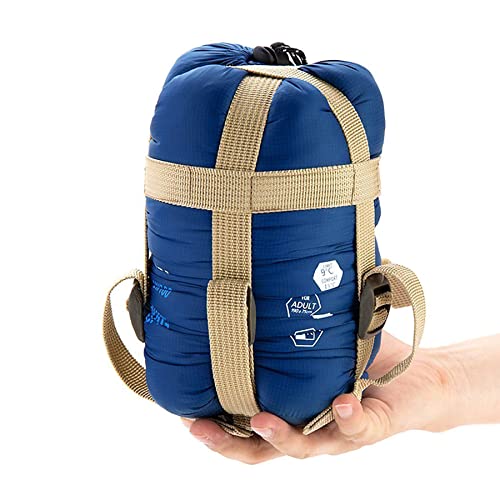
ECOOPRO Warm Weather Sleeping Bag 83x30 inch
This ECOOPRO sleeping bag is a lightweight, waterproof option for warm-weather camping and backpacking. Its envelope design and compact compression sack make it easy to carry, while the nylon outer and polyester lining aim for comfort in temperatures from 55 to 60°F.
Pros
- Lightweight and easy to pack
- Waterproof outer material
- Breathable lining for comfort
- Fits most adults or two kids
- Includes compression sack
Cons
- Limited to warm weather use
- Envelope design may not retain heat as well
Naturehike Ultralight 32°F Sleeping Bag
For backpackers seeking a lightweight and compact sleep system, the Naturehike Ultralight Sleeping Bag packs down to just 5x12 inches and weighs under 1.7 pounds. Its envelope design offers ample space for average adults, while the synthetic filling aims to provide comfort in cool to mild conditions. A waterproof shell and included compression sack add practicality for camping and hiking trips.
Pros
- Ultra lightweight at 1.68 lbs
- Compresses to small 5x12 inch pack
- Roomy envelope design for comfortable sleep
- Durable fabric with reinforced seams
- Includes compression sack
Cons
- Envelope shape less thermally efficient than mummy bags
- Synthetic insulation may degrade over time
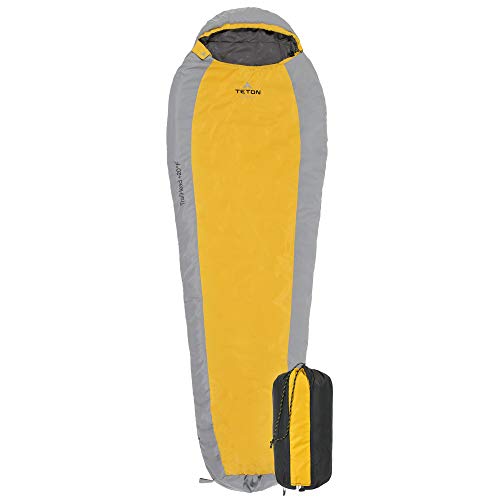
TETON Sports Trailhead 20F Mummy Bag
This lightweight mummy sleeping bag from TETON Sports uses innovative microfiber insulation for warmth and compressibility without sacrificing comfort. Its roomy footbox and soft liner make for a restful night, while the included stuff sack and anti-snag zippers add convenience for backpackers and campers.
Pros
- Innovative microfiber fill offers good warmth and compressibility
- Roomy footbox and soft liner enhance comfort
- Anti-snag zippers are easy to use from inside or out
- Includes stuff sack for easy packing
Cons
- Short length may not suit taller users
- Weight of 2.4 lbs is moderate, not ultralight
TETON Sports Celsius Regular 0-Degree Sleeping Bag
The TETON Sports Celsius Regular 0-Degree Sleeping Bag offers a comfortable camping experience with its soft poly-flannel lining and roomy design. It uses innovative fiber fill and double-layer construction to keep warmth in, and the included stuff sack with straps makes packing easy. Ideal for car camping or casual use where weight is not a concern.
Pros
- Soft poly-flannel lining adds comfort
- Double-layer and draft tubes keep warmth in
- Easy to pack with stuff sack and straps
- Mummy hood keeps pillow clean
- Roomy design for spreading out
Cons
- Weighs 5 pounds, heavy for backpacking
- Left zip only limits pairing options
Best Compressible Sleeping Bag Buying Guide
Compression and Packed Size
The whole point of a compressible sleeping bag is its ability to shrink for transport. Look for models that come with a compression sack or stuff sack that can reduce the bag’s volume significantly.
Many brands list the packed dimensions; a bag that compresses to the size of a small melon or a football is ideal for backpacking.
Pay attention to the compression ratio, some bags can be squished to half their original loft, while others barely shrink.
If you’re pairing your bag with a compact sleeping bag setup, ensure the compression sack is sturdy and has straps to cinch down tight.
Some bags use a dry-bag style compression sack that also protects against moisture, a bonus for wet environments.
Temperature Rating and Insulation
Temperature ratings tell you the lowest temperature at which the bag will keep you warm. For three-season camping, a bag rated between 30°F and 40°F is common, while winter camping requires a 0°F or even -20°F bag.
The insulation type, synthetic or down, affects both warmth and compressibility. Down is lighter and more compressible but loses insulation when wet; synthetic is bulkier but performs better in damp conditions.
Many compressible sleeping bags use synthetic insulation to keep costs down and maintain performance in humidity. For a deeper dive into warmth, check out our guide to expedition sleeping bags for extreme cold.
Weight and Portability
Weight is a primary concern for backpackers. A compressible sleeping bag should weigh under 3 pounds for most three-season trips; ultralight options can dip below 2 pounds. The trade-off is often warmth and durability.
Consider how far you’ll be carrying your gear, if you’re thru-hiking, every gram counts, but for car camping, a slightly heavier bag with more comfort might be acceptable. Bag shape influences weight too.
Mummy bags are lighter and more efficient, while rectangular bags offer more room but add ounces. Our roundup of backpacking sleeping bags covers lightweight options for long trails.
Material and Durability
The outer shell and lining materials determine how well the bag resists tears, abrasion, and moisture. Ripstop nylon is a common choice for its strength-to-weight ratio. A water-resistant coating (DWR) helps shed light rain or condensation.
For the interior, soft fabrics like brushed polyester or cotton blends improve comfort, especially for side sleepers. Check the zipper quality, a snag-prone zipper can be a dealbreaker. Look for anti-snag zippers or a draft tube to prevent heat loss.
If you often camp in rugged terrain, consider a bag with reinforced seams and a durable bottom panel. For added protection, explore backcountry sleeping bags designed for tough conditions.
Shape and Comfort
Sleeping bag shape affects both warmth and sleeping comfort. Mummy bags hug your body to reduce dead air space, making them warmer and more compressible. Semi-rectangular or envelope shapes offer more room but are bulkier and less thermally efficient.
If you’re a restless sleeper, a roomier cut might be worth the extra packed volume. Many bags now include a hood or a draft collar to seal in warmth.
For couples, a double sleeping bag might be a better fit; see our best couple sleeping bag recommendations for shared adventures.
Price and Value
Compressible sleeping bags range from budget-friendly options under $30 to premium models over $100. The best value bags offer a good balance of compression, warmth, and durability without breaking the bank.
Higher-priced bags often use lighter materials or down insulation, but many affordable synthetic bags perform admirably for casual campers. Consider how often you’ll use the bag and in what conditions.
A budget bag is fine for occasional car camping, while a frequent backpacker may want to invest in a lighter, more compressible model. For more budget-conscious picks, explore our inexpensive sleeping bag guide.
Why You Should Trust Us
BestProducts is an independent review site dedicated to helping you make informed purchases. We do not conduct our own product trials; our evaluations are grounded in research, published data, expert review consensus, and verified buyer feedback.
Each product is assessed against a consistent set of criteria and scored on our 0 to 10 BP Score, which reflects its overall performance, value, and reliability.
Our recommendations are free from brand influence, and we may earn a commission through affiliate links, this does not affect our ratings.
Final Thoughts
After evaluating the top compressible sleeping bags on the market, we’ve awarded the following honors based on their BP Scores and real-world strengths:
- Best Overall: MalloMe Sleeping Bags for Adults Cold Weather & Warm, With a near-perfect BP Score of 9.9, this bag delivers exceptional compression, a comfortable temperature range, and an unbeatable price, making it the top choice for most campers.
- Best Budget Pick: ECOOPRO Portable, Waterproof, Lightweight Sleeping Bag, Also scoring 9.9, this bag offers outstanding value with a compact packed size and waterproof shell at a budget-friendly price.
- Best for Backpacking: VENTURE 4TH 3-Season XXL Camping Sleeping Bag, Another 9.9 scorer, this bag combines a roomy cut with excellent compressibility, ideal for backpackers who want extra space without sacrificing packability.
- Best Lightweight Option: ECOOPRO Warm Weather Sleeping Bag, With a BP Score of 9.8, this bag is one of the lightest in the lineup, perfect for warm-weather trips where every ounce counts.
- Best for Cold Weather: TETON Sports Celsius Regular 0 Degree Sleeping Bag, Scoring 9.5, this bag provides serious warmth for freezing temperatures while still packing down reasonably well.
Frequently Asked Questions
How compressible are these sleeping bags?
Most of the bags we recommend come with a compression sack that can reduce their volume by 50 to 70%.
For example, the MalloMe and ECOOPRO models pack down to roughly the size of a small melon, while larger bags like the VENTURE 4TH may be slightly bulkier. The degree of compression depends on the insulation type and bag shape.
For more details, see our compactable sleeping bag guide.
What temperature rating should I choose for three-season camping?
For spring, summer, and fall, a bag rated between 30°F and 40°F is usually sufficient. If you sleep cold or camp in higher elevations, consider a 20°F bag.
The TETON Trailhead (20°F) and the MalloMe (rated for cold weather) are good options for variable conditions. Our backpacking sleeping bag guide covers temperature ratings in more depth.
Are these sleeping bags waterproof?
Most compressible sleeping bags have a water-resistant shell (DWR coating) to repel light rain and condensation, but they are not fully waterproof. The ECOOPRO models feature a waterproof outer layer, making them better suited for damp environments.
For heavy rain, use a tent or a bivvy sack. For additional protection, consider pairing with a sleeping bag mattress that adds insulation from the ground.
Can I use a compression sack with any sleeping bag?
Yes, but the bag should be designed to be compressed. Most sleeping bags come with a stuff sack or compression sack. If you use an aftermarket compression sack, avoid over-compressing down bags as it can damage the loft.
Synthetic bags can be compressed more aggressively. Our good sleeping bag guide includes tips on storage and compression.
How do I clean a compressible sleeping bag?
Follow the manufacturer’s instructions. Generally, machine wash on a gentle cycle with a mild detergent, then air dry or tumble dry on low heat. Avoid fabric softeners as they can reduce insulation performance.
For down bags, use a specialized down cleaner. For more care advice, refer to our comfortable sleeping bag guide.
What is the difference between a mummy and a rectangular sleeping bag?
Mummy bags taper at the feet and have a hood, making them more thermally efficient and lighter. Rectangular bags offer more room to move but are bulkier and less warm. For compressibility, mummy bags are usually the better choice.
If you prefer more space, consider a semi-rectangular design. Our double sleeping bag guide covers options that balance space and warmth for two people.
About the author
Catherine writes about tents and sleeping bags for BestProducts, weighing weather protection, packed weight, and honest temperature ratings. She helps campers stay dry and warm from the backyard to the backcountry.