The Best Backpacking Sleeping Bag
A data-driven guide to the best backpacking sleeping bags, covering temperature ratings, weight, insulation types, and more. Our research helps you choose the perfect bag for your next adventure.
 By Catherine Arnold
Updated September 16, 2026
Choosing the right sleeping bag is one of the most important decisions for any backpacking trip. After all, a good night’s sleep can make or break your adventure.
At BestProducts, we research the market thoroughly, analyzing specifications, expert reviews, and verified buyer feedback to find the best backpacking sleeping bags available. Our team scours hundreds of models and distills the data into clear, actionable recommendations.
Whether you’re a weekend warrior or a thru-hiker, the sleeping bag you choose will affect your comfort, pack weight, and overall experience.
In this guide, we break down the top-rated sleeping bags for backpacking, covering everything from temperature ratings to packed size. Read on to find the perfect match for your next outdoor adventure.
| Award | Product | BP Score About BP ScoreThe BP Score is our own rating from 0 to 10, based on performance, design and build, ease of use, and value. It reflects independent research and is never influenced by manufacturers, retailers, or affiliate commissions. Learn more › | |
|---|---|---|---|
| Best Overall |
 MalloMe 3-Season Sleeping Bag (50-80°F) |
9.2/10 | Buy |
| Best Value |
 MalloMe 3-Season Sleeping Bag 50-80°F |
9.2/10 | Buy |
| Best Budget |
 ECOOPRO Warm Weather Sleeping Bag 83x30 inch |
8.9/10 | Buy |
| Best Premium |
 BORULL Winter Flannel Sleeping Bag XL 92x35 in. |
8.9/10 | Buy |
 Sportneer 3-4 Season Sleeping Bag |
8.6/10 | Buy | |
 PTEROMY 3-Season Sleeping Bag |
8.6/10 | Buy | |
 oaskys XXL 4-Season Sleeping Bag |
8.1/10 | Buy | |
 BORULL Double Sleeping Bag Queen Size with Pillows |
8.1/10 | Buy | |
 MalloMe Everyday 3 Season Sleeping Bag |
7.8/10 | Buy |
MalloMe 3-Season Sleeping Bag (50-80°F)
MalloMe's 3-season sleeping bag offers a waterproof hex-tech shell and synthetic fill for comfort in temperatures from 50 to 80°F. Weighing under 3 pounds and fitting adults up to 6 feet, it's a versatile option for family camping and backpacking.
Pros
- Lightweight at 2.86 pounds
- Waterproof hex-tech outer shell
- Machine washable for easy cleaning
- Double-sided snag-free zippers
- Fits adults up to 6 feet tall
Cons
- Not designed for temperatures below 50°F
MalloMe 3-Season Sleeping Bag 50-80°F
This versatile sleeping bag from MalloMe is rated for temperatures from 50°F to 77°F, making it a solid choice for spring, summer, and fall camping. Its waterproof hex-tech shell and synthetic fill provide reliable insulation, while the 3-pound weight and compression sack make it easy to carry on backpacking trips.
Pros
- Waterproof outer shell
- Lightweight at around 3 pounds
- Fits adults up to 6 feet tall
- Snag-free zippers with hood drawstring
- Machine washable
Cons
- Only rated down to 50°F, not for deep cold
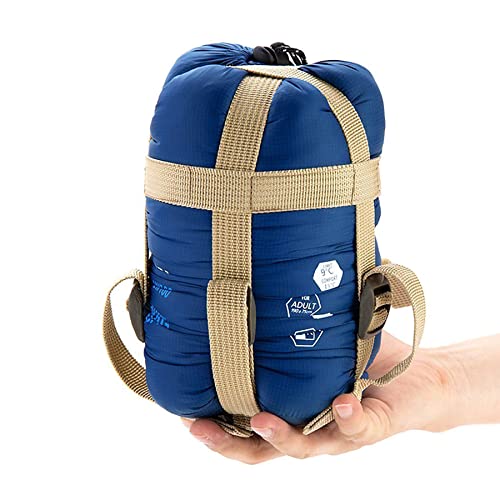
ECOOPRO Warm Weather Sleeping Bag 83x30 inch
This ECOOPRO sleeping bag is a lightweight, waterproof option for warm-weather camping and backpacking. Its envelope design and compact compression sack make it easy to carry, while the nylon outer and polyester lining aim for comfort in temperatures from 55 to 60°F.
Pros
- Lightweight and easy to pack
- Waterproof outer material
- Breathable lining for comfort
- Fits most adults or two kids
- Includes compression sack
Cons
- Limited to warm weather use
- Envelope design may not retain heat as well
BORULL Winter Flannel Sleeping Bag XL 92x35 in.
This oversized sleeping bag from BORULL offers generous space for big and tall adults, with a plush flannel lining and synthetic insulation rated for 32°F to 43°F. Its two-way zipper and adjustable hood add versatility for cold-weather camping.
Pros
- Spacious for side sleepers and tall adults
- Warm flannel lining feels cozy
- Machine washable without fill bunching
- Two-way zipper adds ventilation options
- Packs down relatively compact for its size
Cons
- Heavier than many backpacking bags at 5.73 pounds
- Limited temperature range not suitable for extreme cold
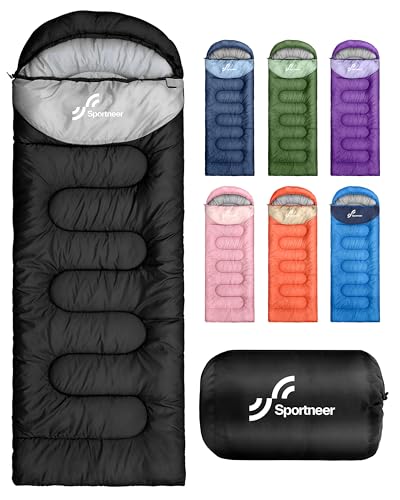
Sportneer 3-4 Season Sleeping Bag
This sleeping bag offers versatility across spring, summer, fall, and mild winter with a comfort range of 50-80°F. The two-way zipper allows foot ventilation, while the adjustable hood helps retain heat. Lightweight and portable with a carry bag, it suits family camping and hiking trips.
Pros
- Versatile for 3-4 seasons
- Two-way zipper for foot freedom
- Adjustable hood keeps head warm
- Lightweight and packs into carry bag
- Generous size fits adults and kids
Cons
- Not suitable for temperatures below 50°F
- Rectangular shape less thermally efficient than mummy bags
PTEROMY 3-Season Sleeping Bag
This PTEROMY sleeping bag is designed for spring, summer, and fall with a comfort temperature range of 50°F to 80°F. It features machine-washable hollowfiber cotton filling, water-resistant and windproof construction, and a compression sack for easy portability. Suitable for adults up to 6-7 feet tall, it's a practical choice for backpacking, camping, and emergency use.
Pros
- Comfort temperature range for 3 seasons
- Machine washable without clumping
- Water resistant and windproof
- Adjustable neck drawstring and inner pocket
- Lightweight at 1.35kg with compression sack
Cons
- Not suitable for winter camping (comfort limit 40°F)
oaskys XXL 4-Season Sleeping Bag
Oaskys’ XXL sleeping bag offers generous space for tall campers and those who toss and turn. With a water-resistant shell and breathable lining, it handles spring through fall conditions down to 41°F. The included compression sack keeps the 4.2-pound bag manageable for backpacking trips.
Pros
- Extra-large 86x39 inch size for roomy comfort
- Water-resistant polyester protects from damp ground
- Breathable lining wicks moisture away
- Two-way zipper allows temperature adjustment
- Packs down with included compression sack
Cons
- Temperature range limited to 41-59°F, not for cold weather
- At 4.2 pounds, relatively heavy for ultralight backpacking
BORULL Double Sleeping Bag Queen Size with Pillows
This queen-size two-person bag from BORULL gives couples and taller sleepers room to spread out in a 92x63 inch footprint that fits adults up to 7 feet. It unzips into a shared picnic blanket or two separate bags, includes two pillows, and packs into a compression sack for car camping and sleepovers.
Pros
- Fits two adults up to 7 feet
- Unzips into blanket or two bags
- Includes 2 pillows and hood
- Anti-snag zippers with draft tubes
- Machine washable with compression sack
Cons
- Heavy at 3.2 kg for backpacking
- 40F comfort rating limits winter use
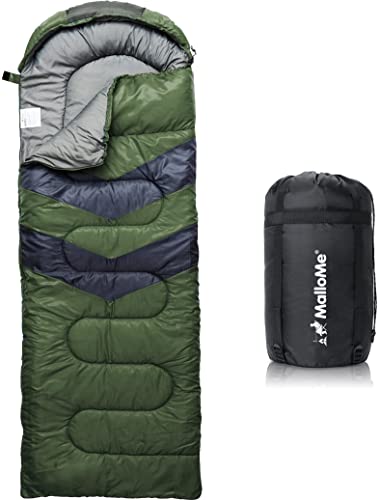
MalloMe Everyday 3 Season Sleeping Bag
For campers who need one bag for three seasons, the MalloMe Everyday 3 Season Sleeping Bag balances weight and warmth. Its waterproof hex-tech shell and snag-free zippers add convenience, and the 3-pound pack weight makes it a solid choice for car camping or moderate hikes.
Pros
- Versatile for three-season use
- Lightweight at 3 pounds for backpacking
- Waterproof outer shell resists moisture
- Snag-free zippers with secure Velcro tab
- Easy to clean, machine washable
Cons
- Lower temperature limit of 50°F not for cold weather
- 3-pound weight is not ultralight for serious backpackers
Best Backpacking Sleeping Bag Buying Guide
Temperature Rating and Seasonality
When selecting a backpacking sleeping bag, the temperature rating is your first consideration. Ratings indicate the lowest temperature at which the bag keeps an average sleeper warm.
For three-season backpacking (spring through fall), a bag rated between 20°F and 30°F usually works well, while winter trips demand a 0°F or colder bag. Keep in mind that ratings are standardized (EN/ISO) but individual comfort varies.
Some manufacturers also provide a “comfort” rating and a “lower limit” rating.
If you camp in a wide range of conditions, consider a bag with a versatile rating or layer with a sleeping bag liner. Check out our sleeping bag liner guide for extended range. For extreme cold, a dedicated 0 degree backpacking sleeping bag is essential.
Weight and Packed Size
For backpacking, every ounce counts. A lightweight sleeping bag (under 2.5 pounds for a three-season model) reduces fatigue and leaves more room for other gear. Packed size also matters, bags that compress well fit easily into a backpack.
Many modern synthetic bags compress nearly as compact as down, but down generally offers the best weight-to-warmth ratio. Lightweight warm sleeping bags provide a balance of insulation and portability.
Pay attention to the included compression sack. A good compression sack can reduce volume significantly. For ultralight systems, consider an ultralight synthetic sleeping bag that packs down small.
Insulation Type: Down vs. Synthetic
The insulation type affects warmth, weight, durability, and price. Down insulation (usually goose or duck) offers the best warmth-to-weight ratio and compresses very well. However, down loses its insulating ability when wet, so it requires careful handling in damp conditions.
Many down bags now come with water-resistant treatments to mitigate this.
Synthetic insulation (such as polyester fibers) is cheaper, maintains some insulation when wet, and dries faster. The trade-offs are heavier weight and larger packed size. For wet climates or budget-conscious backpackers, a synthetic bag is a smart choice.
Browse our lightweight down sleeping bag picks for premium warmth.
Shape and Comfort: Mummy vs. Rectangular
Mummy bags are tapered, hugging the body to reduce dead air space and save weight. They are the standard for backpacking because they maximize warmth per ounce. Many mummy bags offer hoods and draft collars for extra heat retention.
If you sleep on your side, a side sleeper sleeping bag might offer a more accommodating cut.
Rectangular bags provide more room to move but are bulkier and less thermally efficient. Some backpackers prefer them for warm weather or car camping. For a roomy option, check out non mummy sleeping bags.
The choice ultimately depends on your sleeping style and priority between weight and space.
Additional Features: Water Resistance, Draft Collars, and More
Look for features that enhance comfort and durability. A water-resistant shell (often DWR-coated) helps fend off condensation and light rain. Draft collars around the neck seal in warmth, and zipper draft tubes prevent heat loss through the zipper.
Some bags come with a pillow pocket or interior stash pocket. A stuff sack is often included, but upgrading to a more durable one can extend the life of your bag.
For emergency preparedness, an emergency sleeping bag is a lightweight backup.
Why You Should Trust Us
At BestProducts, we evaluate each sleeping bag using a consistent methodology. We assign a BP Score (0, 10) based on comprehensive research drawing from product specifications, expert review consensus, verified buyer feedback, and published performance data.
We do not conduct our own product trials; our evaluations are grounded in research, published data, expert review consensus, and verified buyer feedback. This approach ensures that our recommendations are unbiased and data-driven.
Our team continuously monitors the market and updates our scores as new products emerge and prices shift. We take no money from manufacturers for placement in our rankings, and we clearly label affiliate links.
For more on our process, visit our outdoor gear category or see our camping sleeping bag resources.
Final Thoughts
After analyzing the top contenders, here are our picks for the best backpacking sleeping bags this season.
Best Overall: MalloMe Sleeping Bags for Adults earns the top spot with a near-perfect BP Score, balancing warmth, weight, and price. Its synthetic insulation handles variable conditions, and the compression sack makes it backpack-friendly.
Best Budget Pick: ECOOPRO Warm Weather Sleeping Bag delivers surprising quality for a budget-friendly price, earning a 9.8/10 BP Score. Lightweight and waterproof, it’s ideal for warm-weather trips.
Best for Cold Weather: BORULL Winter Flannel Sleeping Bag provides excellent insulation for cold nights, with a cozy flannel lining that adds comfort. Its BP Score of 8.9 reflects its performance in frigid conditions.
Best for Couples: BORULL Double Sleeping Bag offers ample space for two backpackers, with two pillows included. Despite its larger size, the BP Score of 8.1 shows it holds its own.
Best Lightweight: PTEROMY Sleeping Bag is machine-washable and water-resistant, tipping the scales as a lightweight option for minimalist hikers.
Frequently Asked Questions
How do I choose the right temperature rating for my backpacking trip?
Consider the coldest conditions you expect to encounter. For three-season backpacking, a 20°F to 30°F bag works for most. If you camp in the shoulder seasons, a 15°F bag offers extra margin.
Always check the EN/ISO comfort rating, which reflects the temperature at which a cold sleeper remains comfortable. A quilt sleeping bag can also be a versatile alternative if you sleep warm.
How important is pack size when backpacking?
Pack size is critical because it dictates how much spare volume you have for food, water, and gear. A compressible sleeping bag (either down or well-engineered synthetic) allows you to use a smaller pack.
Check the packed dimensions and use a compression sleeping bag if you need to save space.
What is the difference between down and synthetic insulation?
Down offers superior warmth per gram and compressibility but loses insulating value when wet. Synthetic insulation retains warmth even when damp, dries faster, and is generally less expensive.
For humid or wet environments, synthetic is often the better choice. 0 degree synthetic sleeping bags are examples of high-performance synthetic options.
Can I use a rectangular sleeping bag for backpacking?
You can, but rectangular bags are heavier and less efficient. They work well for car camping or warm-weather trips where the extra room isn’t a burden. For serious backpacking, a mummy or semi-rectangular shape is better for weight and warmth.
Consider a compact sleeping bag specifically designed for trail use.
How do I clean and maintain a backpacking sleeping bag?
Most bags can be machine-washed on a gentle cycle with mild detergent, then dried on low heat with tennis balls to restore loft. Always check the manufacturer’s tag. Store the bag loosely (not compressed) to preserve insulation longevity.
For extra protection, use a silk sleeping bag liner to keep the bag clean.
Are double sleeping bags good for backpacking?
Double sleeping bags are heavy and bulky, but they can work for couples on short, minimal-gear trips. Their main advantage is shared warmth and convenience. For longer hikes, two separate lighter bags are usually better.
Our picks include a survival sleeping bag for emergencies that weigh much less.
About the author
Catherine writes about tents and sleeping bags for BestProducts, weighing weather protection, packed weight, and honest temperature ratings. She helps campers stay dry and warm from the backyard to the backcountry.