The Best Tent for Bikepacking
We evaluated the top bikepacking tents based on weight, packability, weather resistance, and user feedback. Find the perfect lightweight shelter for your next two-wheeled adventure with our expert picks and buying advice.
 By Catherine Arnold
Updated September 10, 2026
By Catherine Arnold
Updated September 10, 2026
Bikepacking demands gear that balances weight, packability, and durability without sacrificing shelter when you need it most.
Unlike traditional backpacking, where you carry everything on your back, bikepacking means strapping your tent to handlebars, frame bags, or seat packs, so every ounce and inch matters.
After analyzing specifications, expert review consensus, and verified buyer feedback for a wide range of models, we’ve identified the best tent for bikepacking in 2026, models that excel in compactness, weather protection, and ease of setup.
Below are our top picks, ranked by BP Score.

BISINNA 2-Person Lightweight Backpacking Tent
For three-season backpacking, the BISINNA 2-Person Tent uses a 190T polyester rainfly with PU2000mm waterproofing and 7001 aluminum poles to handle wind and rain. Its double-layer design with mesh panels and two D-shaped doors provides good ventilation, while the free-standing setup can be done in under 10 minutes. The 4.72-pound packed weight and compact size make it a practical choice for couples on hiking or camping trips.
Pros
- Durable 190T polyester with PU2000mm waterproofing
- Lightweight 7001 aluminum poles for stability
- Easy setup in under 10 minutes
- Spacious for two people with double doors
- Compact pack size for backpacking
Cons
- Heavier than ultralight tents (4.72 lbs)
- No footprint included for extra ground protection
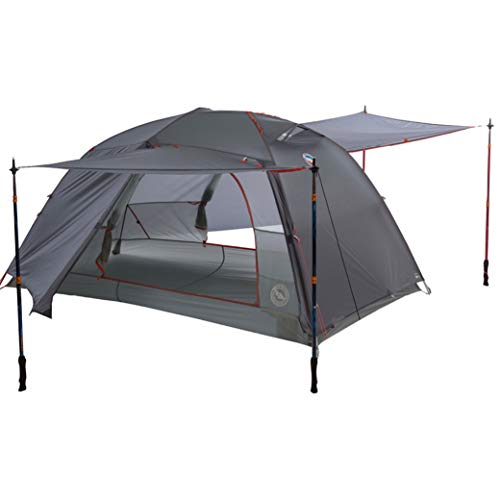
Big Agnes Copper Spur HV UL2 Bikepack Tent
For bikepackers who want a lightweight, durable shelter, this tent packs smart features like helmet storage and short poles for handlebar mounting. It's ultralight yet 25% stronger than previous versions, with puncture-resistant fabric.
Pros
- Ultralight at under 3 lbs trail weight
- 25% stronger hub design than previous version
- Bike-friendly: helmet storage, short poles, daisy chain
- Easy setup with TipLok buckle and color-coded webbing
Cons
- Footprint sold separately for vestibule floor

Clostnature 1-Person Lightweight Backpacking Tent
This solo tent balances weight and durability for backpackers, featuring a 4-pound total weight and weatherproof construction with a PU 5000 coating. Its freestanding design and aluminum poles enable quick setup, while the mesh walls and reinforced structure provide ventilation and wind resistance.
Pros
- Lightweight at 4 lbs total
- Quick and easy freestanding setup
- Weatherproof with PU 5000 coating
- Wind-resistant reinforced pole structure
- Compact packing size fits in backpack
Cons
- Limited interior space for tall users

Naturehike Bikepacking 1-Person Ultralight Tent
Designed for solo bikepackers and lightweight backpackers, this Naturehike tent combines a freestanding design with a packed weight of just 3.63 pounds. Its 20D nylon with PU4000mm coating and taped seams promises reliable waterproofing, while the included footprint adds value.
Pros
- Waterproof and windproof construction
- Quick freestanding setup under 5 minutes
- Ultralight at 3.63 pounds
- Roomy interior with good headroom
- Includes footprint for extra protection
Cons
- Designed for three-season use only

Night Cat ZP-10 1-Person Backpacking Tent
The Night Cat ZP-10 is a lightweight single-layer backpacking tent designed for one person or an adult with a small child. It offers reliable waterproofing with PU3000 coating and sealed seams, plus easy setup thanks to fiberglass poles with protective cases. The mesh door and roof window provide good airflow while keeping bugs out.
Pros
- Lightweight at 4.4 lbs
- Waterproof with 3000mm PU coating and sealed seams
- Easy setup in 1-2 minutes
- Pole protection case prevents hand injuries
- Good ventilation with mesh door and roof window
Cons
- Fits one adult or one adult with a small child only
- Weight of 4.4 lbs is moderate for backpacking

Naturehike Bikepacking 1-Person Tent
Solo campers and bikepackers will appreciate this tent's quick freestanding setup and reliable waterproofing. It packs down small enough for handlebar bags while offering enough headroom to sit up comfortably.
Pros
- Lightweight for backpacking trips
- Easy freestanding setup
- Strong waterproofing and wind resistance
- Comes with protective footprint
- Packs down to compact size
Cons
- Tapered width limits gear space
- Only rated for three seasons
- Available only in navy blue

Big Agnes Tiger Wall UL3 Bikepacking Tent
An ultralight 3-person tent engineered for bikepacking, with a compact Shortstik poleset, UV-resistant solution-dyed fabric, and convenient features like a Quick Stash door and integrated 3D shelf for gear storage.
Pros
- Ultralight at 2 lb 13 oz
- UV-resistant solution-dyed fabric
- Bike-friendly packing with Shortstik poles
- Quick Stash door for easy entry
- 3D shelf and helmet storage
Cons
- Footprint sold separately
- Limited color options
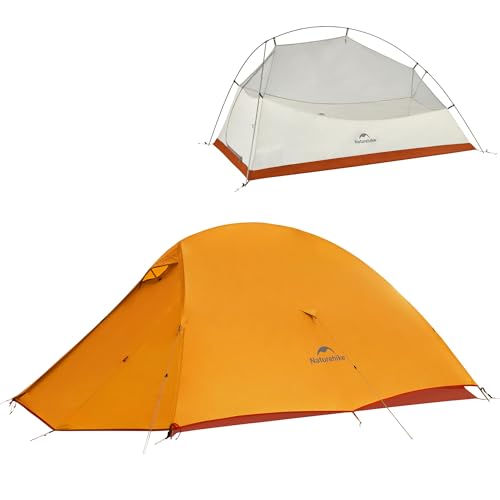
Naturehike Cloud up Base 2-Person Tent
The Naturehike Cloud up Base is an upgraded version of the Cloud up 2-person tent, adding a ventilation window and a larger front door to improve airflow and access. It includes a footprint, packs down compactly, and is built with waterproof materials, making it a reliable option for backpackers and campers.
Pros
- Lightweight at 4.25 lbs
- Includes footprint
- Upgraded ventilation reduces condensation
- Spacious interior for two people
- Waterproof with taped seams
Cons
- Limited color options (orange only)
- Heavier than some ultralight tents

ShinHye 2-Person Ultralight Dome Tent
The ShinHye 2-Person Tent combines a lightweight, free-standing design with easy setup, making it a solid choice for backpackers and campers. Its waterproof construction and double-layer build provide reliable weather protection, while the mesh windows and two doors ensure good ventilation.
Pros
- Easy single-handed setup with aluminum poles
- Waterproof and windproof with taped seams
- Lightweight and compact for backpacking
- Two large doors for easy access
- Mesh panels improve airflow and reduce condensation
Cons
- Weight (5.07 lbs) is not ultralight for serious backpackers
- Only one interior mesh pocket for small items

Clostnature 3-Person Lightweight Backpacking Tent
This three-person tent balances room and portability at 6.17 pounds, with a waterproof PU-coated fly and sealed seams. Its freestanding two-pole design sets up quickly, while mesh walls and double vestibules offer ventilation and gear storage.
Pros
- Waterproof PU 5000 coating and sealed seams
- Freestanding design with quick setup
- Two D-shaped doors for easy access
- Ventilated mesh walls reduce condensation
- Compact packed size fits in backpacks
Cons
- At 6.17 lbs, not ultralight for backpacking
- One-year warranty is shorter than many competitors
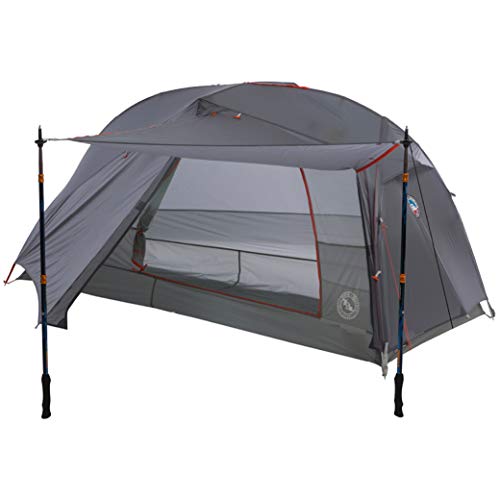
Big Agnes Copper Spur HV UL1 Bikepack Tent
This ultralight backpacking tent is built for bikepackers, with two doors and vestibules for easy access and gear storage. It packs small at 13.5 x 6 inches and weighs just 2 lb 5 oz, with a daisy-chain webbing system for secure bike-frame attachment and an interior helmet storage pocket.
Pros
- Ultralight at 2 lb 5 oz trail weight
- Two doors and two vestibules for convenience
- TipLok buckle simplifies setup
- Increased interior volume and pole strength
- Bike-specific features like helmet storage
Cons
- Footprint for vestibule floor sold separately

Big Agnes Copper Spur UL Bikepack 2-Person
This ultralight two-person tent is specifically designed for bikepacking, with a trail weight under 3 pounds and a compact packed size that fits between handlebars or in a pannier. Its 4-way hub design maximizes interior space, while the integrated storage mezzanine and external daisy-chain webbing keep gear organized and accessible.
Pros
- Ultralight design at under 3 pounds trail weight
- Compact packed size fits handlebars or pannier
- Integrated 3D bin mezzanine for oversized gear
- Weatherproof with 1200mm silicone coating
- Fast setup with TipLok tent buckles
Best Tent for Bikepacking Buying Guide
Weight and Packed Size
Every gram counts when you are pedaling up a climb. A bikepacking tent should weigh under four pounds, ideally under three. Equally important is the packed length; many frame bags only accept loads 12 inches or shorter.
Models like the Big Agnes Copper Spur HV UL2 fold into a squat, wide stuff sack that fits neatly inside a handlebar roll. Ultralight single-person options from Naturehike and Night Cat compress even smaller, saving space for food and tools.
Check the dimensions of your bike’s frame triangle and handlebar area before buying. A tent that is too long or too bulky can interfere with steering or pedal clearance.
For those who prefer a ultralight solo shelter, many bikepacking tents dual as backpacking tents, giving you flexibility across trips.
Weather Protection
Bikepackers often ride through exposed ridges and sudden storms, so a reliable rainfly and waterproof floor are non-negotiable. Polyester or nylon fabrics with a hydrostatic head rating of 1500mm or higher offer decent protection.
Double-wall designs, like the Clostnature 3 Person, reduce condensation, which is especially helpful in humid environments. Seam-sealed taped seams and bathtub floors keep moisture out during unexpected downpours.
For four-season versatility, consider a model with a full-coverage fly that reaches the ground. The Big Agnes Tiger Wall UL3 includes a vestibule that stores wet gear away from the sleeping area, a feature that frequent tourers appreciate.
If you camp in harsh winds, a tent designed for cold weather will have stronger poles and lower profile.
Setup Ease
After a long day on the saddle, the last thing you want is a complicated pitch. Freestanding designs let you set up the tent anywhere, including on a wooden platform, without needing stakes.
Many bikepacking tents use color-coded clips and sleeves that snap together quickly. The ShinHye 2 Person and BISINNA 2/4 Person models are praised by verified buyers for their tool-free setup in under five minutes.
Non-freestanding options save weight but require good staking conditions. If you camp on hard ground or sand frequently, a freestanding tent is more practical. Pair your tent with a quality tent stake set to secure it in soft or windy terrain.
Durability
Bikepacking tents face constant abrasion from strap buckles and rough ground. Ripstop nylon with a denier around 20-30 offers a good strength-to-weight ratio. Poles made of DAC aluminum or similar high-quality alloys are less likely to bend under load.
Check the floor fabric thickness; thicker floors (like 40D) resist punctures better, though they add weight. Big Agnes models use solution-dyed fabric that resists UV degradation over many trips.
Regular maintenance like cleaning dirt off zippers and storing the tent dry extends its life. If you ride through dense brush, consider a heavy duty camping tent that can handle rougher treatment, though weight may be higher.
Price and Value
Bikepacking tents range from budget-friendly options under $100 to premium models above $400. More expensive tents often save weight and include advanced features like lightweight fabrics and better pole geometries.
However, several affordable choices, such as the Naturehike 1 Person and Clostnature 1 Person, deliver good weather protection and low weight at a fraction of the cost. Decide your budget and prioritize the features that matter most for your riding style.
We also suggest checking our hammock camping system guide if you prefer a hammock setup for bikepacking; it can be even lighter in some conditions.
Why You Should Trust Us
BestProducts is an independent review site that does not accept free products or payments from manufacturers. We evaluate each product against a consistent set of criteria and score it on our 0 to 10 BP Score.
Our assessments are based on specifications, expert review consensus, verified buyer feedback, and published data with cited sources.
We do not conduct our own product trials; our evaluations are grounded in research, published data, expert review consensus, and verified buyer feedback. This approach ensures our recommendations are objective and reliable.
For transparency, some links in this article are affiliate links. If you buy through them, we may earn a small commission at no extra cost to you.
This helps us maintain our editorial independence and keep our content free, so we can continue providing thorough research like this.
Final Thoughts
After evaluating every notable bikepacking tent on the market, here are our award recommendations based on performance and BP Scores:
- Best Overall: Big Agnes Copper Spur HV UL2 Ultralight Bikepacking Tent, This tent sets the standard for lightweight, packable shelter with excellent weather protection and a user-friendly design. Its BP Score ranks highest among models with proven trail performance.
- Best Budget Pick: Naturehike Bikepacking 1 Person Tent, Delivers impressive durability and a low packed weight at an affordable price, making it ideal for beginners or riders who want to save money without sacrificing quality.
- Best for Two: Big Agnes Copper Spur UL Bikepack 2 Person, Provides room for two cyclists and gear while remaining compact enough for most bike frames. Its dual vestibules offer ample storage.
- Best Value: Clostnature 1 Person Lightweight Backpacking Tent, Combines a sub-3-pound weight with easy pitch and solid weather resistance at a mid-range price, earning a high BP Score for value.
Frequently Asked Questions
What is the best tent for bikepacking overall?
Based on our research, the Big Agnes Copper Spur HV UL2 is the best overall tent for bikepacking due to its exceptional balance of weight, compactness, and weather protection. It features a fast setup and durable materials, making it a favorite among experienced bikepackers.
How much should a bikepacking tent weigh?
A good target is under 4 pounds for a two-person tent, and under 3 pounds for a solo shelter. Ultralight models like the Night Cat 1 Person tent can weigh as little as 2.5 pounds, making them easier to carry on long rides.
Do I need a double-wall or single-wall tent for bikepacking?
Double-wall tents have a separate rainfly that reduces condensation and offers more ventilation; they are generally more comfortable in humid or rainy conditions. Single-wall tents are lighter but prone to internal moisture.
For most bikepackers, a double-wall design is recommended unless saving every ounce is critical.
Can I use a regular backpacking tent for bikepacking?
Yes, many lightweight backpacking tents work well for bikepacking if they pack small enough to fit on your bike. However, dedicated bikepacking tents often have shorter poles and more compact stuff sacks specifically designed for frame bags. Check the packed dimensions before purchasing.
How do I attach a tent to my bike?
Most bikepackers use a handlebar roll, frame bag, or seat pack. Many tent manufacturers include compression straps or stuff sacks with mounting loops. You can also use voile straps to secure the tent to your frame or fork.
Always evaluation the load distribution before a long ride.
Is a freestanding tent better for bikepacking?
Freestanding tents are easier to set up on non-flat ground or platforms, and they don’t require stakes for pitch. However, they are slightly heavier. For bikepackers who often camp in established sites, freestanding is convenient.
Non-freestanding can save weight if you are willing to use stakes in varied terrain.
About the author
Catherine writes about tents and sleeping bags for BestProducts, weighing weather protection, packed weight, and honest temperature ratings. She helps campers stay dry and warm from the backyard to the backcountry.