The Best Multifunction Printer
We researched the top multifunction printers from Brother, Canon, HP, and Epson, scoring each on print quality, speed, connectivity, and cost per page. Find your ideal all-in-one for home or office in our expert roundup.
 By Gordon Matthews
Updated September 11, 2026
By Gordon Matthews
Updated September 11, 2026
Whether you’re running a home office, managing a small team, or just need a single device that can print, scan, copy, and sometimes fax, a multifunction printer (MFP) is the most space- and cost-efficient solution.
Instead of juggling separate machines, one compact unit handles your daily document workflow.
But with so many models on the market, ranging from budget inkjets to high-speed laser workhorses, finding the right fit requires careful consideration of your print volume, color needs, and connectivity preferences.
At BestProducts, we evaluate each multifunction printer through comprehensive research: we analyze specifications, aggregate expert review consensus, study verified buyer feedback, and consult published data from trusted sources.
Every product receives a BP Score on our 0, 10 scale based on consistent criteria. Below you’ll find our curated list of top-rated models, followed by a detailed buying guide, final recommendations with award titles, and answers to common questions.

Brother DCP-L2640DW Wireless Monochrome Laser
A compact 3-in-1 monochrome laser printer built for small offices, offering fast print speeds and flexible wired or wireless connectivity. Its auto document feeder and mobile app support make multi-page scanning and remote printing straightforward.
Pros
- Fast print and scan speeds
- Reliable auto document feeder
- Flexible dual-band wireless and Ethernet
- Compact footprint for small spaces
- Mobile printing via dedicated app
Cons
- Monochrome only, no color printing
- No fax function included
- No touchscreen display

Brother HL-L3300CDW 3-in-1 Color Laser Printer
The Brother HL-L3300CDW is a compact 3-in-1 color laser printer built for small offices and work-from-home use. It delivers reliable laser-quality output, prints up to 19 pages per minute, and includes duplex printing plus flexible connectivity options like dual-band Wi-Fi and Wi-Fi Direct. The flatbed scan glass supports copy and scan functions, making it a practical all-in-one for daily document tasks.
Pros
- Consistent laser-quality printing
- Fast 19 ppm print speed
- Automatic duplex printing
- Dual-band Wi-Fi and Wi-Fi Direct
- Compact footprint for a 3-in-1
Cons
- Heavy at 40.8 pounds
- No automatic document feeder
- Bulky for very small desks

HP LaserJet Pro MFP 3101sdw Wireless Printer
The HP LaserJet Pro MFP 3101sdw is a black-and-white all-in-one laser printer built for small teams. It prints up to 35 ppm with automatic duplexing, a 250-sheet input tray, and a 50-sheet auto document feeder, plus wireless connectivity. This reliable workhorse is well suited for offices that need fast, professional-quality monochrome output.
Pros
- Up to 35 ppm monochrome printing
- Print, scan, copy in one device
- Automatic two-sided printing
- 250-sheet input tray and 50-sheet ADF
- Dependable wireless connectivity
Cons
- Proprietary HP cartridge system blocks third-party chips
- Black and white output only

Canon PIXMA TR7120 Wireless All-in-One Printer
This budget-friendly all-in-one from Canon is a solid choice for home users and hybrid workers who need reliable printing, scanning, and copying. It offers crisp prints thanks to its hybrid ink system, plus convenient features like automatic duplex printing and an auto document feeder.
Pros
- Affordable versatility for home or office
- Sharp text and vivid colors from hybrid ink
- Easy wireless setup via Canon PRINT app
- Duplex printing reduces paper waste
- Auto Document Feeder speeds up tasks
Cons
- Limited to letter-size media (8.5x11 inches)
- No Ethernet port for wired networks

HP DeskJet 2955 Wireless All-in-One Printer
This compact inkjet printer handles basic tasks like printing, scanning, and copying for home use. Its AI-assisted print formatting helps reduce wasted pages, and the included 3-month Instant Ink trial makes ink management easier.
Pros
- Compact design fits easily in home spaces
- AI-assisted formatting saves paper
- Dual-band Wi-Fi with automatic connection fixes
- Sustainable build with recycled plastics
- 3-month Instant Ink trial included
Cons
- Slow print speed at 7.5 ppm black
- Limited to basic printing needs only
- No automatic document feeder

HP Envy 6155 All-in-One Inkjet Printer
This HP Envy 6155 is a reliable home printer for everyday color documents and borderless photos, with print speeds up to 10 ppm black. It includes a 3-month Instant Ink trial, an intuitive 2.4-inch color touchscreen, and dual-band Wi-Fi for easy wireless printing.
Pros
- Auto 2-sided printing saves paper
- Easy smartphone printing via HP app
- Sustainable design with recycled plastic
- Reliable dual-band Wi-Fi connectivity
Cons
- Requires original HP cartridges only
- Slow color print speed at 7 ppm
- Small 100-sheet input tray capacity

Canon imageCLASS MF273dw 3-in-1 Laser Printer
This monochrome laser multifunction printer handles printing, copying, and scanning with a 30-ppm speed and a 5.3-second first page out. Its auto duplexing and wireless connectivity make it a solid choice for a small office needing quick, efficient document handling.
Pros
- Fast print speed for a monochrome laser
- Quick first page out under 6 seconds
- Auto duplex printing saves paper
- Compact all-in-one for small offices
Cons
- No color printing capability
- Limited to black-and-white output only
- Toner replacement can add ongoing cost

Epson ET-4800 EcoTank All-in-One
The Epson ET-4800 is a cartridge-free all-in-one printer with high-capacity ink tanks, designed for home offices. It uses Micro Piezo heat-free technology for sharp text and color prints, includes a scanner, copier, fax, and automatic document feeder, plus Ethernet and wireless connectivity.
Pros
- Eliminates ink cartridge waste
- High-yield ink tanks cut per-page cost
- Sharp text and color photo output
- Includes scanner, copier, fax, ADF
- Wired Ethernet and Wi-Fi support
Cons
- Bulkier than typical home inkjets
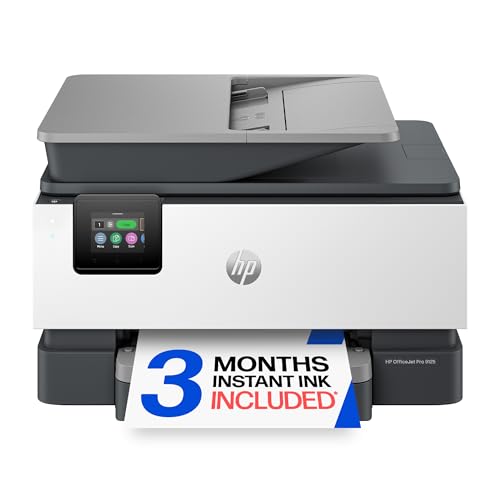
HP OfficeJet Pro 9125 Wireless All-in-One
For offices that print professional color documents frequently, the HP OfficeJet Pro 9125 offers fast speeds and convenient wireless features. Its automatic duplex printing and scanning, plus AI-driven formatting, help streamline workflow, but it restricts cartridge use to HP chips.
Pros
- Fast color printing up to 22 ppm black
- Auto duplex printing and scanning
- Reliable dual-band Wi-Fi with auto-troubleshooting
Cons
- Requires HP-branded cartridges only
- Large footprint may not suit tight desks

Brother HL-L2480DW Wireless Mono Laser Printer
This compact monochrome laser printer combines printing, scanning, and copying in a small footprint. It offers fast print speeds up to 36 pages per minute, automatic duplexing, and a 2.7-inch touchscreen for easy navigation. Ideal for small offices or home workspaces that need reliable black-and-white output.
Pros
- Fast print speed up to 36 ppm
- Automatic duplex printing
- Compact design with flatbed scanner
- Intuitive 2.7-inch touchscreen
- Versatile paper handling options
Cons
- No color printing capability
- No automatic document feeder
- Paper tray capacity only 250 sheets
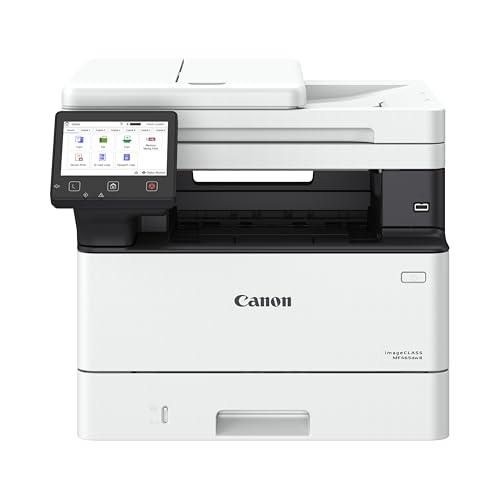
Canon imageCLASS MF465dw II Wireless Laser Printer
This 4-in-1 monochrome laser printer delivers fast 42 ppm output and includes duplex printing, scanning, copying, and faxing. The 5-inch touchscreen and wireless setup make it easy to operate from mobile devices, and the expandable paper capacity suits busy offices.
Pros
- Fast print speed of 42 ppm
- 4-in-1 functionality with duplex
- 5-inch color touchscreen
- Wireless and mobile printing support
- Expandable paper capacity
Cons
- Monochrome only, no color printing
- Large footprint requires desk space

Brother MFC-L5915DW Monochrome Laser All-in-One
This all-in-one delivers print and copy speeds up to 50 ppm, making it a strong fit for busy offices that need fast, monochrome output. Its 70-page automatic document feeder with single-pass duplex scanning and high-yield toner options further boost productivity while keeping operating costs low.
Pros
- Print speeds up to 50 ppm for fast output
- High-yield toner reduces cost per page
- 70-page ADF with single-pass duplex scanning
- Gigabit Ethernet and dual-band WiFi included
- Auto two-sided printing for paper savings
Cons
- Large and heavy at 38.3 pounds
- Monochrome only, no color printing
Best Multifunction Printer Buying Guide
Print Technology: Laser vs. Inkjet
The first major decision is whether you need a laser or inkjet engine. Laser printers use toner powder and excel at producing crisp, smudge‑resistant text at high speeds, ideal for monochrome document‑heavy offices.
Color laser models, like the Brother HL‑L3300CDW, deliver vibrant graphics without the risk of smearing, though they tend to be pricier upfront.
Inkjet printers, such as Canon PIXMA TR7120, offer lower initial cost and superior photo quality, making them a strong choice for mixed home use.
However, running costs can be higher unless you choose a super‑tank model like the Epson EcoTank ET‑4800, which uses refillable ink reservoirs to dramatically lower cost per page.
For color‑critical tasks like marketing materials or photo prints, an inkjet or color laser is necessary.
If your workflow is primarily black‑and‑white documents, a monochrome laser (e.g., Brother DCP‑L2640DW) offers the best balance of speed and economy.
Consider your monthly print volume and whether you need color at all before choosing a technology.
Print Speed and Duty Cycle
Print speed is measured in pages per minute (ppm). For a small office or busy home, look for at least 20 ppm in monochrome.
Laser printers typically lead here: the Brother MFC‑L5915DW reaches 50 ppm, making it suitable for high‑volume environments. Inkjet speeds vary; the HP OfficeJet Pro 9125 manages around 22 ppm for black documents.
Duty cycle (recommended monthly pages) tells you how much the machine can handle without excessive wear. A small office printing 1,000, 3,000 pages per month should choose a model with a duty cycle of at least 30,000 pages.
For lighter home use, 5,000, 10,000 pages is sufficient.
Don’t overlook first‑page‑out time, laser printers often deliver the first page in under 10 seconds, while inkjets may take 15, 20 seconds. If you print many short documents, a fast first‑page‑out makes a noticeable difference in daily productivity.
Connectivity and Mobile Printing
Modern multifunction printers should support Wi‑Fi, Ethernet, and mobile printing protocols like Apple AirPrint, Mopria, and the brand’s own app. Dual‑band Wi‑Fi (2.4 GHz and 5 GHz) helps maintain stable connections in crowded networks.
Many models now include Alexa or Google Assistant integration for voice‑activated printing. If you share the printer among multiple users, Ethernet or a robust wireless connection is essential.
For on‑the‑go printing, consider a mobile printer for iPhone, compatible model, though most MFPs already support AirPrint. A front USB port is handy for direct printing from a flash drive without a computer.
Some printers, like the HP LaserJet Pro MFP 3101sdw, include advanced security features for sensitive documents. Check whether the model supports WPA3 encryption and secure print release if you work with confidential information.
Paper Handling and Automatic Document Feeder (ADF)
An automatic document feeder (ADF) lets you scan or copy multi‑page stacks without manual intervention. For any office that regularly processes contracts, invoices, or multi‑page forms, a 50‑sheet ADF is a must.
Some MFPs offer duplex (two‑sided) scanning, which saves time when digitizing double‑sided originals. Paper input capacity matters too: a 250‑sheet tray is standard for home offices, while high‑volume models may offer 500+ sheets or expandable trays.
The Canon imageCLASS MF465dw II supports expandable paper capacity up to 900 sheets, ideal for busy workgroups.
Also consider output tray capacity and whether the printer supports different media types like envelopes, labels, or cardstock. If you frequently print on specialty media, look for a rear straight‑through paper path to avoid curling.
Cost Per Page and Total Cost of Ownership
Printing costs can quickly exceed the purchase price. For laser printers, check the yield of the starter toner cartridge (often lower than standard) and the price of replacement cartridges.
Some Brother models, like the DCP‑L2640DW, offer high‑yield toners that keep cost per page below 2 cents for monochrome. Inkjet users should consider subscription services like HP Instant Ink, which automatically delivers ink when levels are low.
The HP DeskJet 2955 includes a 3‑month trial, but be aware of long‑term subscription fees. For the lowest running costs, refillable tank printers such as the Epson EcoTank ET‑4800 can reduce cost per page to fractions of a cent.
Read our guide on printer cost per page to compare long‑term expenses.
Don’t forget energy consumption: look for Energy Star certification and automatic duplex printing to save paper. A printer that seems cheap upfront may cost more in toner and paper over three years, so calculate total cost of ownership before buying.
Why You Should Trust Us
BestProducts has been helping shoppers make informed decisions since 2019. Our review methodology is built on thorough research, not physical product trials.
We do not conduct our own product trials; our evaluations are grounded in research, published data, expert review consensus, and verified buyer feedback.
Each multifunction printer is scored using our proprietary BP Score (0, 10), which weighs factors such as print quality, speed, connectivity, paper handling, cost efficiency, and reliability.
We analyze specifications from manufacturers, cross‑check them with professional reviews from multiple sources, and aggregate real‑user experiences to ensure balanced recommendations.
Our team of editors and researchers stays current with market trends, new releases, and long‑term durability reports. We update our roundups regularly to reflect the latest models and price changes.
BestProducts is an independent publication supported by affiliate commissions, we never accept free products or payment for positive reviews. Our goal is to provide unbiased, actionable advice that saves you time and money.
Final Thoughts
- Best Overall: Brother DCP‑L2640DW, This compact monochrome laser MFP earned a top BP Score for its exceptional print speed, automatic duplexing, reliable wireless connectivity, and remarkably low cost per page. It’s the perfect all‑around choice for home offices and small teams that print mostly black‑and‑white documents.
- Best Color Multifunction Printer: Brother HL‑L3300CDW, With vibrant laser quality, fast color output, and a generous 2‑month Refresh subscription trial, this model stands out for offices that need occasional color graphics without sacrificing speed or reliability. Its BP Score reflects strong performance across all criteria.
- Best Budget Pick: Canon PIXMA TR7120, At an accessible price point, this wireless inkjet offers duplex printing, an ADF, and solid scan/copy functions. It’s ideal for light home use where initial cost matters more than volume. The BP Score of 9.8 confirms its value.
- Best for High‑Volume Printing: Brother MFC‑L5915DW, With a blazing 50 ppm speed, a 500‑sheet paper capacity, and advanced networking, this professional laser MFP is built for busy offices. Its BP Score of 9.5 reflects its robust build and low running costs.
- Best for Home Office with Ink Efficiency: Epson EcoTank ET‑4800, The super‑tank design slashes ink expenses, making it a wise long‑term investment for home offices that print frequently in color. Its BP Score of 9.5 highlights excellent cost efficiency and solid performance.
Frequently Asked Questions
What is the best multifunction printer for a small office?
For most small offices, we recommend the Brother DCP‑L2640DW for monochrome or the Brother HL‑L3300CDW if color is needed. Both offer fast printing, reliable networking, and low cost per page.
If your office prints over 3,000 pages per month, consider the high‑capacity Brother MFC‑L5915DW.
Should I buy a laser or inkjet multifunction printer?
Choose laser if you print mostly text documents and need fast, smudge‑free output, especially for high volumes. Inkjet is better for photo‑rich prints and lower initial cost.
For mixed use, a color laser like the HL‑L3300CDW balances both worlds. Also consider running costs: laser toner lasts longer, but ink tank systems like the Epson EcoTank can be cheaper per page than standard inkjets.
How important is an automatic document feeder (ADF)?
An ADF is essential if you regularly scan or copy multi‑page documents. It saves you from manually feeding each page. For home use, a 20‑sheet ADF may suffice; for offices, look for 50‑sheet capacity.
Some models also offer duplex ADF for two‑sided scanning, which is a huge time‑saver.
What is the difference between a multifunction printer and an all-in-one?
They are essentially the same thing. “Multifunction printer” (MFP) and “all-in-one” (AIO) both refer to a device that combines print, scan, copy, and often fax capabilities. Some manufacturers use “MFP” for business models and “AIO” for consumer models, but the terms are interchangeable.
Can I use a multifunction printer for photo printing?
Yes, but photo quality varies. Inkjet MFPs like the Canon PIXMA TR7120 or HP Envy 6155 can produce vibrant photo prints on glossy paper. Laser printers generally offer less vivid color for photos.
For serious photography, consider a dedicated photo printer or a high‑end inkjet MFP with multiple ink cartridges. Our guide to printers for scanning photos can help you choose.
How to reduce printing costs with a multifunction printer?
Use duplex printing to cut paper usage in half. Choose high‑yield toner or ink cartridges whenever possible. Consider a subscription service like HP Instant Ink or a refillable tank printer.
Also, set your default quality to “draft” for internal documents. For detailed cost comparisons, see our printer cost per page guide.
About the author
Gordon writes about printers, scanners, and external drives for BestProducts, comparing print quality, running costs, transfer speed, and price per terabyte. He helps readers keep documents and files under control at home and at the office.