The Best Metal Cutting Circular Saw
We researched top metal cutting circular saws from DEWALT, Evolution, Milwaukee, and more. Our picks include corded and cordless models with high BP Scores for power, safety, and value.
 By Michelle Mendoza
Updated September 10, 2026
By Michelle Mendoza
Updated September 10, 2026
Whether you’re a professional fabricator, a metal roofing contractor, or a dedicated DIY enthusiast, cutting through steel, aluminum, or stainless steel demands a tool that can handle the heat, literally.
A standard wood-cutting circular saw will burn through blades and create hazardous sparks when used on metal.
A dedicated metal cutting circular saw, on the other hand, uses a specially designed tooth geometry and lower RPM to shear through material cleanly, cool, and without burrs.
In this guide, we’ve researched the top models on the market, from industrial-grade corded behemoths to versatile cordless options, to help you find the perfect saw for your workshop or job site.
Our recommendations are based on thorough analysis of specifications, expert consensus, verified buyer feedback, and published performance data.
We evaluated offerings from leading brands such as DEWALT, Evolution, Milwaukee, SKIL, and SEESII, scoring each on a 0, 10 BP Score using consistent criteria like cutting capacity, motor power, ergonomics, safety features, and overall value.
Below you’ll find our top picks, followed by an in-depth buying guide that explains what to look for when choosing a metal cutting circular saw.
| Award | Product | BP Score About BP ScoreThe BP Score is our own rating from 0 to 10, based on performance, design and build, ease of use, and value. It reflects independent research and is never influenced by manufacturers, retailers, or affiliate commissions. Learn more › | Price | |
|---|---|---|---|---|
| Best Overall |
 FOXBC 7-1/4" 70-Tooth Metal Circular Saw Blade
|
9.8/10 | $26.99 | Buy |
| Best Premium |
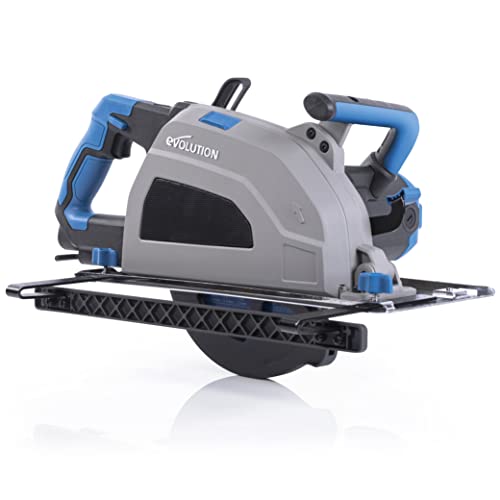 EVOLUTION S210CCS 8-1/4" Metal Cutting Saw
|
9.7/10 | $295.00 | Buy |
| Best Value |
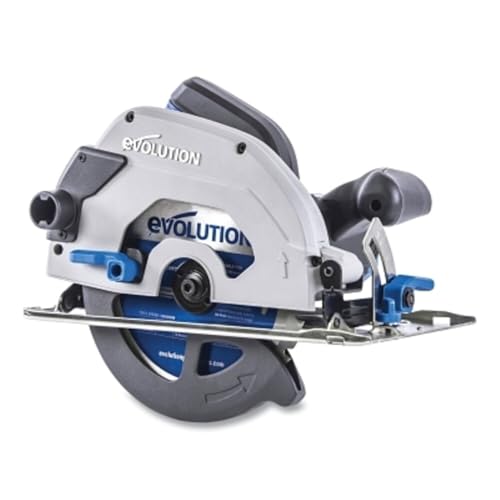 Evolution S185CCSL 7-1/4" Metal Cutting Circular
|
9.6/10 | $195.00 | Buy |
 DEWALT DCS373B 5-1/2-Inch Metal Cutting Saw
|
9.6/10 | $239.00 | Buy | |
 DEWALT DCS383B 7-1/4 in. Metal Cutting Saw
|
9.5/10 | $453.78 | Buy | |
| Best Budget |
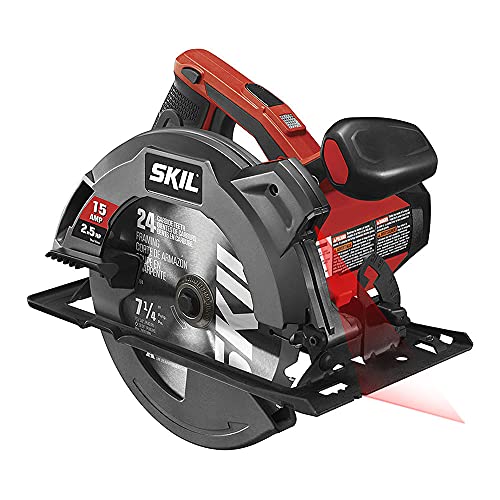 Skil 5280-01 7-1/4 Inch Circular Saw with Laser
|
9.5/10 | $69.00 | Buy |
 Milwaukee 15A 4000 RPM Circular Saw
|
9.5/10 | $499.00 | Buy | |
 Seesii 4-1/2" Circular Saw with Laser
|
9.4/10 | $64.99 | Buy |
FOXBC 7-1/4" 70-Tooth Metal Circular Saw Blade
This blade uses premium ceramic carbide teeth to cut steel studs, angle iron, and conduit up to 10 times faster than grinding discs. It runs up to 50 degrees cooler and lasts up to 25 times longer, making it a reliable choice for metalworkers who want clean, accurate cuts without discoloration.
Pros
- Cuts metal up to 10X faster than grinding discs
- Runs up to 50X cooler, preventing steel discoloration
- Lasts up to 25X longer than standard grinding discs
- Laser-cut stabilizer vents reduce noise and vibration
- Compatible with corded and cordless circular saws
Cons
- Limited to specific metal thickness ranges
EVOLUTION S210CCS 8-1/4" Metal Cutting Saw
For cutting mild steel without heat or sparks, this saw uses advanced TCT blade technology. Its high-torque motor handles up to 1/2" thick plates, and the integrated chip collector stores 60% more debris than previous models. The adjustable 3" cutting depth and LED cutline aid precision.
Pros
- Clean, burr-free cuts in mild steel
- High torque motor cuts thick steel plates
- Integrated chip collector stores more debris
- Adjustable 3" depth with LED cutline light
- Electronic blade brake and ergonomic handles
Evolution S185CCSL 7-1/4" Metal Cutting Circular
This 15 amp corded circular saw is purpose-built for cutting mild steel with a TCT blade that delivers clean, burr-free edges. Its lightweight design and adjustable bevel make it a practical choice for fabricators and metalworkers who need precise cuts without sparks or heat.
Pros
- Powerful 15 amp motor
- Lightweight for its class
- Clean, burr-free cuts
- Adjustable bevel and depth
- Clear cutline visibility
Cons
- Corded only, limits mobility
- Heavier than general circular saws
- No dust collection port mentioned
DEWALT DCS373B 5-1/2-Inch Metal Cutting Saw
The DEWALT DCS373B is a 20V Max cordless circular saw built for metal cutting chores. It pairs a 3700 rpm motor with a 5-1/2-inch 30T carbide-tipped blade to slice through a range of metallic construction materials, while the Sight-Line window and delayed LED light keep the cutting line in view.
Pros
- Powerful 3700 rpm motor cuts demanding materials
- Carbide-tipped blade slices metal cleanly
- LED light with 20-second delay enhances visibility
- Sight-Line window provides clear cut line view
- Steel shoe resists chip build-up
Cons
- Battery and charger sold separately
- Smaller blade limits depth of cut
DEWALT DCS383B 7-1/4 in. Metal Cutting Saw
This cordless circular saw is built for metal cutting with a brushless motor that delivers enough power to slice through steel studs and corrugated decking. An integrated chip collector keeps the work area cleaner, and the electronic brake stops the blade quickly. The Tool Connect+ feature allows for asset tracking via a smartphone app.
Pros
- Brushless motor provides high power (1,400 MWO)
- Cuts up to 214 steel studs per charge
- Integrated chip collector reduces cleanup
- Electronic brake stops blade in under 1 second
- Tool Connect+ enables asset tracking
Cons
- Tool only, battery and charger sold separately
- Heavy at 13.32 pounds
Skil 5280-01 7-1/4 Inch Circular Saw with Laser
This Skil circular saw delivers a 15-amp motor churning out 5300 RPM for fast cuts. Its single beam laser guide aids accuracy and the dust blower keeps the cut line visible. A reliable option for framing and general construction work.
Pros
- 15-amp motor with 5300 RPM speed
- Single beam laser guide for alignment
- Dust blower improves line-of-cut visibility
- Spindle lock for quick blade changes
- 51° bevel capacity with positive stop at 45°
Cons
- Weighs 8.7 pounds, heavier than some models
- Fixed speed only, no variable speed control
Milwaukee 15A 4000 RPM Circular Saw
This corded circular saw is built for metal cutting with a 15A motor and brushless design that delivers 4,000 RPM for efficient performance. It includes REDLINK PLUS intelligence for protection and offers a 2-9/16 inch cut capacity suitable for demanding decking tasks.
Pros
- Powerful 15A motor for fast cuts
- Brushless motor is durable and efficient
- Intelligent protection against overheating
- Versatile 2-9/16 inch cut depth
Cons
- Heavy at 16.2 pounds
- Large dimensions reduce portability
Seesii 4-1/2" Circular Saw with Laser
This compact corded circular saw from Seesii offers a 4.8A motor for 4000 RPM cutting speed and comes with three blades for wood, metal, tile, and plastic. It features a laser guide for accuracy, adjustable depth and bevel, and a lightweight design for one-handed use, making it a practical choice for DIYers and home projects.
Pros
- Includes blades for wood, metal, tile, and plastic
- Laser guide improves cut precision
- Adjustable cutting depth and 45° bevel
- Lightweight at 4.73 pounds for one-hand use
- Safety dual-switch prevents accidental start
Cons
- Corded design limits portability
- Small blade restricts maximum cutting depth
- No storage case included
Metal Cutting Circular Saw Buying Guide
Power Source: Corded vs. Cordless
A primary decision when selecting a metal cutting circular saw is whether a corded electric model or a cordless battery-powered version suits your workflow.
Corded saws, like the Evolution S185CCSL, deliver constant high torque and are ideal for stationary use or projects where you have reliable access to an outlet. They typically offer deeper cuts and run indefinitely without worrying about battery life.
However, they restrict mobility and require extension cords on large job sites. Cordless models, such as the DEWALT DCS383B or DCS373B, provide freedom of movement, especially when working on a roof, scaffolding, or remote locations.
With modern lithium-ion batteries, runtime is sufficient for multiple cuts in 14-gauge steel. If you already own a battery platform (e.g., DEWALT 20V MAX), a tool-only purchase can save money.
Consider investing in a high-capacity battery for extended use, compatible cordless drills often share the same batteries.
For heavy-duty infrequent use, a corded saw offers the best value per cutting performance. But if you prioritize portability and already own a popular battery system, a cordless saw is more practical.
Our research shows that cordless models with brushless motors (like the DEWALT XR series) achieve cutting speeds close to their corded counterparts.
Blade Size and Material
Most metal cutting circular saws use either 7-1/4″ or 8-1/4″ blades. A larger blade allows for deeper cuts, the Evolution S210CCS with its 8-1/4″ blade can cut up to 3″ deep, making it suitable for thick steel profiles.
Smaller blades, like 4-1/2″ on the SEESII mini saw, are better for trim work and tight spaces. The blade itself is critical: you should use a carbide-tipped (TCT) blade designed specifically for ferrous and non-ferrous metals.
These blades have negative rake teeth that shear material without creating dangerous sparks or heat buildup. Replacing worn blades is inevitable; upgrading to a high-quality aftermarket option like the FOXBC 70-tooth carbide blade can improve cut quality and longevity.
Check if the saw comes with a blade included (most Evolution models do) or if you need to purchase separately. Always match the blade arbor size, standard is 5/8″ for 7-1/4″ blades. Using a blade with the wrong RPM rating can damage both material and saw.
Cutting Depth and Bevel Capacity
The cutting depth determines the thickness of metal you can slice through in a single pass. For standard square tube, angle iron, and rebar, a depth of 2, 3 inches is sufficient.
Bevel capacity (typically 45°) allows you to make angled cuts for welding prep or frame construction. Models like the Evolution S185CCSL offer a 45° bevel with a detent stop, providing repeatable accuracy for roofing panels.
If your work frequently involves bevels, look for a saw with a robust bevel adjustment mechanism that locks securely.
Also consider the shoe plate design: a sturdy cast-aluminum base provides stability and helps you guide the saw along a straight edge. Many saws have a spindle lock for quick blade changes, a feature that speeds up production work.
When using a saw for metal, be aware that the material heats up. For long continuous cuts, a portable generator can power a corded saw on remote job sites without worrying about extension cord length.
Safety Features
Metal cutting produces hot chips and sharp edges. Safety features to look for include a blade guard that retracts smoothly, a lower guard that covers the blade after use, and a lock-off switch to prevent accidental startups.
Some models, like the Milwaukee circular saw, include an electric brake that stops the blade within seconds, a crucial safety enhancement. Always wear appropriate personal protective equipment (PPE): safety glasses, heavy gloves, hearing protection, and a fire-resistant apron.
For job site safety, use a stable work surface and clamp your material securely. A ladder may be needed for elevated work; ensure the saw is not overloaded during overhead cuts.
Many cordless saws incorporate trigger locks and overload protection. For instance, DEWALT’s DCS383B features a lock-off button that must be pressed before the trigger can be squeezed, helping to prevent accidental activation when carrying the saw.
Build Quality and Ergonomics
A metal cutting circular saw is an investment that should withstand years of heavy use. Look for a housing made of reinforced polymer or magnesium alloy, which is lighter yet durable. The shoe plate should be flat and rigid.
Ergonomic considerations include a comfortable rubber grip, a well-balanced weight distribution, and tactile controls that can be operated with gloved hands. Models with a visible cut line or laser guide (like the SKIL 5280-01) help you stay on track.
If you plan to use the saw frequently for demanding tasks, choose a model with a higher amp rating (15A for corded saws) or a brushless motor (for cordless) that delivers consistent torque under load.
Our research indicates that both Evolution and DEWALT saws have excellent build quality, and user feedback often cites long lifespan when properly maintained.
For those who also need a saw for wood, check out our guide to circular saws for table mounting for versatility.
Why You Should Trust Us
BestProducts is an independent review site that does not sell products.
We evaluate each item using a consistent 0, 10 BP Score based on thorough research of manufacturer specifications, consensus among professional tool reviewers, verified buyer feedback from multiple sources, and published performance data (e.g., cutting speed, heat generation).
We do not conduct our own product trials; our evaluations are grounded in research, published data, expert review consensus, and verified buyer feedback. This methodology ensures that our recommendations are objective and comprehensive.
We may earn a small commission if you purchase through links on this site, but this does not affect our rankings or editorial independence.
Final Thoughts
Choosing the right metal cutting circular saw comes down to your power preference, cutting demands, and budget. Here are our top picks with specific honors:
- Best Overall: Evolution S210CCS Metal Cutting Circular Saw, With its 8-1/4″ TCT blade, adjustable 3″ depth, and high-torque motor, this saw delivers clean, burr-free cuts on steel up to 3 inches thick. Its superior build and consistent performance earned it the highest BP Score among full-size saws.
- Best Value: SKIL 15 Amp 7-1/4 Inch Circular Saw with Laser Guide, At a budget-friendly price, this corded saw offers excellent cut quality and a handy laser guide. It’s perfect for DIYers and light-to-medium metal work.
- Best Cordless: DEWALT 20V MAX XR 7-1/4 in. Metal Cutting Circular Saw (Tool Only), Compact, powerful, and part of the DEWALT 20V ecosystem, this brushless saw provides corded-like performance without the cord. Its lock-off switch and electric brake enhance safety.
- Best Compact: SEESII Mini Circular Saw, 4.8A Corded 4-1/2″ Saw, Ideal for tight spaces and light-gauge metal, this small saw is surprisingly capable for its size and price.
- Best Upgrade Blade: FOXBC 7-1/4 inch Circular Saw Blade (70 Teeth), For those who already own a saw, swapping to this carbide-tipped blade significantly improves cut quality and reduces sparking.
Frequently Asked Questions
Can I use a regular wood-cutting blade on metal?
No. Wood-cutting blades spin at a higher RPM and have a positive rake angle, which will overheat and quickly dull when cutting metal. They also produce dangerous sparks. Always use a metal-cutting blade with a negative rake and appropriate tooth count (usually 60, 80 teeth for steel).
How do I cut stainless steel without overheating?
Stainless steel is harder and more prone to work-hardening than mild steel. Use a sharp, carbide-tipped blade designed for stainless, maintain a steady feed rate, and avoid forcing the saw.
Let the blade do the work; if you see blue discoloration, you’re going too slow or the blade is dull. A mist of coolant (or a dedicated dry-cut saw) helps.
Is a corded or cordless metal saw better for jobsites?
For mobile jobsites, cordless offers convenience and safety (no tripping hazards). Modern brushless cordless saws like the DEWALT DCS383B can cut dozens of pieces of unistrut or conduit per battery charge.
Corded saws are better for fixed workshops where you make many repetitive cuts and want unlimited runtime.
What accessories do I need to start cutting metal?
At minimum, you’ll need a metal-cutting blade (many saws include one), safety gear (glasses, gloves, earplugs, fire-resistant clothing), and a stable workbench or clamps. For precision cuts, a speed square or straight-edge guide helps. A portable work light is useful for dark spaces.
How do I maintain a metal cutting circular saw?
After each use, clean metal dust from the blade guard and vents with compressed air. Check the blade for missing carbide tips and replace as needed. Keep the arbor threads clean and lightly lubricate moving parts (like the bevel adjustment).
Store the saw in a dry place to prevent rust. For batteries, follow manufacturer charging guidelines.
For more power tool comparisons, see our guides on miter saws and impact drivers.
About the author
Michelle is BestProducts's saw writer, weighing cut accuracy, blade quality, dust control, and safety features. She helps woodworkers get clean, repeatable cuts at every budget.