The Best Heavy Duty Stand Mixer
From commercial-grade power to budget-friendly options, we researched the top heavy duty stand mixers to find the best for your baking needs.
 By Russell Howell
Updated September 12, 2026
By Russell Howell
Updated September 12, 2026
For serious home bakers and small-scale professionals, a heavy duty stand mixer is more than a convenience; it’s a necessity.
Whether you’re kneading stiff bread dough, whipping large batches of frosting, or mixing heavy cookie batter, a standard mixer can struggle and overheat. A heavy duty model delivers the torque, capacity, and durability required for consistent results.
In this guide, we’ve researched and evaluated the top contenders based on specifications, expert consensus, and verified buyer feedback to help you find the best heavy duty stand mixer for your kitchen.
Our team at BestProducts has analyzed dozens of models, comparing motor power, bowl construction, mixing mechanisms, and overall build quality. We’ve also considered real-world user experiences to highlight the mixers that truly excel under demanding conditions.
Below, you’ll find our top picks, each scored on our 0-to-10 BP Scale. Use this information to make an informed purchase for your baking journey.
| Award | Product | BP Score About BP ScoreThe BP Score is our own rating from 0 to 10, based on performance, design and build, ease of use, and value. It reflects independent research and is never influenced by manufacturers, retailers, or affiliate commissions. Learn more › | Price | |
|---|---|---|---|---|
| Best Premium |
 ZACME 8.4QT Commercial Stand Mixer
|
9.6/10 | $499.99 | Buy |
| Best Overall |
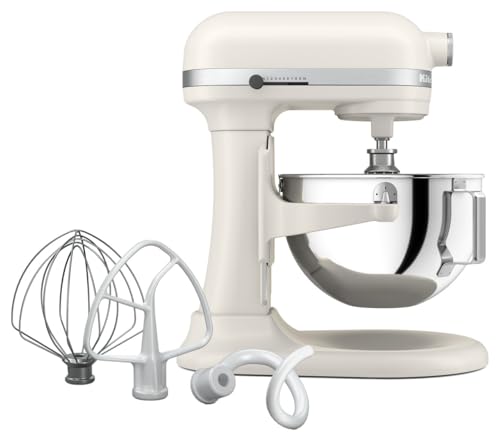 KitchenAid KSM55S 5.5-Quart Bowl-Lift Stand Mixer
|
9.6/10 | $349.99 | Buy |
| Best Budget |
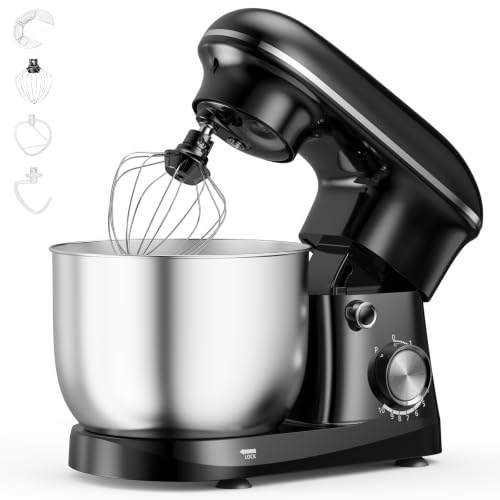 OLIXIS 6.3-Quart Stand Mixer
|
9.5/10 | $54.98 | Buy |
| Best Value |
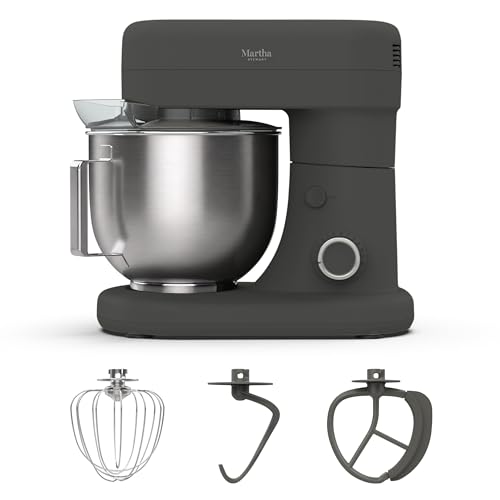 Martha Stewart 5.3QT Tilt-Head Stand Mixer
|
9.5/10 | $149.99 | Buy |
 Kourice 6.5QT Stand Mixer
|
9.4/10 | $116.99 | Buy | |
 ZACME 8.4-Quart Commercial Stand Mixer
|
9.4/10 | $499.99 | Buy |
ZACME 8.4QT Commercial Stand Mixer
This heavy-duty stand mixer combines an 800W DC motor with a large 8.4-quart stainless steel bowl, making it ideal for bulk baking and large families. Its tilt-head design, low noise operation, and NSF certification for commercial use add to its appeal.
Pros
- 800W DC motor for powerful mixing
- 8.4-quart capacity handles large batches
- Low noise operation (under 48 dBA on low gear)
- Tilt-head design for easy access
- NSF certified for commercial durability
Cons
- Heavy at 33 pounds
KitchenAid KSM55S 5.5-Quart Bowl-Lift Stand Mixer
This bowl-lift mixer delivers twice the power in the bowl compared to tilt-head models, making it ideal for heavy doughs and large batches. With 11 speeds and a dedicated 1/2 speed fold setting, it offers precise control for everything from whipping to gently incorporating delicate ingredients.
Pros
- More powerful than tilt-head models
- Large 5.5-quart capacity handles big batches
- 11 speeds for power and control
- Half-speed folding for delicate ingredients
- Compatible with over 10 attachments
Cons
- Bowl-lift design less convenient for adding ingredients mid-mix
- Limited to Porcelain White color in this model
OLIXIS 6.3-Quart Stand Mixer
This budget-friendly stand mixer from OLIXIS offers a tilt-head design and ten speed levels to handle everything from pizza dough to cake batter. Its all-in-one bowl cover includes six practical tools, making it a space-saving choice for home bakers who want versatility without a premium price tag.
Pros
- Powerful motor for dough and batter
- Comes with essential baking attachments
- All-in-one lid saves counter space
- Reasonable price for home use
Cons
- Weight may feel light for some tasks
Martha Stewart 5.3QT Tilt-Head Stand Mixer
This 5.3-quart stand mixer offers 12 speeds and a tilt-head design for easy bowl access. With its stainless steel bowl and three included attachments, it handles large batches of dough, batter, and up to 9 dozen cookies, making it a practical choice for frequent bakers in smaller kitchens.
Pros
- 12 speed settings for precise control
- Tilt-head design for easy ingredient access
- Removable splash shield with pour chute
- Dishwasher-safe attachments for easy cleanup
- Sturdy base reduces movement during use
Cons
- Limited bowl capacity compared to larger models
Kourice 6.5QT Stand Mixer
The Kourice 6.5QT stand mixer features a quiet copper motor and a 63-point planetary mixing system for thorough blending. Its stainless steel body and tilt-head design with safety cut-off offer durability and ease of use. Ideal for home bakers looking for a powerful yet quiet mixer.
Pros
- Quiet operation under 55dB
- 63-point planetary mixing for even consistency
- Durable stainless steel cladding
- Tilt-head with auto power cut-off for safety
- Non-stick accessories and splash guard included
ZACME 8.4-Quart Commercial Stand Mixer
Built with commercial-grade construction and NSF/ANSI 8-2023 certification for safety and durability, this 800-watt stand mixer tackles heavy dough batches up to 3 kg. Its planetary mixing action ensures thorough results, while the 11 speed settings and countdown timer provide precise control for frequent bakers.
Pros
- Commercial-grade certification for safety
- Powerful 800W motor handles heavy doughs
- Ultra-low noise even at high speeds
- Digital timer frees up your hands
- Planetary mixing for even results
Cons
- Heavy at 33 pounds in a compact space
- No pouring shield included with the unit
- Limited color choice: only cream available
Best Heavy Duty Stand Mixer Buying Guide
Motor Power and Performance
The motor is the heart of any heavy duty stand mixer. Look for models with at least 500 watts of power; professional-grade machines often exceed 800 watts. Higher wattage translates to greater torque, enabling the mixer to handle dense doughs without stalling.
Direct-drive motors and metal gears further enhance reliability and longevity. For insight into power requirements for specific tasks, check our guide to dough mixing.
Some mixers advertise peak power rather than continuous power. For heavy duty use, focus on continuous power ratings. A machine that can maintain consistent speed under load will produce better results and last longer.
Also consider the number of speed settings; 10 or more speeds allow fine control for different recipes.
Bowl Capacity and Build
Bowl size directly affects how much you can mix at once. For heavy duty tasks, bowls of 5 quarts or larger are common. Stainless steel bowls are preferred for durability and ease of cleaning.
Some models offer a pouring shield or splash guard to keep ingredients contained. The bowl’s attachment mechanism (lift vs. tilt) also influences stability. If you often make large batches, a bowl-lift design with a sturdy base provides better support.
For smaller kitchens, a compact stand mixer might be more suitable.
Bowl material matters: stainless steel is non-reactive, dishwasher-safe, and resistant to staining. Avoid plastic bowls for heavy mixing, as they can crack or warp. Also check the bowl’s handle and ergonomics, a well-designed handle makes lifting and pouring easier.
Mixing Mechanism: Tilt-Head vs. Bowl-Lift
Tilt-head mixers allow the head to pivot back for easy access to the bowl and attachments. They are convenient for adding ingredients and scraping sides. Bowl-lift mixers keep the head fixed and raise the bowl via a lever.
This design is typically more stable under heavy loads and can handle larger capacities. For heavy doughs, a bowl-lift model often provides better torque distribution. However, tilt-head models can be more affordable and easier to store.
Consider your typical batch sizes and counter space. If you frequently make bread, a bread-focused stand mixer with bowl-lift might be ideal.
Attachments and Versatility
A heavy duty stand mixer should come with essential attachments: a flat beater, wire whisk, and dough hook. Some models include additional accessories like a pouring shield or a spiral dough hook for better kneading.
Compatibility with optional attachments (pasta makers, meat grinders, vegetable slicers) expands the mixer’s utility. For home bakers who want a multi-functional appliance, a versatile electric stand mixer is a smart investment.
Check the attachment hub location and ease of swapping. Metal attachments are more durable than plastic ones. Also, ensure the attachments are dishwasher-safe for easy cleanup. Some mixers offer a slow-start feature to prevent splattering when adding dry ingredients.
Durability and Warranty
Heavy duty mixers are built to last, but construction quality varies. Look for all-metal gear trains, die-cast metal bodies, and high-quality bearings. Plastic gears or housings may fail under repeated heavy loads.
A longer warranty (often 3 to 5 years) indicates manufacturer confidence. Reading reviews of quality stand mixers can reveal common durability issues. Also consider the availability of replacement parts and service centers.
Weight also contributes to stability; a heavier mixer stays put during vigorous mixing. However, it may be harder to move. If you plan to store the mixer between uses, a lighter model might be preferable.
For those with limited strength, a lightweight stand mixer could be a better fit, though it may not be as heavy duty.
Why You Should Trust Us
At BestProducts, we are committed to providing unbiased, research-driven recommendations. Each product in this roundup has been evaluated against a consistent set of criteria and assigned a BP Score on a 0-to-10 scale.
Our assessments are based on thorough analysis of specifications, expert review consensus, verified buyer feedback, and published data from reputable sources.
We do not conduct our own product trials; our evaluations are grounded in research, published data, expert review consensus, and verified buyer feedback. This approach ensures that our picks reflect real-world performance and reliability.
We also maintain affiliate partnerships with retailers, which helps support our independent research, but our rankings are never influenced by those relationships.
Final Thoughts
Choosing the right heavy duty stand mixer depends on your baking volume, dough types, and budget. Based on our research, here are our top recommendations across different needs:
- Best Overall: ZACME 8.4QT Commercial Stand Mixer, With an 800W motor, NSF certification, and commercial-grade aluminum die-cast construction, this mixer delivers outstanding power and durability for the heaviest tasks.
- Best for Home Baking: KitchenAid 5.5QT Bowl-Lift Stand Mixer, A trusted brand with a proven track record, offering a 5.5-quart bowl and a wide range of attachments for versatile home use.
- Best Budget Pick: OLIXIS 6.3QT Stand Mixer, An affordable option that doesn’t compromise on performance, ideal for occasional heavy mixing or beginners on a tight budget.
- Best for Beginners: Martha Stewart 5.3QT Tilt-Head Stand Mixer, User-friendly tilt-head design and 12 speeds make it easy for novice bakers to achieve great results.
- Best for Bread Dough: Kourice 6.5QT Tilt-Head Stand Mixer, A robust 10-speed mixer with a stainless steel cladding bowl, specifically designed to handle stiff bread doughs.
Frequently Asked Questions
What makes a stand mixer “heavy duty”?
A heavy duty stand mixer typically features a more powerful motor (500W or higher), metal gears, a sturdy construction (often die-cast metal), and a larger bowl capacity.
These machines are designed to handle thick doughs and large batches without overheating or stalling. For a deeper comparison, see our bread making stand mixer guide.
How much power do I need for bread dough?
For regular bread dough, a motor with at least 500W is recommended. For very stiff doughs (e.g., whole wheat or bagels), 800W or more provides reliable performance. Higher wattage mixers also maintain speed better under load.
If you bake frequently, investing in a dedicated bread dough mixer may be worthwhile.
Is a bowl-lift or tilt-head better for heavy mixing?
Bowl-lift mixers generally offer greater stability and can handle heavier loads more effectively because the bowl is locked in place. Tilt-head models are more convenient for adding ingredients but may be less stable with very stiff doughs.
For heavy duty use, many professionals prefer bowl-lift designs. Explore commercial stand mixer options for more insight.
Can I use a heavy duty mixer for light tasks?
Yes, heavy duty mixers can handle light tasks like whipping cream or mixing cake batter, but they are often overkill. They may be louder and take up more counter space.
If you only occasionally need heavy mixing, a mid-range model might be a better balance. Check our home use stand mixer recommendations for versatile options.
What attachments are essential for a heavy duty mixer?
The essential attachments are a flat beater (for general mixing), a wire whisk (for aerating), and a dough hook (for kneading). Some mixers include a spiral dough hook that works better for bread.
Additional attachments like a pouring shield, food grinder, or pasta roller can expand functionality. For a full list of compatible attachments, see our best-selling stand mixer guide.
How do I clean and maintain a stand mixer?
Most attachments are dishwasher-safe, but the mixer body should be wiped clean with a damp cloth. Avoid submerging the motor head. Regularly check the bowl lock and gear mechanism for debris.
Store the mixer with the head down to prevent dust accumulation. For long-term care, consult the manufacturer’s manual and our kitchen & dining maintenance tips.
About the author
Russell writes about stand mixers and food processors for BestProducts, comparing motor strength, attachment range, and stability under heavy dough. He helps bakers and cooks buy once and keep it for decades.