The Best Gaming Monitor
Looking for a new gaming display? Our research-based guide breaks down the top models by refresh rate, resolution, panel type, and value, helping you find the best gaming monitor for your budget and play style.
 By Irene Hopkins
Updated September 12, 2026
By Irene Hopkins
Updated September 12, 2026
Whether you’re grinding through ranked matches or exploring vast open worlds, the monitor you choose directly affects your performance and immersion. A high-refresh-rate panel with low response time can mean the difference between a clean headshot and a frustrating defeat.
In 2026, the market offers options from budget-friendly 1080p screens to premium ultrawide OLEDs, making it essential to pick the right balance of resolution, speed, and panel technology for your setup.
Our team at BestProducts has evaluated dozens of models using a consistent methodology: we analyze specifications, aggregate expert review consensus, verify buyer feedback, and cross-reference published data.
Each monitor receives a BP Score on a 0, 10 scale based on real-world performance indicators. Below, you’ll find our top picks for the best gaming monitor to suit every budget and preference.
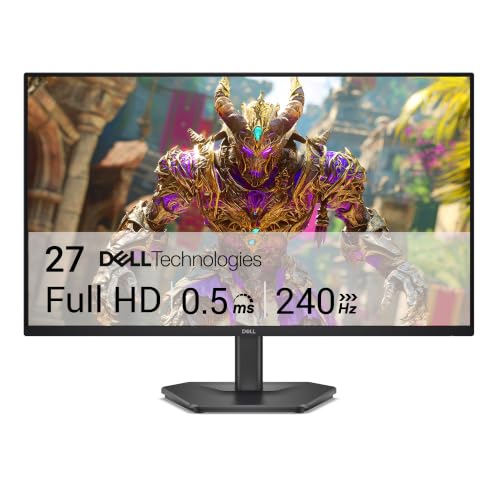
Dell SE2726HG 27-inch FHD 240Hz IPS Gaming Monitor
This 27-inch gaming monitor from Dell packs a 240Hz refresh rate and 0.5ms response time for exceptionally smooth gameplay. With FreeSync Premium and 99% sRGB coverage, it's a solid choice for competitive gamers who value both speed and color accuracy.
Pros
- Excellent 240Hz performance for competitive gaming
- Fast 0.5ms response time reduces motion blur
- FreeSync Premium works with PC and console
- Accurate colors with 99% sRGB coverage
- Eye comfort certification without sacrificing color
Cons
- Only FHD resolution on a 27-inch panel
- Limited ergonomics (tilt only, no height adjust)
- No built-in speakers or USB hub

SANSUI 27" 240Hz Curved Gaming Monitor
This 27-inch curved monitor targets competitive gamers with a 240Hz refresh rate and 1ms MPRT response time. Its 1500R curvature and 130% sRGB color gamut aim to deliver immersive visuals, while the metal stand adds stability.
Pros
- High 240Hz refresh rate
- Fast 1ms MPRT response
- Wide color gamut coverage
- Sturdy metal stand
- VESA mount compatible
Cons
- No built-in speakers
- Only FHD resolution
- Limited ergonomic tilt only

Samsung Odyssey G5 G51F 27" QHD 1440p Monitor
This 27-inch QHD gaming monitor from Samsung delivers sharp 1440p visuals with a fast 180Hz refresh rate and 1ms response time, making it a solid choice for competitive gamers. Its HDR10 support and AMD FreeSync help reduce screen tearing and enhance contrast for more immersive gameplay.
Pros
- Sharp QHD resolution with high pixel density
- Fast 180Hz refresh rate and 1ms response
- HDR10 for more vivid contrast
- AMD FreeSync for smooth, tear-free gameplay
- Fully adjustable ergonomic stand
Cons
- No built-in speakers
- Limited connectivity options
- HDR performance may not match premium models

Acer KB272 G0bi 27" 120Hz IPS Monitor
This 27-inch IPS monitor from Acer delivers a 120Hz refresh rate and 1ms response time, making it a solid budget-friendly choice for casual gamers. FreeSync compatibility helps reduce screen tearing, though the 250-nit brightness is average for indoor use. It's a straightforward option for smooth motion without premium extras.
Pros
- 120Hz refresh rate for smooth motion
- 1ms response time minimizes ghosting
- Adaptive-Sync (FreeSync) reduces tearing
- IPS panel provides wide viewing angles
- Full HD resolution is sharp for everyday use
Cons
- 250-nit brightness is modest
- No built-in speakers

Samsung S36GD 27-Inch 1800R Curved FHD Monitor
This 27-inch curved FHD monitor from Samsung wraps around your field of vision to enhance depth perception and minimize distractions. With a 100Hz refresh rate and Game Mode, it delivers smooth performance for gaming and video, while TUV-certified eye comfort technology reduces strain during long sessions.
Pros
- Curved screen enhances immersion
- 100Hz refresh rate for smooth motion
- Game Mode improves gaming visuals
- Eye care technology reduces strain
- Flexible connectivity options
Cons
- Only FHD resolution, not 4K
- No built-in speakers mentioned

Sceptre C345B-QUT168 34-inch Curved Ultrawide WQHD
This ultrawide monitor brings vivid WQHD detail and fast 1ms response to gamers seeking an immersive curved display. With 99% sRGB coverage and built-in speakers, it covers both creative and everyday use.
Pros
- Sharp WQHD ultrawide resolution
- Fast 1ms response time for gaming
- High color accuracy with 99% sRGB
- Immersive R1500 curve
- Built-in speakers save desk space
Cons
- No HDMI input mentioned
- Limited ergonomic adjustability likely
- Speakers may lack deep bass

Samsung Odyssey G5 32-Inch QHD Gaming Monitor
This 32-inch QHD gaming monitor from Samsung combines a 180Hz refresh rate with 1ms response time and IPS panel for smooth, vivid gameplay. HDR10 and Black Equalizer improve visibility in dark scenes, and the ergonomic stand adjusts for comfort.
Pros
- High 180Hz refresh rate
- Fast 1ms response time
- QHD resolution for sharp details
- Wide 178° viewing angle
- Ergonomic stand adjustments
Cons
- Limited to 32-inch size only
- HDR10 without local dimming

Alienware AW3425DW 34-inch QD-OLED 240Hz Monitor
This ultrawide gaming monitor combines a 34-inch QD-OLED panel with 240Hz refresh and sub-millisecond response, delivering vivid colors and buttery smooth motion for competitive and immersive gameplay. Its 1800R curve and HDR400 TrueBlack support make it a premium pick for gamers who demand both speed and picture quality.
Pros
- Incredible color accuracy and vibrancy
- Ultra-fast 240Hz for smooth motion
- Deep blacks and high contrast with QD-OLED
- Supports multiple adaptive sync technologies
Cons
- Premium pricing tier
- No built-in speakers
- Requires ample desk space due to size

Sceptre C275B-FW250G 27-inch 250Hz Curved
This 27-inch curved monitor combines a 250Hz refresh rate with 1ms blur reduction for smooth gaming visuals. Its 100% sRGB coverage and built-in speakers make it a versatile choice for both play and everyday tasks.
Pros
- Fast 250Hz refresh rate for smooth motion
- 1ms blur reduction enhances responsiveness
- 100% sRGB color accuracy
- Built-in speakers save desk space
- Multiple connectivity options including two DisplayPorts
Cons
- Speakers may lack bass depth
- Stand adjustability not specified
- Curve may not suit non-gaming use

Alienware AW3425DWM 34-inch WQHD Gaming Monitor
This ultrawide monitor delivers smooth 180Hz performance with WQHD resolution and a 1500R curve for immersive gaming. It supports AMD FreeSync Premium and VESA AdaptiveSync to minimize screen tearing. The hardware-based low blue light solution helps reduce eye strain during long sessions.
Pros
- Excellent color accuracy with DCI-P3 95% coverage
- Smooth 180Hz refresh rate with 1ms response
- Immersive 1500R curve for ultrawide gaming
- AMD FreeSync Premium and VESA AdaptiveSync support
- Hardware-based low blue light reduces eye strain
Cons
- No built-in speakers
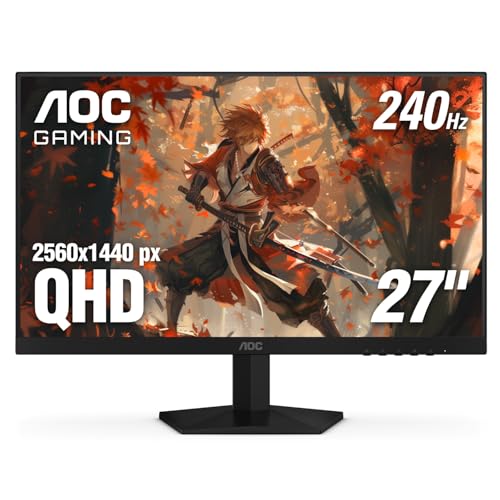
AOC Q27G41ZE 27" QHD 240Hz Gaming Monitor
This AOC monitor combines a 27-inch QHD IPS panel with a 240Hz refresh rate and 0.3ms response time, making it a strong choice for competitive gamers seeking smooth, tear-free gameplay via Adaptive-Sync support.
Pros
- Fast 240Hz refresh rate and 0.3ms response
- QHD resolution on an IPS panel
- Adaptive-Sync compatible
- Tilt adjustable stand
- Slim frameless design
Cons
- No height or swivel adjustment
- Only HDMI 2.0 ports (no HDMI 2.1)
- Limited to 240Hz via DisplayPort

ASUS TUF Gaming VG27AQ3A 27" 1440p 180Hz
This 27-inch QHD monitor targets competitive gamers who want a high-refresh-rate panel without breaking the bank. The Fast IPS panel delivers smooth 180Hz performance with ELMB Sync to reduce ghosting, while FreeSync Premium and G-Sync compatible support keep tearing at bay.
Pros
- High refresh rate for smooth gaming
- Good color accuracy with 130% sRGB
- Both FreeSync and G-Sync support
- Built-in speakers save desk space
- Includes DisplayPort cable and screwdriver
Cons
- Speakers may lack bass for immersive audio
- No USB-C connectivity included
Best Gaming Monitor Buying Guide
Panel Technology: IPS, VA, or OLED
The panel type dictates color accuracy, contrast, and viewing angles. IPS panels (like those found in many best IPS monitors) offer wide viewing angles and vibrant colors, making them ideal for competitive gaming where fast motion clarity matters.
VA panels deliver deeper blacks and higher contrast, which enhances immersion in dark scenes, though they may exhibit slight ghosting at extreme refresh rates.
OLED panels, such as the QD-OLED used in premium models, provide near-instant response times and infinite contrast, but they come at a higher price and require careful burn-in management.
For most gamers, an IPS display strikes the best balance between color reproduction and motion handling. If you prioritize contrast for single-player titles, a VA panel can be a solid choice.
OLED is reserved for those seeking the absolute best image quality and are willing to invest in a top-tier best HDR monitor.
Refresh Rate and Response Time
Refresh rate (measured in Hz) indicates how many frames per second the monitor can display. A 120Hz panel is a significant upgrade over standard 60Hz, while 180Hz and 240Hz are common among competitive gamers.
Higher refresh rates reduce motion blur and make fast-paced gameplay feel smoother. Response time, often listed as 1ms MPRT or GTG, affects how quickly pixels change color; lower values minimize ghosting.
Pairing a high-refresh-rate monitor with a capable graphics card ensures you can actually reach those frame rates. For esports titles, 240Hz or even 250Hz provides a tangible advantage, while 144, 180Hz is ample for most AAA games.
Remember that response time specifications are often marketing numbers; real-world performance can vary, so we rely on expert consensus to assess each model.
Resolution and Screen Size
Resolution determines image sharpness. Full HD (1920×1080) remains popular for budget gaming and high-refresh-rate setups because it demands less GPU power. QHD (2560×1440) offers a sweet spot of clarity and performance, especially on 27-inch screens.
4K provides stunning detail but requires a powerful GPU to maintain high frame rates. Ultrawide resolutions like 3440×1440 deliver a wider field of view, ideal for immersive sims and racing games.
Screen size is a personal preference, but 27 inches is the most versatile for desk setups. Larger 32-inch or 34-inch ultrawide panels can be more immersive, especially with a best curved monitor design.
Consider your viewing distance and desk depth; a 27-inch QHD panel is often the recommended starting point for balanced gaming.
Connectivity and Adaptive Sync
Modern gaming monitors should include at least one DisplayPort and two HDMI ports. DisplayPort supports higher bandwidth for high refresh rates at higher resolutions.
HDMI 2.1 is valuable for console gamers using a best PS5 monitor, as it enables 120Hz at 4K. Adaptive sync technologies (G-Sync, FreeSync, VESA AdaptiveSync) eliminate screen tearing by synchronizing the monitor’s refresh rate with the GPU’s output.
Most monitors now support FreeSync, and many are also G-Sync compatible. For a tear-free experience, ensure your GPU and monitor share the same adaptive sync standard.
Built-in speakers are convenient but often mediocre; a dedicated pair of mechanical keyboards and a good headset are better investments for audio.
Additional Features: HDR, Curvature, and Ergonomics
HDR (High Dynamic Range) can enhance brightness and color in supported content, but many monitors in this price range offer only basic HDR with limited peak brightness. True HDR requires DisplayHDR 400 or higher certification.
Curved screens, typically with 1500R or 1800R radius, wrap around your field of view for a more immersive gaming experience, especially on ultrawide models.
Ergonomic adjustments, height, tilt, swivel, and pivot, are often overlooked but crucial for long gaming sessions. A monitor with a sturdy stand and VESA mount compatibility allows you to pair it with a best office chair setup for optimal posture.
Low blue light modes and flicker-free technology reduce eye strain during marathon play.
Why You Should Trust Us
At BestProducts, we are committed to independent, data-driven recommendations. Our team of editors and researchers does not accept free products or payments from manufacturers for favorable reviews.
Every monitor in this roundup is evaluated using a consistent set of criteria: we analyze technical specifications, aggregate expert review consensus from trusted industry sources, and incorporate verified buyer feedback from real users.
We also cross-reference published data from reputable outlets to ensure accuracy.
We do not conduct our own product trials; our evaluations are grounded in research, published data, expert review consensus, and verified buyer feedback.
Each product is scored on our 0, 10 BP Score based on how well it meets the needs of its intended audience. This method allows us to highlight the best gaming monitor for various budgets and use cases without bias.
Final Thoughts
- Best Overall: Dell 27 240Hz Gaming Monitor, SE2726HG, This 27-inch FHD IPS panel delivers a blazing 240Hz refresh rate with AMD FreeSync Premium, making it an exceptional choice for competitive gamers. Its high BP Score reflects excellent motion handling and reliable build quality at a reasonable price point.
- Best Budget Pick: Acer 27in FHD 1920×1080 IPS 120Hz Gaming Monitor, KB272 G0bi, At under $100, this monitor offers a 120Hz refresh rate and IPS panel for smooth entry-level gaming. It’s a fantastic value for those building a budget gaming rig.
- Best Ultrawide: Sceptre 34-Inch Curved Ultrawide WQHD Monitor, C345B-QUT168, With a 3440×1440 resolution, 180Hz refresh rate, and 1500R curvature, this ultrawide provides an immersive experience for sim racers and RPG fans. Its 99% sRGB coverage ensures vivid colors.
- Best Premium: Alienware 34 240Hz QD-OLED Curved Gaming Monitor, AW3425DW, This 34-inch WQHD QD-OLED panel offers 0.03ms response time, infinite contrast, and DisplayHDR TrueBlack 400. It’s the ultimate choice for gamers who demand top-tier image quality and speed.
- Best Value Curved: Samsung 27″ Essential S3 (S36GD) Series FHD 1800R Curved Computer Monitor, A 27-inch curved VA panel with 1800R radius and 120Hz refresh rate, this monitor delivers deep blacks and an engaging curve at an affordable price, perfect for casual gaming and multimedia.
Frequently Asked Questions
What is the best refresh rate for gaming?
For most gamers, 144Hz to 180Hz offers a noticeable improvement over 60Hz without requiring an extremely powerful GPU. Competitive players often prefer 240Hz or higher for the smoothest motion in fast-paced titles. If you play mainly single-player games, 120Hz is a solid upgrade.
Is 1080p still good for gaming in 2026?
Yes, 1080p remains a viable choice, especially for high-refresh-rate monitors and budget builds. It allows you to achieve high frame rates without breaking the bank on a GPU. For larger screens, QHD (1440p) provides noticeably sharper images, but 1080p is still excellent for competitive gaming.
What is the difference between IPS and VA panels?
IPS panels offer wider viewing angles and better color accuracy, making them ideal for gaming where colors matter. VA panels provide higher contrast ratios and deeper blacks, which enhance immersion in dark scenes.
IPS generally has better motion handling, while VA can suffer from slight ghosting at high refresh rates.
Do I need G-Sync or FreeSync?
Adaptive sync technology eliminates screen tearing and stuttering. FreeSync works with AMD GPUs and many NVIDIA cards (via G-Sync Compatible), while G-Sync requires a dedicated module and is typically more expensive.
Most modern monitors support FreeSync, and many are certified as G-Sync Compatible, offering a tear-free experience regardless of your GPU brand.
What size monitor is best for gaming?
A 27-inch monitor is the most popular size for gaming because it offers a good balance between screen real estate and desk space. For immersive experiences, 32-inch or ultrawide 34-inch models are excellent, but they require more desk depth.
If you play competitively, a 24, 27 inch screen allows you to see the entire display without moving your head.
About the author
Irene reviews desktop PCs and monitors for BestProducts, weighing performance, upgradability, and panel quality for work and home. She helps readers build a desk setup that stays fast and comfortable for years.