The Best Food Blender
Our research team compared over 20 food blenders based on motor power, jar material, blade design, and user feedback. We highlight top performers from Oster, Ninja, Nutribullet, and more to help you find the perfect match for your blending needs.
 By Ken Mendoza
Updated September 12, 2026
By Ken Mendoza
Updated September 12, 2026
Whether you’re whipping up a morning smoothie, pureeing soup, or crushing ice for a party, a reliable food blender is a cornerstone of any kitchen.
With so many models on the market, from budget-friendly classics to high-power machines, finding the right one can feel overwhelming.
Our team of researchers has analyzed hundreds of specifications, cross-referenced expert reviews, and sifted through verified buyer feedback to bring you a curated list of the best food blender options available today.
Below, you’ll find our top picks, each scored on our 0, 10 BP Score based on performance, build quality, and value.
We know that a blender needs to handle everything from leafy greens to frozen fruit, and we’ve prioritized models that deliver consistent results across a range of tasks.
Our roundup includes everything from compact personal blenders for one-serving smoothies to full-sized pitchers capable of making family-size batches.
Read on for our expert recommendations and a comprehensive buying guide to help you choose the best food blender for your needs.
| Award | Product | BP Score About BP ScoreThe BP Score is our own rating from 0 to 10, based on performance, design and build, ease of use, and value. It reflects independent research and is never influenced by manufacturers, retailers, or affiliate commissions. Learn more › | Price | |
|---|---|---|---|---|
| Best Overall |
 Oster Classic Series 8-Speed Blender, Gray
|
9.9/10 | $49.30 | Buy |
| Best Value |
 NutriBullet NBF50500 Full-Size Blender Combo
|
9.9/10 | $99.99 | Buy |
| Best Budget |
 KOIOS 4-in-1 Blender/Processor 1000W
|
9.8/10 | $58.49 | Buy |
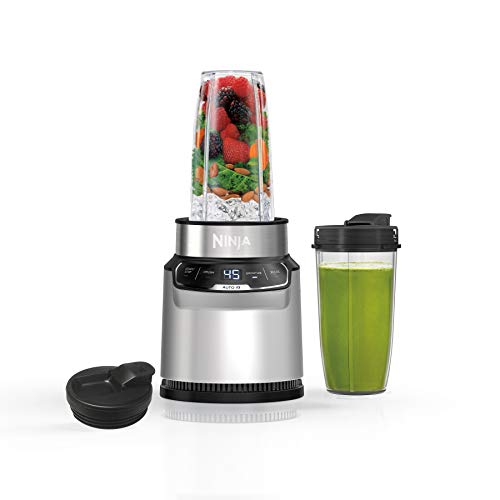 Ninja BN401 Nutri-Blender Pro
|
9.8/10 | $99.99 | Buy | |
| Best Premium |
 Ninja BN801 Kitchen System with Auto-iQ
|
9.8/10 | $169.99 | Buy |
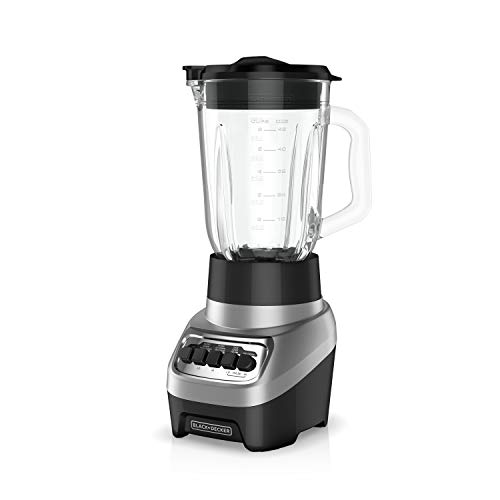 BLACK+DECKER PowerCrush 6-Cup Blender
|
9.6/10 | $46.99 | Buy | |
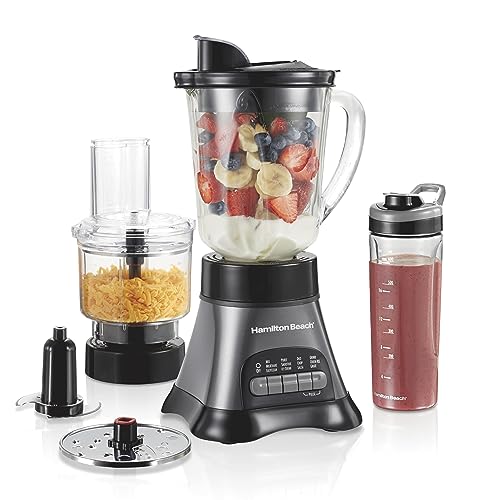 Hamilton Beach 58163 Blender & Food Processor
|
9.6/10 | $79.99 | Buy | |
 Ninja Professional Plus Blender BN701 72oz
|
9.6/10 | $109.99 | Buy | |
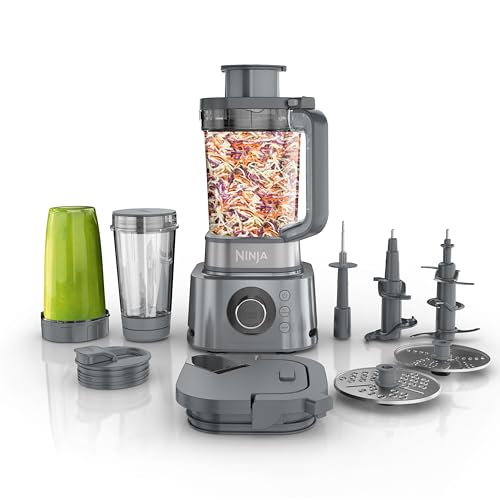 Ninja SS401 Power Blender & Processor, 1600W
|
9.6/10 | $219.99 | Buy |
Oster Classic Series 8-Speed Blender, Gray
This Oster blender provides reliable performance with an 8-speed motor and a durable glass jar. Its ice crushing button and stainless steel blades make it a solid choice for frozen drinks and smoothies.
Pros
- Stainless steel blades for durability
- Glass jar is more resistant to scratches
- Includes dedicated ice crushing button
- 8 speeds allow precise control
Cons
- Plastic base may feel less premium
- Only 6-cup capacity may limit large batches
NutriBullet NBF50500 Full-Size Blender Combo
This blender combo offers the flexibility of a full-size pitcher and single-serve cups, powered by a robust 1200W motor. The cyclonic Extractor blade and three speeds plus pulse give precise control for smoothies, soups, and sauces. It's a practical choice for households that want both batch blending and personal drinks.
Pros
- Powerful 1200W motor
- Versatile pitcher and single-serve cups
- Dishwasher-safe pitcher and cups
- Precise speed and pulse control
- BPA-free construction
Cons
- Large footprint (7.75 x 8.07 x 16.97 in)
- Extractor blade requires hand washing
- Only 1-year limited warranty
KOIOS 4-in-1 Blender/Processor 1000W
This compact 4-in-1 system combines a blender, food processor, grinder, and travel cups all powered by a single 1000W motor. It’s a space-saving solution for smoothies, chopping, and grinding, with dishwasher-safe parts that simplify cleanup.
Pros
- Four appliances in one compact base
- Powerful 1000W motor handles tough ingredients
- All detachable parts are dishwasher safe
- Safety lock lid and overheating protection
- Includes multiple cups and a grinding cup
Cons
- Motor base not dishwasher safe
- Sharp blades require careful handling
Ninja BN401 Nutri-Blender Pro
This personal blender packs a 1100-watt motor and Auto-iQ presets for effortless smoothies and crushed ice. The Pro Extractor blades break down whole fruits and veggies to unlock hidden nutrients, and the two 24-oz cups make it easy to blend and go.
Pros
- Powerful 1100-watt motor for tough blending
- Auto-iQ presets simplify operation
- Nutrient extraction from whole produce
- Two 24-oz cups for on-the-go convenience
- Easy cleanup with dishwasher-safe parts
Cons
- Short 2.6-foot power cord limits placement
Ninja BN801 Kitchen System with Auto-iQ
This versatile system combines a powerful 72-ounce blender with an 8-cup food processor and two single-serve cups, making it easy to crush ice, chop vegetables, mix dough, and blend smoothies. The five preset Auto-iQ programs simplify operation for both quick drinks and larger batches.
Pros
- Powerful 1400-watt motor
- Includes blender, processor, and single-serve cups
- Auto-iQ presets for hands-free operation
- Can mix up to 2 pounds of dough in 30 seconds
- Total Crushing blades for smooth ice crushing
Cons
- Large base may take up counter space
BLACK+DECKER PowerCrush 6-Cup Blender
This mid-range blender uses a 4-tip stainless steel blade and 700W peak motor to crush ice and blend smoothies. Its 6-cup glass jar is sturdy and pours cleanly, while four speed settings offer control for different tasks.
Pros
- Glass jar is durable and easy to pour
- QuadPro blades create consistent vortex
- Dishwasher-safe parts simplify cleanup
- Four speeds handle blending to ice crushing
- Powerful 700W motor for tough ingredients
Cons
- Continuous use limited to 350W
- No variable speed dial or pre-sets
- Glass jar adds weight
Hamilton Beach 58163 Blender & Food Processor
This 3-in-1 countertop blender combines a 40 oz. glass jar, a 20 oz. travel cup, and a 3-cup vegetable chopper. Its Wave-Action system ensures smooth results, making it a versatile option for home cooks who want to blend and chop without buying separate appliances.
Pros
- 3-in-1 design with blender, chopper, travel cup
- Durable glass jar handles hot and cold liquids
- Wave-Action system for smooth blends
- Drip-free pour spout lid
- Powerful 700-watt peak motor
Cons
- 700 watts may struggle with very hard frozen ingredients
- No preset blending programs or smart settings
Ninja Professional Plus Blender BN701 72oz
This blender upgrades Ninja's classic Professional model with a 1400W motor and Total Crushing blades for smooth ice crushing. Its 72-ounce pitcher and 3 Auto-iQ presets make it a convenient choice for families who want large batches of smoothies or frozen drinks with minimal guesswork.
Pros
- Strong 1400W motor for tough blending
- Large 72-oz pitcher fits family batches
- Auto-iQ presets simplify drink making
- Dishwasher safe parts for easy cleanup
Cons
- No variable speed control mentioned
- Pitcher may be bulky for small kitchens
Ninja SS401 Power Blender & Processor, 1600W
A versatile countertop blender that doubles as a food processor with shredding, slicing, and grating discs. Its 1600-peak-watt motor and smartTORQUE technology prevent stalling even with tough ingredients, and the XL smoothie bowl maker excels at thick frozen blends.
Pros
- Powerful motor handles frozen loads
- Includes food processing discs
- Smoothie bowl tamper built-in
- Dishwasher safe parts
- Variable speed control
Cons
- Heavy at 12.1 pounds
- Large countertop footprint
Best Food Blender Buying Guide
Motor Power and Performance
The motor is the heart of any blender, and power ratings (measured in watts) give a general indication of blending capability.
For regular smoothies and soft ingredients, 500, 700 watts is sufficient, while tougher tasks like crushing ice or blending fibrous greens often require 1000 watts or more.
High-performance blenders with motors above 1400 watts can handle even the most challenging recipes, but they also tend to be louder and more expensive.
Consider the types of foods you’ll blend most often, if your daily routine includes kale stalks and frozen berries, invest in a powerful model. For occasional use or basic blending, a mid-range motor will save you money without sacrificing quality.
Beyond raw power, the motor’s durability and noise level matter. Look for models with thermal overload protection and sturdy metal drive shafts, which tend to last longer than plastic alternatives.
If you’re sensitive to noise, check reviews for volume comparisons, some blenders are noticeably quieter than others. For a detailed look at the quietest options, read our guide on quiet blenders for a peaceful kitchen.
Jar Material and Capacity
Blender jars come in glass, plastic (Tritan or similar), and stainless steel. Glass jars are heavy, scratch-resistant, and don’t absorb odors, making them a popular choice for many.
Plastic jars are lighter, shatterproof, and often more affordable, but they can scratch over time and may retain stains. Stainless steel is rare in consumer blenders but offers excellent durability and temperature retention.
For most home cooks, a 48- to 72-ounce glass jar provides the best balance of capacity and stability.
Capacity is another key consideration. If you often blend for a family or batch-prep, look for pitchers of at least 60 ounces. For single servings or small households, a personal blender with a 20- to 32-ounce cup may be more convenient.
Many full-size blenders now come with a single-serve attachment, offering versatility without taking up extra counter space. Check out our favorite small blender options for space-saving alternatives.
Blade Design and Versatility
Blade design affects how ingredients are drawn into the vortex for consistent blending. Most blenders use stainless steel blades shaped to create a powerful downward pull.
Some models feature stacked blades or specialized extractor blades for breaking down seeds and fibrous plants.
If you plan to make nut butters, grind coffee, or emulsify sauces, look for a blender with a dedicated food processor attachment or a blade system that handles dry ingredients.
Versatility can also come from multiple speed settings and pre-programmed cycles. Machines with pulse function give you more control over texture, while automatic iQ programs take the guesswork out of smoothies and soups.
For a deep dive into multi-function machines, read our power blender roundup for models that excel at heavy-duty tasks.
Ease of Cleaning
No one wants to spend half an hour scrubbing a blender after dinner. Many modern blenders feature self-cleaning cycles: simply add warm water and a drop of dish soap, then run for 30 seconds.
Dishwasher-safe jars and lids are also common, though plastic bottles may warp over time. Glass jars are more resistant to high heat and dishwasher detergents.
Some models come with a cleaning brush, but we generally recommend choosing a blender with a wide-mouth jar for easy hand washing.
Speed Settings and Controls
Basic blenders offer two to three speeds, while premium models may have 10+ variable speeds plus pre-programmed cycles. More settings give you finer control over texture, for example, a low speed for mixing batters and a high speed for crushing ice.
However, too many options can be overwhelming, and many users rely on just a few settings. Touch controls look sleek but can be tricky to operate with wet hands; physical dials and buttons are more tactile and reliable.
If you value simplicity, a blender with a dedicated pulse button and a couple of speeds is often all you need.
Budget and Value
Food blenders range from $30 budget models to over $500 high-end machines. Our research shows that you can get excellent performance starting around $50, especially if you’re willing to choose a glass-jar model from a reputable brand.
Spending more often gets you a stronger motor, additional accessories, and better build quality, but it’s not necessary for most everyday blending.
Consider your usage frequency, if you blend daily, investing in a mid-range or premium blender will likely save you money on replacements in the long run. For budget-conscious shoppers, our recommendations under $50 deliver solid value.
Why You Should Trust Us
At BestProducts, we evaluate each product using a consistent methodology that emphasizes thorough research. We do not conduct our own product trials; our evaluations are grounded in research, published data, expert review consensus, and verified buyer feedback.
Every blender in this roundup was scored on our 0, 10 BP Score, based on specifications, performance claims, expert opinions, and real-world user experiences.
Our team of editors reviews hundreds of products across multiple categories, ensuring that our picks represent the best value and quality for your money.
We are committed to transparency and independence. Our content is not influenced by manufacturers or retailers, and we may earn a small commission if you purchase through our affiliate links, at no extra cost to you.
This helps us maintain our editorial integrity and continue providing unbiased recommendations.
Final Thoughts
After analyzing the market, we’ve identified several standout models that earn our top recommendations. Here are our final picks:
- Best Overall: Oster Classic Series 8-Speed Blender, With a BP Score of 9.9, this blender combines reliable performance, a glass jar, and an affordable price. Its 8-speed dial and pulse function offer excellent control for everything from milkshakes to smoothies.
- Best Budget: BLACK+DECKER PowerCrush Multi-Function Blender, Scoring 9.6, this model delivers solid blending at a very affordable price point, making it a fantastic entry-level choice for basic tasks.
- Best Personal Blender: Ninja Nutri-Blender Pro with Auto iQ, This compact personal blender earned a 9.8 BP Score for its powerful 1100-watt motor and two 24-ounce cups, perfect for single-serving smoothies and quick blends.
- Best High-Performance Blender: Ninja Professional Plus Kitchen System, With 1400 watts and a 72-ounce pitcher, this machine handles heavy-duty blending with ease. Its BP Score of 9.8 reflects its exceptional versatility and power.
- Best for Multi-Tasking: Nutribullet Full-Size Blender Combo, Scoring 9.9, this unit includes both a 64-ounce pitcher and a single-serve cup, allowing you to blend for the whole family or just yourself. Its 1200-watt motor and extractor blade make short work of tough ingredients.
Frequently Asked Questions
What is the difference between a blender and a food processor?
A blender is designed for liquid-based tasks like smoothies, soups, and sauces, using a vortex to pull ingredients down toward the blades. A food processor excels at chopping, slicing, and shredding solid foods, often with interchangeable discs and bowls.
Some machines, like the KOIOS 4-in-1 Blender/Food Processor Combo, combine both functions into one appliance. If you often switch between blending and chopping, a combo unit can save counter space.
Can a blender crush ice effectively?
Yes, most modern blenders with at least 500 watts and sturdy blades can crush ice, but higher-powered models (1000W+) do it more consistently and quickly. Look for a blender with a dedicated ice-crush setting or pulse function.
Units with a strong motor and thick jar material (like the Ninja Professional Plus Kitchen System) are especially effective at turning ice into snow-like textures for frozen drinks.
How do I clean a blender properly?
Most blenders can be cleaned by filling the jar with warm water and a drop of dish soap, then running it on high for 30 seconds. Rinse thoroughly and dry. For stuck-on residue, use a bottle brush.
Many jars and lids are dishwasher-safe (top rack), but check the manufacturer’s instructions. Glass jars generally tolerate dishwasher heat better than plastic ones.
What size blender should I buy for a family of four?
For a family of four, a pitcher with at least 48 ounces (6 cups) is recommended. A 64-ounce jar provides room for larger batches and allows you to double recipes. Many full-size blenders, like the top countertop blender models, offer 64-ounce or larger capacities ideal for families.
Is a glass or plastic blender jar better?
Glass jars are heavier, less prone to scratching, and don’t absorb odors, making them a long-lasting choice. Plastic jars are lightweight, unbreakable, and often cheaper, but they can scratch, stain, and warp over time.
For most home users, a glass jar is preferable for durability and easy cleaning. Our glass blender guide highlights top-rated models with glass pitchers.
Do I really need a high-wattage blender?
It depends on what you blend. For soft fruits, yogurt, and protein powders, 500, 700 watts is adequate.
If you regularly blend frozen fruit, ice, nuts, or fibrous vegetables, a motor of at least 1000 watts will give smoother results and reduce blending time. High-wattage blenders (1400W+) are ideal for heavy-duty use but come with a higher price tag.
For a balance of power and price, consider the best powerful blender picks we’ve researched.
About the author
Ken covers air fryers and blenders for BestProducts, comparing cooking evenness, motor power, capacity, and how easily each one cleans. He helps home cooks pick countertop machines they will still reach for next year.