The Best Electric Toothbrush with Pressure Sensor
Protect your gums and enamel with a brush that alerts you when you're brushing too hard. Our research-based guide compares top models from Oral‑B, Philips Sonicare, and more, highlighting pressure sensor technology, modes, and value.
 By Katherine Perez
Updated September 11, 2026
By Katherine Perez
Updated September 11, 2026
Brushing too hard can damage enamel and irritate gums, yet many people don’t realize they’re applying excessive pressure. An electric toothbrush with a pressure sensor solves this by providing real-time feedback when you brush too forcefully.
This review roundup helps you find the best electric toothbrush with pressure sensor for your needs, based on our research into specifications, expert consensus, and verified buyer feedback. Below are our top picks.

Wagner Stern WHITEN+ 48,000 VPM Sonic Toothbrush
The Wagner Stern WHITEN+ is a high-performance sonic toothbrush with 48,000 vibrations per minute for effective plaque removal. It features a pressure sensor to protect gums, five brushing modes with three intensity levels, and comes with eight soft brush heads and a travel case, making it a solid choice for those seeking a feature-rich option with long battery life.
Pros
- Removes up to 10x more plaque than manual brushing
- Smart pressure sensor protects gums and enamel
- Five brushing modes plus three intensity levels
- Includes eight brush heads and travel case
- 30-day battery life and 1-year replacement warranty

Philips Sonicare 4100 Electric Toothbrush
This sonic toothbrush uses advanced technology to remove plaque effectively while protecting gums with a pressure sensor. Its built-in timer and brush head replacement reminder help maintain a consistent oral care routine.
Pros
- Gentle pressure sensor protects gums
- Effective plaque removal and whitening
- Timers encourage thorough brushing
- Long battery life for travel
- Trusted brand among dentists
Cons
- Power adaptor not included
- Only one brush head in the box

Aquasonic Clinical AQ Ultrasonic Toothbrush
This smart toothbrush combines a 50,000 VPM ultrasonic motor with an LCD screen that shows mode, quadrant timer, and battery level. Its pressure sensor uses color-coded feedback to protect gums, and the IPX7 waterproof design makes it shower-friendly. Comes with two DuPont brush heads and a hard travel case.
Pros
- Real-time LCD feedback for better brushing
- Pressure sensor protects enamel and gums
- 5 customizable brushing modes
- Fully waterproof and travel-ready
- Includes two brush heads and hard case
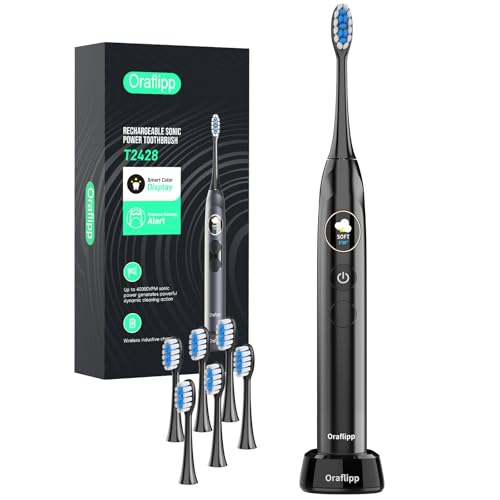
ORAFLIPP Sonic Electric Toothbrush with
For those who want real-time brushing feedback, the ORAFLIPP Sonic Electric Toothbrush combines a smart LED display and a visual pressure sensor to guide your technique. Its five modes and inductive charging make it a versatile choice for daily use.
Pros
- Smart LED display shows mode and battery status
- Visual pressure sensor with three-color feedback
- Five brushing modes including clean, soft, whiten
- Inductive charging base provides 30 days of use
- IPX7 waterproof rating allows shower use
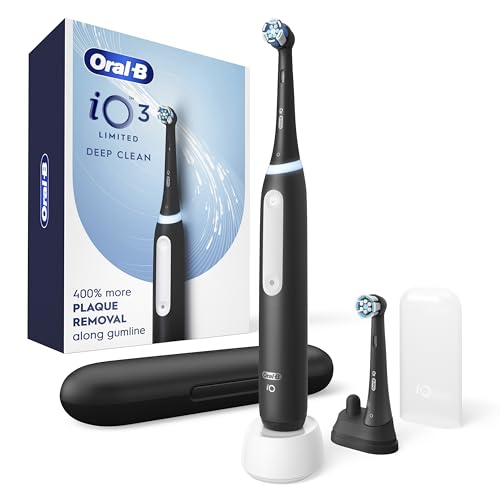
Oral-B iO Series 3 Deep Clean Electric Toothbrush
The Oral-B iO Series 3 combines a rotating brush head with gentle micro-vibrations for effective plaque removal and gum care. It offers three cleaning modes, a smart pressure sensor to protect gums, and includes two replacement heads and a travel case.
Pros
- Intelligent pressure sensor protects gums
- Three cleaning modes for personalized brushing
- Round head cleans hard-to-reach areas
- Smart timer and refill alert included
- Comes with two brush heads and travel case
Cons
- Only one color option available
- Limited to three cleaning modes
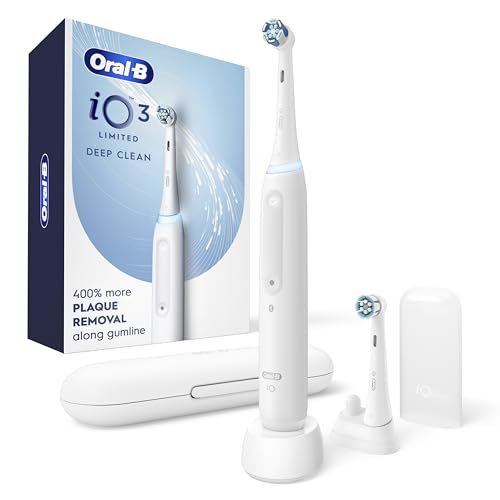
Oral-B iO3 Limited Deep Clean
The Oral-B iO3 is a rotating electric toothbrush designed to improve gum health in just one week. It features a visual pressure sensor to prevent overbrushing and a round brush head that cleans more effectively than manual brushes. With three cleaning modes and a long-lasting battery, it offers a customizable and thorough clean.
Pros
- Removes 100% more plaque than a manual brush
- Visual pressure sensor protects gums
- Round head reaches areas rectangular brushes miss
- Long-lasting lithium-ion battery
- 30-day money-back guarantee
Cons
- Only three cleaning modes

Philips Sonicare 5950 Electric Toothbrush
The Philips Sonicare 5950 is a high-performance sonic toothbrush with Fluid Action technology for cleaning between teeth and along the gumline. A built-in pressure sensor protects gums, while six brushing settings and smart timers help build consistent habits. It includes two C3 brush heads and a travel case, with up to 21 days of battery life.
Pros
- Fluid Action pushes fluid between teeth for deep cleaning
- Pressure sensor alerts when brushing too hard
- SmartTimer and BrushPacer ensure thorough brushing
- 6 customizable modes and intensity levels
- C3 brush heads remove up to 1000% more plaque
Cons
- Power adapter not included
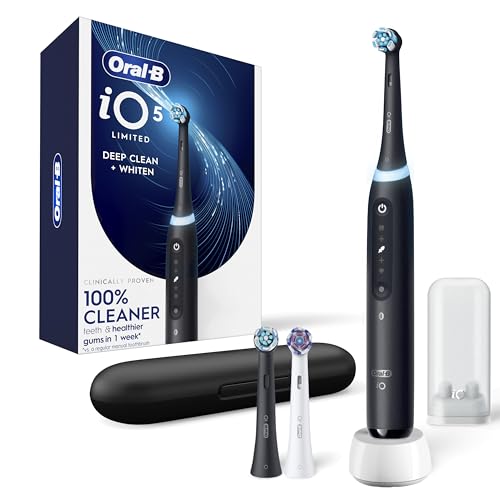
Oral-B iO5 Limited Deep Clean & Whiten Electric
This rotating electric toothbrush from Oral-B offers five cleaning modes and a visual pressure sensor to protect gums. It uses AI-powered real-time tracking through the app for thorough cleaning and includes a travel case for portability.
Pros
- Effective plaque removal
- Pressure sensor protects gums
- Multiple modes for varied needs
- Long battery life
- Comprehensive app guidance
Cons
- Limited to iO brush heads

Colgate 360 Vibrate Charcoal Sonic Toothbrush
This hybrid manual battery powered toothbrush uses sonic vibration to clean teeth, tongue, cheeks, and gums. It offers a familiar manual feel with added power from vibrating bristles, making it a solid budget friendly pick for a whole mouth clean.
Pros
- Combines manual control with sonic power
- Gentle soft bristles
- Covers entire mouth including tongue and cheeks
- Easy to use with single button
- Two pack offers good value
Cons
- No charging dock or rechargeable battery
- Limited vibration settings

Oral-B Pro 1000 Electric Toothbrush
This electric toothbrush uses a dentist-inspired round head to remove up to 100% more plaque along the gumline compared to a manual brush. It features three cleaning modes, a gum pressure control that stops pulsations if you brush too hard, and a quadrant timer for thorough brushing. Ideal for those seeking an affordable, effective electric toothbrush with gum protection.
Pros
- Removes up to 100% more plaque along gumline vs manual brush
- Gum pressure control stops pulsations when brushing too hard
- Three cleaning modes with quadrant timer alerts every 30 seconds
- Round brush head reaches areas rectangular brushes miss
- Long-lasting battery with LED charge indicator
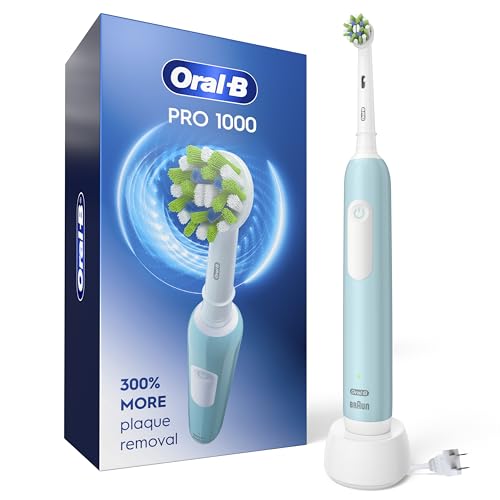
Oral-B Pro 1000 CrossAction Electric Toothbrush
For a dentist-inspired clean that prioritizes gum health, this rotating electric toothbrush uses its round brush head to remove more plaque along the gumline compared to a manual brush. With three cleaning modes and a pressure control that stops pulsations when brushing too hard, it offers a customizable and gentle experience. The quadrant timer and long-lasting battery with LED indicator round out a reliable daily routine.
Pros
- Removes up to 100% more plaque along the gumline vs. manual brush
- Gum pressure control stops pulsations if brushing too hard
- Three cleaning modes including sensi for gentle care
- Quadrant timer alerts every 30 seconds for thorough brushing
- Round brush head reaches areas rectangular brushes miss
Best Electric Toothbrush with Pressure Sensor Buying Guide
Pressure Sensor Technology
The pressure sensor is the core feature. Some models use a visual indicator (a light that changes color), while others provide haptic feedback (vibration pulse) or a combination of both.
Visual sensors are helpful for seeing when you’re brushing too hard, while haptic feedback lets you correct without looking in the mirror. Look for a sensor that triggers consistently and resets quickly after you ease off.
Higher-end brushes like the Oral-B iO series offer a smart ring that glows red when pressure is too high, green when optimal. Simpler models may use a single LED or a vibration pattern.
For some users, a visual sensor is enough; for others, haptic feedback is more intuitive. Consider which type fits your brushing habits.
Brushing Modes and Customization
Multiple cleaning modes let you tailor the experience. Common modes include daily clean, sensitive, whitening, gum care, and deep clean. If you have sensitive teeth or gums, a sensitive mode with gentler pulsations is valuable.
Whitening modes often alternate between high and low speeds to help remove surface stains. More modes give you flexibility, but a brush with 3 to 5 well‑chosen modes is usually sufficient.
Some brushes also offer intensity settings (low, medium, high) that work across all modes. This adds another layer of customization, especially if you’re new to electric brushing or have specific oral health needs.
Check whether the brush lets you save your preferred mode so you don’t have to cycle through options each time.
Battery Life and Charging
Battery life varies widely: from about 10 days for some Oral‑B models to 3 weeks or more for many sonic brushes. If you travel frequently, look for a brush that lasts at least 2 weeks on a full charge.
Inductive charging bases are common and convenient, but some models now offer USB‑C charging for greater portability. Also consider charging time, a quick charge feature can give you a single brushing session from a short charge.
A battery indicator (LED or digital display) helps you avoid running out mid‑brush. Some brushes, like the Aquasonic Clinical AQ, include an LCD screen showing battery level and mode.
For most people, a simple low‑battery warning is enough, but a percentage display adds peace of mind.
Brush Head Compatibility and Replacement Cost
Ongoing costs matter. Some brands require proprietary brush heads (e.g., Oral‑B, Philips Sonicare), while others use standard sizes. Check the cost per replacement head, generic alternatives may be available but can affect performance.
A brush that comes with multiple heads (like the Wagner Stern WHITEN+ with 8 heads) offers excellent initial value. Also verify that the brush head you need (e.g., sensitive, compact, extra soft) is readily available.
If you share a brush with family, look for models that accept different head types for each user. Some brushes have a color‑coding ring system to distinguish heads.
Replacement reminders (bristle fade or timer) help you change heads at the right interval, typically every 3 months.
Build Quality and Ergonomics
A comfortable, non‑slip grip is important for wet hands. Rubberized handles provide better traction than smooth plastic. Weight matters too, a heavier brush may feel more substantial but can tire your hand over a 2‑minute brushing session.
The button layout should be intuitive, with easy access to power and mode selection.
Water resistance (IPX7 rating is common) ensures the brush survives bathroom splashes and brief submersion. A travel case protects the brush when packing. Some cases have built‑in UV sanitizers, but a simple hard case is adequate for most users.
Check that the charging base has a stable design and doesn’t tip over easily.
Why You Should Trust Us
BestProducts evaluates each electric toothbrush using a consistent methodology.
We assign a BP Score (0, 10) based on thorough research: we analyze product specifications, aggregate expert review consensus from dental professionals and independent reviewers, collect verified buyer feedback, and review published data from reputable sources.
We do not conduct our own product trials; our evaluations are grounded in research, published data, expert review consensus, and verified buyer feedback. Our goal is to provide objective, data‑driven recommendations that help you make an informed purchase.
We update our reviews regularly to reflect new models, price changes, and evolving user feedback. Our team of editors and researchers has years of experience covering oral care products, and we maintain strict editorial independence.
We may earn a commission through affiliate links, but this does not influence our ratings or recommendations.
Final Thoughts
After evaluating dozens of models, these are our top picks for the best electric toothbrush with pressure sensor:
- Best Overall: Wagner Stern WHITEN+ Electric Toothbrush, Combines a responsive pressure sensor, 48,000 VPM sonic cleaning, five modes, and an exceptional bundle of eight brush heads and a travel case. Its BP Score of 9.9/10 reflects outstanding value and performance.
- Best for Gum Health: Oral‑B iO5 Limited Deep Clean & Whiten, Features a visual pressure sensor that glows red when brushing too hard, plus five modes including a dedicated gum care setting. The iO5 earned a 9.9/10 BP Score for its gentle yet effective cleaning.
- Best Budget Pick: Philips Sonicare 4100, Delivers reliable sonic cleaning with a pressure sensor at an accessible price. Its 9.9/10 BP Score proves you don’t need to spend a lot for effective gum protection.
- Best Value Bundle: Aquasonic Clinical AQ Ultra‑Whitening Smart Toothbrush, Includes a clear LCD screen, battery indicator, and two brush heads with a travel case. The pressure sensor and whitening modes make it a versatile choice, scoring 9.9/10.
Frequently Asked Questions
Do I really need a pressure sensor?
Yes, if you tend to brush aggressively. Over‑brushing can cause gum recession and enamel wear. A pressure sensor alerts you when you’re pressing too hard, helping you adopt a gentler technique.
Many dental professionals recommend a brush with this feature for long‑term oral health.
How does a pressure sensor protect my gums?
When you exceed the optimal brushing force (typically around 150, 200 grams), the sensor triggers a visual or haptic cue. Some brushes automatically reduce power or change oscillation speed.
This immediate feedback trains you to brush with lighter pressure, reducing the risk of gum irritation and tooth sensitivity.
What’s the difference between sonic and rotating toothbrushes?
Sonic brushes use high‑frequency vibrations (typically 30,000, 48,000 movements per minute) to create fluid dynamics that clean between teeth. Rotating brushes (like Oral‑B) use a mechanical oscillating‑rotating motion to break up plaque.
Both are effective, but sonic brushes tend to feel quieter and less aggressive, while rotating brushes offer a more traditional scrubbing sensation. Your choice often comes down to personal preference.
How often should I replace brush heads?
Most manufacturers recommend every 3 months, or sooner if bristles become frayed. Some brushes have a reminder indicator (fading bristles or a timer). Using a worn head reduces cleaning effectiveness and can harbor bacteria.
Check your brush head compatibility and stock up on replacements to stay on schedule.
Can I use any brush head with my electric toothbrush?
No, brush heads are often brand‑specific. Oral‑B brushes use their own click‑on heads, Philips Sonicare uses a snap‑on system, and other brands may have proprietary designs.
Some third‑party heads are available, but they may not fit perfectly or deliver the same cleaning performance. Always verify compatibility before buying replacement heads.
How long do electric toothbrush batteries last?
Most rechargeable electric toothbrushes have lithium‑ion batteries that last 2, 5 years with regular use. Battery life per charge varies from about 10 days to 3 weeks.
If you notice significantly shorter run times after a year or two, it may be time to replace the brush. Some models have replaceable batteries, but most are sealed units.
About the author
Katherine writes about styling irons and electric toothbrushes for BestProducts, weighing heat consistency, plate and brush quality, and dentist-backed features. She helps readers care for hair and teeth without paying for gimmicks.