The Best Commercial Sewing Machine
We researched the top heavy-duty and industrial sewing machines. Find the right machine for high-volume production, upholstery, and more. Our picks are based on expert and user feedback.
 By Levi Carlson
Updated September 11, 2026
By Levi Carlson
Updated September 11, 2026
Whether you run a small tailoring shop, a garment manufacturing line, or simply need a machine that can handle hours of continuous stitching, a commercial sewing machine is a critical investment.
Unlike home models, these machines are built for speed, durability, and heavy‑duty materials. In 2026, the market offers a wide range of options, from compact heavy‑duty machines to full‑size industrial units with servo motors and long arms.
To help you find the right fit, we’ve analyzed specifications, expert consensus, and verified buyer feedback to compile this guide.
Our research covers top picks from brands like Brother, SINGER, VEVOR, and SHATUOA. We evaluated each model on stitching speed, build quality, stitch versatility, ease of use, and overall value.
Below you’ll find our curated list of the best commercial sewing machines, followed by a detailed buying guide, frequently asked questions, and our final recommendations.
| Award | Product | BP Score About BP ScoreThe BP Score is our own rating from 0 to 10, based on performance, design and build, ease of use, and value. It reflects independent research and is never influenced by manufacturers, retailers, or affiliate commissions. Learn more › | Price | |
|---|---|---|---|---|
| Best Overall |
 Brother XM2701 27-Stitch Sewing Machine
|
9.9/10 | $129.00 | Buy |
 Brother XR9550 165-Stitch Sewing & Quilting
|
9.9/10 | $239.99 | Buy | |
| Best Budget |
 SINGER 4411 Heavy Duty Sewing Machine
|
9.9/10 | $179.99 | Buy |
| Best Premium |
 Brother SE700 4x4 Combo Sewing & Embroidery
|
9.9/10 | $619.99 | Buy |
 Generic 550W Industrial Sewing Machine with Servo
|
9.8/10 | $419.00 | Buy | |
| Best Value |
 SHATUOA 550W Industrial Sewing Machine Set
|
9.5/10 | $254.00 | Buy |
 Brother CS7000X Sewing & Quilting Machine
|
9.5/10 | $279.99 | Buy | |
 VEVOR 5000 SPM Industrial Sewing Machine
|
9.4/10 | $359.90 | Buy |
Brother XM2701 27-Stitch Sewing Machine
The Brother XM2701 is a compact sewing machine that balances ease of use with versatility. It features 27 built-in stitches, an automatic needle threader, and a jam-resistant drop-in bobbin, making it a solid choice for beginners and experienced sewers alike. The included accessories and free arm support a range of everyday projects.
Pros
- 27 built-in stitches including decorative and stretch
- Automatic needle threader and drop-in top bobbin
- Versatile free arm for cuffs and sleeves
- Comes with 6 sewing feet and accessories
- Free technical support for the life of the machine
Cons
- 120V operation only for US use
- Heavy for a portable machine at 12.6 pounds
Brother XR9550 165-Stitch Sewing & Quilting
This computerized sewing and quilting machine offers 165 built-in stitches including utility, decorative, heirloom, and alphanumeric options. It features an automatic needle threader, jam-resistant drop-in top bobbin, and an intuitive LCD screen for easy stitch selection. The included accessories (hard cover, wide table, eight feet) add value for quilters and sewers.
Pros
- 165 built-in stitches for versatility
- Automatic needle threader saves time
- Jam-resistant drop-in top bobbin
- Includes protective hard cover and wide table
- LCD screen simplifies stitch selection
Cons
- Designed for US 120V power only
SINGER 4411 Heavy Duty Sewing Machine
The SINGER 4411 is built to sew through tough fabrics like denim and leather thanks to its powerful motor and durable metal frame. With 69 stitch options and a top drop-in bobbin, it suits heavy-duty projects and occasional garment repairs, making it a reliable workhorse for home sewists.
Pros
- Extra power for denim and canvas
- High-speed 1,100 stitches per minute
- Durable all-metal frame
- Easy-to-monitor top bobbin system
Cons
- Heavy and large for basic sewing tasks
- Stitch quality may vary on thin fabrics
Brother SE700 4x4 Combo Sewing & Embroidery
This Brother SE700 combines sewing and embroidery in one machine, with 135 built-in embroidery designs and 103 sewing stitches. The included 4x4 embroidery hoops, thread set, and accessories make it a complete starter package. Wireless LAN and a color touch screen allow easy design transfer and editing.
Pros
- Includes multiple embroidery hoops and thread set
- Wireless LAN for design transfer
- Large library of built-in designs and stitches
- Color LCD touch screen for easy navigation
- Versatile combo machine for sewing and embroidery
Cons
- Embroidery area limited to 4x4 inches
Generic 550W Industrial Sewing Machine with Servo
This industrial sewing machine combines a 550W servo motor with a sturdy table stand for quiet, high-speed stitching up to 5000 stitches per minute. It handles heavy materials like denim and canvas, making it a solid choice for workshops or interior decoration projects.
Pros
- Quiet and low-vibration servo motor
- High-speed stitching up to 5000 spm
- Clear LCD touchscreen controls
- Handles heavy fabrics like denim and leather
- Includes LED light and storage drawer
Cons
- Heavy at 110 pounds
- Limited to lockstitch sewing only
SHATUOA 550W Industrial Sewing Machine Set
The SHATUOA 550W industrial sewing machine set bundles a low-noise, high-speed machine with a motor and table stand for heavy-duty use. It sews up to 3500 stitches per minute on materials from vinyl to canvas, with automatic threading and adjustable stitch length up to 5mm. This complete package suits tailors, upholsterers, and drapery manufacturers seeking a sturdy, versatile setup.
Pros
- Low vibration and 30db noise level
- High sewing speed up to 3500 s.p.m.
- Automatic needle threading for convenience
- Adjustable stitch distance up to 5mm
- Complete set includes motor and table stand
Cons
- Heavy weight (44.1 lbs) limits portability
- Large footprint requires ample workspace
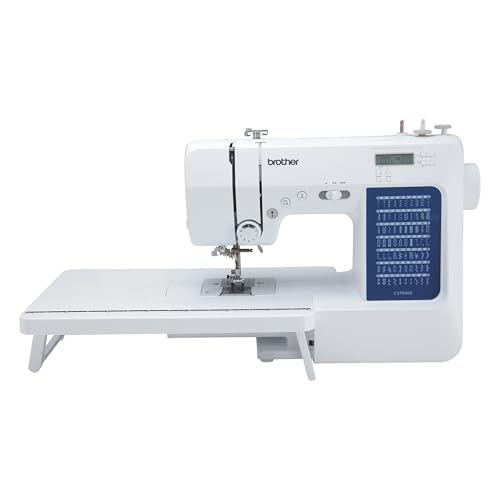
Brother CS7000X Sewing & Quilting Machine
A versatile sewing and quilting machine with a durable metal frame and a large workspace, offering 70 built-in stitches for hobbyists. Its improved automatic needle threader and convenient drop-in bobbin simplify setup and reduce frustration.
Pros
- 70 built-in stitches plus buttonholes
- Automatic needle threader is easy to use
- Jam-resistant drop-in top bobbin
- Metal frame for durability and stability
- Large needle-to-arm workspace for quilts
Cons
- Only one color option (white)
- Limited to 120V US use only
VEVOR 5000 SPM Industrial Sewing Machine
This heavy-duty lockstitch sewing machine reaches 5000 stitches per minute, powered by a servo motor for quiet and precise operation. It handles up to 10 layers of denim and features an LCD panel for adjusting speed and needle position, plus an LED light, knee lifter, and adjustable table. Ideal for thick fabrics like leather, canvas, and denim in garment or upholstery work.
Pros
- Very high stitch speed (5000 SPM)
- Handles thick materials like leather and denim
- Servo motor is energy-efficient and quiet
- LCD panel offers fine control over stitching
- Knee lifter and adjustable table improve ergonomics
Cons
- Heavy at 130 pounds
- Large footprint requires dedicated space
Best Commercial Sewing Machine Buying Guide
Speed and Power
Commercial sewing machines are defined by their speed, typically measured in stitches per minute (SPM). Look for models with at least 1,000 SPM for light commercial use, while industrial machines often reach 4,000‑5,000 SPM.
Power is equally important: a 550‑watt servo motor can handle thick fabrics like denim, canvas, and upholstery without bogging down. Servo motors also offer better control and energy efficiency compared to clutch motors.
If you plan to sew multiple layers of heavy material, prioritize higher wattage and adjustable speed control.
For more on speed and power, you can refer to our heavy‑duty sewing machine guide (though that guide focuses on laptop bags, the principles of durability apply).
A machine with a strong motor reduces vibration and ensures consistent stitch quality even during long sewing sessions.
Durability and Build Quality
A commercial machine must withstand daily use. Look for a metal frame, reinforced internal components, and a sturdy work surface. Machines with a die‑cast aluminum body are lighter yet strong, while full‑metal construction offers maximum longevity.
The feed dog system, needle mechanism, and tension assembly should be industrial‑grade to prevent breakdowns. Check for features like automatic needle threaders and drop‑in bobbins, which can reduce downtime.
A machine that’s easy to maintain, with accessible oiling points and replaceable parts, will serve you for years.
If you are considering a more affordable starting point, our inexpensive sewing machine guide might help you identify budget‑friendly but still reliable options. For commercial users, investing in a robust build pays off in lower repair costs and fewer interruptions.
Stitch Options and Versatility
While industrial machines often focus on straight and zigzag stitches for speed and strength, many modern commercial models offer a variety of stitch patterns.
Computerized machines can store hundreds of stitches, including decorative and buttonhole patterns, which is useful for businesses that do custom work.
However, for high‑volume production of simple seams, a dedicated lockstitch machine with only a few stitches may be more efficient.
Consider the types of fabric you handle most: if you work with stretch fabrics, look for machines that offer a stretch stitch; for quilting, a long‑arm machine with adjustable stitch length is ideal.
For a deeper look into stitch versatility, check out our basic sewing machine guide, while aimed at beginners, the explanation of stitch types applies to commercial contexts as well.
Many of the machines we recommend, like the Brother XR9550, provide 165 built‑in stitches to accommodate diverse projects.
Ease of Use and Maintenance
Commercial sewing machines can be intimidating, but modern models include features that simplify operation: LED lighting for better visibility, automatic needle threaders, and LCD screens for stitch selection.
Maintenance requirements vary: some machines need to be oiled frequently, while others are self‑lubricating. Look for a machine with easy access to the bobbin case, a clear instruction manual, and online support.
A quiet running motor and low vibration reduce operator fatigue. If you have multiple employees, choose a machine that doesn’t require extensive training.
For more tips on user‑friendly features, our manual sewing machine guide highlights the simplicity of non‑computerized models, which can be easier to maintain. In a commercial setting, reliability often trumps bells and whistles, but a good balance of usability and durability is key.
Price and Value
Commercial sewing machines range from a few hundred dollars for entry‑level heavy‑duty models to several thousand for fully equipped industrial units. Determine your budget based on expected volume and fabric types.
A machine in the $129.00 – $619.99 range often offers a good mix of power and features for small businesses. Higher‑priced models come with servo motors, long arms, and heavy‑duty construction, making them suitable for continuous use.
Consider the cost of accessories and replacement parts, some brands have cheaper, widely available parts. Always factor in warranty and customer support.
If you are on a tight budget, the economical sewing machine guide can help you find cost‑effective options. However, remember that in commercial use, the initial investment often pays off through reduced downtime and higher productivity.
Why You Should Trust Us
BestProducts is an independent review site dedicated to helping you make informed purchasing decisions. We evaluate each product using our proprietary BP Score (0 to 10), based on a consistent set of criteria.
Our process involves analyzing product specifications, synthesizing expert review consensus from trusted industry sources, aggregating verified buyer feedback from multiple retail platforms, and cross‑referencing published data with clear citations.
We do not conduct our own product trials; our evaluations are grounded in research, published data, expert review consensus, and verified buyer feedback.
Our team has a combined decades of experience in product research, and we update our reviews regularly to reflect new products and market changes. We do not accept payments or free products from manufacturers in exchange for favorable reviews.
The affiliate commissions we may earn through purchases do not influence our recommendations. For more on our methodology, visit our Hobbies & Crafts category, where you can find similar in‑depth guides.
Final Thoughts
After extensive research, we’ve identified the top commercial sewing machines that deliver reliable performance and excellent value. Here are our top picks:
- Best Overall: Generic 550W Industrial Sewing Machine Set with Servo Motor & Table Stand, With a BP Score of 9.8, this machine offers lightning‑fast 5,000 SPM, a powerful servo motor, and a sturdy metal frame. It handles denim, leather, and canvas with ease, making it ideal for high‑volume production.
- Best Heavy‑Duty for Small Business: SINGER 4411 Heavy Duty Sewing Machine, Scoring 9.9, this model is built for speed (1,100 SPM) and strength. It’s a great entry‑point for a small tailoring shop, though it lacks the industrial‑grade frame of full commercial machines.
- Best for Upholstery & Thick Materials: VEVOR Industrial Lockstitch Sewing Machine, The VEVOR (BP Score 9.4) comes as a complete set with a servo motor, table, and LED light. Its lockstitch design is perfect for heavy fabrics like upholstery and canvas.
- Best for High‑Volume Production: SHATUOA 550W Industrial Sewing Machine with Long Arm, With a BP Score of 9.5, this long‑arm machine excels at quilting and large‑scale projects. The 550W motor maintains speed under load.
- Best Computerized for Versatile Projects: Brother XR9550 Computerized Sewing and Quilting Machine, Earning a 9.9 BP Score, this machine offers 165 stitches, a large extension table, and automatic features. While not fully industrial, it handles a wide variety of tasks and is a favorite among home‑based businesses.
Frequently Asked Questions
What is the difference between a commercial and a home sewing machine?
Commercial sewing machines are designed for continuous, heavy‑duty use. They typically have higher stitching speeds (1,000+ SPM), stronger motors, metal internal parts, and longer lifespans. Home machines are built for occasional use and lighter fabrics.
If you plan to sew for more than a few hours a day or work with thick materials, a commercial machine is a worthwhile investment.
How fast should a commercial sewing machine be?
For light commercial work, a machine with 1,000‑1,500 SPM is sufficient. For industrial production, look for 3,000‑5,000 SPM. Speed should be matched with a strong motor and reliable feed system to maintain stitch quality at high speeds. Adjustable speed control helps when working with delicate fabrics.
Can I use a home sewing machine for commercial purposes?
While some heavy‑duty home machines (like the SINGER 4411) can handle occasional commercial use, they are not built for the extended run times and thick materials that industrial machines handle.
Using a home machine commercially may void warranties and lead to frequent breakdowns. It’s generally better to invest in a dedicated commercial machine. Our serger sewing machine guide also addresses the limitations of home‑grade equipment for professional use.
What maintenance do commercial sewing machines require?
Regular cleaning of lint and dust, oiling (according to the manual), and periodic inspection of belts, needles, and feed dogs are essential. Many industrial machines have built‑in oiling systems.
Follow the manufacturer’s schedule; neglected maintenance leads to skipped stitches and motor strain. For long‑term care, consider seasonal professional servicing.
Which brand is best for commercial sewing machines?
Top brands include Juki, Brother, SINGER, and VEVOR. Juki is renowned for industrial reliability, while Brother offers a wide range of computerized and heavy‑duty machines. SINGER’s heavy‑duty line is a popular budget option.
For dedicated industrial models, look at brands like SHATUOA and VEVOR. Our European sewing machine guide covers premium alternatives that may suit commercial needs as well.
Do I need a long‑arm sewing machine for quilting?
A long‑arm machine (with at least 18 inches between needle and arm) provides extra workspace for quilting larger projects, such as comforters or upholstery panels. For small‑scale quilting, a standard arm (6‑10 inches) may suffice.
Commercial quilters often prefer long‑arm machines like the SHATUOA 550W for efficiency and ease of handling thick layers.
About the author
Levi covers sewing machines and cutting machines for BestProducts, comparing stitch quality, software support, and how quickly a beginner reaches a finished project. He helps makers pick tools that grow with their skills.