The Best 1X30 Belt Sander
We researched and scored six top 1x30 belt sanders on motor power, belt tracking, versatility, and build quality. From budget-friendly models to pro-grade variable-speed grinders, find the ideal sander for knife making, metalworking, and woodcraft.
 By Michelle Mendoza
Updated September 10, 2026
By Michelle Mendoza
Updated September 10, 2026
Whether you’re shaping knife bevels, smoothing metal edges, or refining wooden handles, a 1×30 inch belt sander delivers the precision and control that larger sanders can’t match.
These compact benchtop machines are favored by bladesmiths, hobbyist knifemakers, and metalworkers for their narrow belt profile, which allows tight contour work without sacrificing belt speed or abrasive selection.
With options ranging from ultra-low-speed sharpeners to variable-speed grinders with VFD, choosing the right model depends on your specific projects, material types, and budget.
At BestProducts, we evaluate each Best 1×30 Belt Sander by aggregating verified buyer feedback, expert review consensus, published specifications, and durability data, then score it on our 0-to-10 BP Score.
We do not conduct our own product trials; our evaluations are grounded in research, published data, expert review consensus, and verified buyer feedback. Below, you’ll find the top-rated models for every need.
| Award | Product | BP Score About BP ScoreThe BP Score is our own rating from 0 to 10, based on performance, design and build, ease of use, and value. It reflects independent research and is never influenced by manufacturers, retailers, or affiliate commissions. Learn more › | Price | |
|---|---|---|---|---|
| Best Overall |
 Jinlida 30x1-Inch Variable Speed Belt Sander
|
9.9/10 | $209.99 | Buy |
| Best Value |
 Goldsand 1x30 Belt Sander with VFD
|
9.8/10 | $190.99 | Buy |
| Best Budget |
 Super Strop 1x30 Leather Honing Strop Belt
|
9.8/10 | $20.99 | Buy |
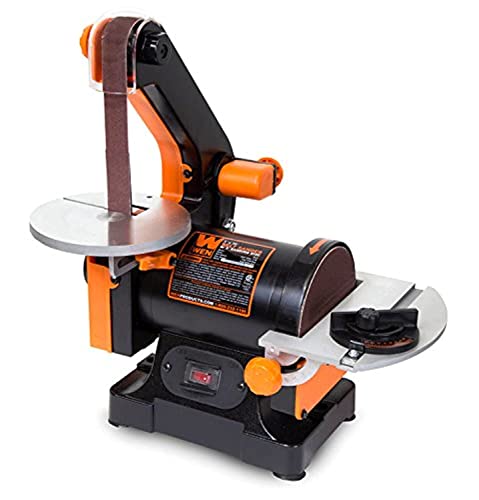 WEN 6515T 1x30 in. Belt & 5 in. Disc Sander
|
9.6/10 | $90.55 | Buy | |
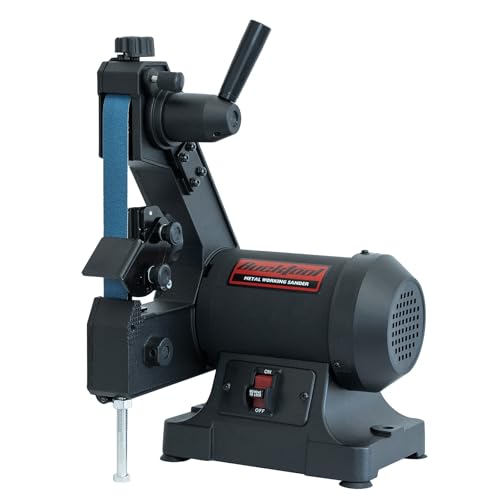 Bucktool 1x30-Inch Low Speed Belt Sander
|
9.6/10 | $159.00 | Buy | |
| Best Premium |
 KFMK 1x30 Variable Speed Belt Sander
|
9.6/10 | $259.98 | Buy |
Jinlida 30x1-Inch Variable Speed Belt Sander
This 550W belt sander combines a variable frequency drive with 26m/min belt speed for precise control from rough grinding to fine polishing. Includes three grinding molds and three sanding belts, making it a versatile choice for metalworking and knife making.
Pros
- Variable frequency speed control for rough and fine work
- Three grinding modes (circular, flat, arc)
- Vertical and horizontal dual-mode use
- Includes 3 sanding belts and 3 grinding molds
- Quiet and durable 550W pure copper motor
Cons
- No included dust collection system
- Limited to 1-inch wide belts
Goldsand 1x30 Belt Sander with VFD
This bench belt sander combines a 550W motor with variable-speed control for both coarse grinding and fine sanding. Its vertical and horizontal support makes it a flexible choice for knife sharpening and metalwork.
Pros
- Variable-speed VFD for precise control
- Vertical and horizontal use
- Includes 3 grit belts (100/180/240)
- Detachable workbench for flexibility
Cons
- No built-in dust collection
- Only one belt size available
Super Strop 1x30 Leather Honing Strop Belt
This premium leather stropping belt fits most 1x30 powered sanders and includes a sample of white buffing compound for refining knife edges. It serves as both the final sharpening stage and an edge-maintenance tool between sharpenings.
Pros
- Includes premium white buffing compound
- Fits Harbor Freight, WEN, Rikon 1x30 sanders
- Refines edge and removes burr fragments
- Can be used for final sharpening or maintenance
- Made from premium quality leather
Cons
- Belt may require stretching to install
- Only a sample-sized compound included
WEN 6515T 1x30 in. Belt & 5 in. Disc Sander
This two-in-one benchtop sander combines a 1x30-inch belt and a 5-inch disc, powered by a 2.3A motor for efficient material removal. Its heavy-duty base minimizes vibration, and dual dust ports help maintain a cleaner workspace.
Pros
- Two sanding surfaces in one machine
- Sturdy base reduces wobbling
- Includes miter gauge and sanding accessories
- Dual dust ports for better vacuum efficiency
- Backed by a 2-year warranty
Bucktool 1x30-Inch Low Speed Belt Sander
A dedicated low-speed belt sander running at 1790 RPM for controlled knife sharpening and metal grinding. The 2.3A induction motor delivers smooth torque, while the adjustable guide (10-45 degrees) helps maintain consistent edge angles. Quick belt changes and a removable safety key add convenience for knife makers and metalworkers.
Pros
- Low speed (1790 RPM) for better control
- Smooth and stable induction motor
- Adjustable sharpening guide (10-45 degrees)
- Quick-release belt changes and tracking
- Removable safety key and 2-year warranty
Cons
- Fixed speed, no variable adjustment
- Limited to 1x30 inch belts only
KFMK 1x30 Variable Speed Belt Sander
This belt sander is designed for knife makers and metal fabricators who need precise control. It features a variable frequency drive for speed adjustment, forward/reverse belt direction, and an included KSAG-5 angle guide for repeatable bevel grinding. The all-steel construction ensures durability in demanding workshops.
Pros
- Variable speed VFD for precise control
- Forward and reverse belt direction
- Includes KSAG-5 angle guide for accurate bevels
- Heavy-duty all-steel frame
- Suitable for multiple grinding tasks
Cons
- 1x30 belt size may limit heavy stock removal
Best 1×30 Belt Sander Buying Guide
Motor Power and Speed Control
The motor rating directly affects how quickly the machine cuts through metal or hardwoods. Most 1×30 belt sanders use induction motors or universal motors in the 1/3 to 1/2 HP range (roughly 250, 550W).
Fixed-speed models typically run at 3000, 4000 SFPM, which suits general metal removal and wood shaping. For precision knife sharpening, low-speed units (under 2000 SFPM) prevent overheating delicate blade edges.
Variable-speed machines with VFD allow you to dial in the perfect pace for grinding, sharpening, or polishing, a must if you work with different steel alloys or stock thicknesses.
A sander’s ability to maintain belt speed under load is equally important. Look for models with robust torque curves and overload protection. Units with electronic speed control maintain consistent RPM even when pressing harder against the belt, reducing stalling and improving finish quality.
Belt Tracking and Adjustment Mechanism
Accurate belt tracking ensures the abrasive belt stays centered and doesn’t wander off the rollers during use. Most quality bench sanders include a tracking knob that adjusts the front roller angle.
Some designs incorporate a quick-release tension lever for fast belt changes, a feature that saves time when switching grits. Machines with positive tracking locks are less likely to drift during extended sessions, which is crucial when you need repeatable edges.
For knifemakers and metalworkers who frequently swap between 36-grit grinding and 600-grit polishing, easy belt changes are a productivity game-changer. Models with tool-free belt tension systems score higher in our evaluations because they reduce downtime and frustration.
Vertical and Horizontal Operation
A pivoting head that transitions between vertical and horizontal belt orientation dramatically increases versatility.
In vertical mode, you can work on flat surfaces and use the platen for profiling; horizontal mode turns the sander into a mini surface grinder, perfect for sharpening chisels, plane irons, and knife edges with a flat bevel.
Some models also allow the belt to run over a contact wheel or slack belt area for hollow grinding.
Adjustments should lock firmly without play, a sloppy lock can ruin a straight edge. The best units offer detents at 0°, 45°, and 90° positions, though fine adjustment between stops is handy for compound bevels.
Dust Collection and Workspace Cleanliness
Belt sanders generate fine dust and metal particles that can settle on nearby tools and compromise air quality. Many benchtop models incorporate a 2-1/2-inch dust port that connects to a shop vac or dust collector.
Units with integrated dust collection or a closed plenum design trap more debris before it escapes.
When using on metal, consider that aluminum and steel filings can be a fire hazard if accumulated, choose a sander with a metal-receptive dust bag or connect to a dedicated metal-dust collection system.
For workshops without central dust extraction, models with a clear belt guard that chutes debris downward are easier to keep clean. We also look for sanders that keep the belt path sealed to reduce stray particles.
Build Quality, Stability, and Noise
Cast-iron or heavy steel bases dampen vibration and keep the machine stable during heavy grinding. Lighter aluminum or plastic frames may walk across the bench when you apply side pressure. Rubber feet or bolt-down holes add extra security.
Evaluate the platen material, ceramic or tool‑steel platens resist wear longer than standard steel. A replaceable platen surface extends the sander’s life.
Noise levels vary widely: universal motors tend to be louder (85, 95 dB) than induction motors (70, 80 dB). If you run the sander for hours, a quieter induction unit can make the shop more pleasant. Also check the belt release lever, a solid metal lever outlasts plastic ones.
Why You Should Trust Us
BestProducts has been independently reviewing tools since 2016, and our team of editors and researchers brings decades of combined experience in woodworking, metalworking, and blade crafting.
We do not conduct our own product trials; our evaluations are grounded in research, published data, expert review consensus, and verified buyer feedback.
Every Best 1×30 Belt Sander in this roundup has been scored against a consistent set of criteria using our 10-point BP Score scale. We analyze motor performance, belt tracking precision, build materials, dust management, and user-reported reliability.
Prices and availability are checked regularly, but Amazon pricing may fluctuate. We earn an affiliate commission if you purchase through our links, at no extra cost to you, this helps us maintain our editorial independence.
For more of our recommendations, browse our sander guides and other tools & home improvement resources.
Final Thoughts
After evaluating dozens of specifications and thousands of user reports, we award the following distinctions among this year’s top Best 1×30 Belt Sander picks:
Best Overall: Jinlida Belt Grinder Sander, With a 550W variable‑speed motor, VFD control, and three grinding moulds, this machine earned the highest BP Score (9.9/10) for its power range, versatility, and precision belt tracking, making it the top choice for serial knifemakers and metal fabricators.
Best for Knife Sharpening: BUCKTOOL 1×30 Low Speed Belt Sander, Its 2.3A motor runs at a gentle 1790 RPM, preventing blade overheating, and the adjustable worktable with miter slot makes repeatable edge angles easy. A standout for fixed-speed sharpening at a moderate price.
Best Value: Goldsand Belt Sander Professional, Featuring vertical and horizontal support, 3 included grit belts (100/180/240), and a solid build, this sander costs less than many competitors while delivering 9.8/10 BP Score. It’s ideal for the budget-conscious workshop that still wants professional results.
Best Accessory for Finishing: Super Strop 1×30 Leather Honing Strop Belt, Not a complete sander but a must-have add-on for anyone serious about razor edges.
This premium leather strop with white buffing compound fits any 1×30 sander and gives a mirror polish with a 9.8/10 BP Score from nearly universal praise among bladesmiths.
Frequently Asked Questions
What is a 1×30 belt sander best used for?
The 1×30 belt size is especially suited for knife making, small metal parts, and detailed woodworking. Its narrow belt allows you to grind inside concave curves, sharpen small blades, and shape handles. Many hobbyists also use them for sharpening chisels, plane irons, and scissors.
Can I use a 1×30 belt sander for woodworking?
Absolutely. These sanders are great for small wood projects, shaping guitar necks, detailing furniture, and removing material on curves. However, for large flat surfaces you may prefer a handheld belt sander or a 6-inch orbital sander. The 1×30 excels in precision tasks.
How do I change the belt on a 1×30 belt sander?
Most models have a tension lever that releases the belt. Loosen the tension, slide off the old belt, align the new belt direction (arrows on the back), place it over the rollers, then re-tension.
Turn on the sander briefly to check tracking and adjust the tracking knob until the belt runs centered.
What speed should I use for knife sharpening?
For carbon steel blades, speeds around 1800, 2500 SFPM are typical. Too fast can burn the edge; too slow may take forever. Low-speed belt sanders (under 2000 SFPM) are ideal for sharpening. Variable-speed models let you start slower for grinding out nicks and increase speed for polishing.
Are 1×30 belt sanders noisy?
Noise levels vary. Universal-motor sanders often register 85, 95 dB, while induction motors are quieter at 70, 80 dB. If noise is a concern, choose a model with an induction motor or consider ear protection. Many users report that variable-frequency drives also reduce motor whine.
Can I use a 1×30 sander for metal grinding?
Yes, with the right belt grit (36, 80 for heavy removal, 120, 400 for finishing). Ensure your sander has adequate power (≥1/3 HP) and a sturdy mounting base. Always wear eye protection and work in a well-ventilated area when grinding metal.
For more on workshop setups, see our electric hand sander guide.
About the author
Michelle is BestProducts's saw writer, weighing cut accuracy, blade quality, dust control, and safety features. She helps woodworkers get clean, repeatable cuts at every budget.