The Best Ultrawide 4K Monitor
Find the top ultrawide 4K monitors after rigorous analysis of specs, expert opinions, and real buyer reviews. From gaming to productivity, our picks suit every need.
 By Irene Hopkins
Updated September 10, 2026
By Irene Hopkins
Updated September 10, 2026
An ultrawide monitor with 4K-class resolution delivers the screen real estate you need for seamless multitasking and immersive gaming, but finding the right blend of size, panel quality, and connectivity can be overwhelming.
After analyzing specifications, expert review consensus, and verified buyer feedback, we’ve identified the top models that deliver outstanding performance for productivity and entertainment alike.
Below, you’ll find our curated list of the best ultrawide 4K monitors to suit various budgets and use cases.
| Award | Product | BP Score About BP ScoreThe BP Score is our own rating from 0 to 10, based on performance, design and build, ease of use, and value. It reflects independent research and is never influenced by manufacturers, retailers, or affiliate commissions. Learn more › | Price | |
|---|---|---|---|---|
| Best Overall |
 LG 34SR60QC-W 34" QHD Curved Smart Monitor
|
9.9/10 | $349.99 | Buy |
| Best Value |
 INNOCN 49C1R 49-Inch Curved Ultrawide Monitor
|
9.9/10 | $664.99 | Buy |
| Best Premium |
 Samsung 49" Curved Ultrawide Dual QHD Monitor
|
9.8/10 | $849.99 | Buy |
| Best Budget |
 ZZA 34-Inch Ultrawide WQHD Curved Monitor
|
9.8/10 | $199.99 | Buy |
 Samsung Odyssey Neo G9 G95NC 57-Inch Dual UHD
|
9.7/10 | $1,449.99 | Buy | |
 Samsung Odyssey G7 G75F 40" WUHD Curved
|
9.6/10 | $699.99 | Buy | |
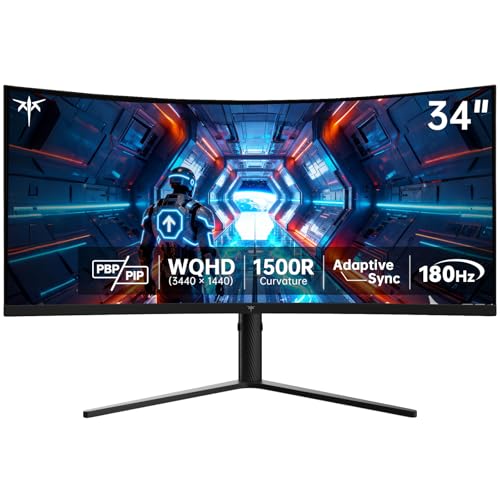 KTC H34S5 34-Inch Ultrawide Curved Gaming
|
9.6/10 | $259.99 | Buy | |
 INNOCN 45C1R 45-inch Ultrawide Curved Monitor
|
9.6/10 | $624.99 | Buy | |
 Samsung Odyssey G5 34-Inch 1000R Curved
|
9.5/10 | $279.99 | Buy |
LG 34SR60QC-W 34" QHD Curved Smart Monitor
This 34-inch ultrawide QHD curved monitor doubles as a smart TV with built-in webOS streaming apps. It supports AirPlay 2 mirroring and includes a 100Hz refresh rate, making it suitable for both productivity and casual entertainment.
Pros
- Built-in webOS with streaming apps and free LG Channels
- Ultrawide 21:9 curved display with 99% sRGB color gamut
- Supports Apple AirPlay 2 and HomeKit wireless casting
- Cloud PC access without a computer via webOS
- Two HDMI and three USB ports for versatile connectivity
Cons
- Limited to 100Hz refresh rate
- No ergonomic stand adjustments (height, pivot)
- Magic Remote sold separately
INNOCN 49C1R 49-Inch Curved Ultrawide Monitor
This 49-inch VA panel offers a 5120x1440 resolution at 120Hz with Adaptive-Sync, combining an immersive 32:9 curved display with solid color accuracy from 99% sRGB and HDR400 support. Its USB-C port with 65W power delivery and full ergonomic adjustments make it a versatile choice for work and play.
Pros
- Ultrawide 32:9 5120x1440 resolution
- 120Hz refresh rate with Adaptive-Sync
- 99% sRGB and HDR400 color performance
- USB-C 65W power delivery and extensive ports
- Height/tilt adjustable stand with PIP/PBP
Cons
- Built-in speakers likely lack audio quality
- HDR400 is entry-level HDR performance
Samsung 49" Curved Ultrawide Dual QHD Monitor
This 49-inch curved ultrawide monitor offers a panoramic Dual QHD display that wraps around your field of view, making it ideal for multitasking professionals. With a 120Hz refresh rate, built-in speakers, and USB-C with 90W charging, it doubles as a docking station for a clutter-free desk.
Pros
- Immersive curved ultrawide workspace
- Acts as a docking station with multiple inputs
- Smooth 120Hz refresh rate
- HDR support enhances color depth
- Built-in speakers free up desk space
Cons
- Heavy at over 32 pounds
- Limited to Dual QHD, not 4K
ZZA 34-Inch Ultrawide WQHD Curved Monitor
This 34-inch ultrawide monitor from ZZA offers a 3800R curve and WQHD resolution for expansive views in gaming and productivity. Its 100Hz refresh rate and built-in speakers make it a functional all-in-one display for users seeking smooth motion and convenience.
Pros
- Immersive 34-inch curved screen
- Smooth 100Hz refresh rate
- Rich 100% sRGB color accuracy
- Built-in speakers save desk space
- Versatile HDMI and DisplayPort inputs
Cons
- Only 100Hz refresh rate, not for high-end gaming
- No adjustable stand included
- Limited to 3800R curvature, less aggressive curve
Samsung Odyssey Neo G9 G95NC 57-Inch Dual UHD
This 57-inch curved monitor delivers dual 4K resolution in a single screen, effectively replacing two UHD monitors with a seamless, immersive view. Its 240Hz refresh rate, 1ms response time, and DisplayPort 2.1 input make it a top choice for competitive gamers seeking ultra-wide, high-performance visuals.
Pros
- World's first dual UHD resolution for expansive workspace
- 240Hz refresh rate and 1ms response time
- Quantum Mini LEDs with 2,392 local dimming zones
- VESA DisplayHDR 1000 for vivid contrast
- AMD FreeSync Premium Pro for smooth gameplay
Cons
- Large size and weight (41.9 lbs) may require sturdy desk
- Premium pricing limits accessibility
Samsung Odyssey G7 G75F 40" WUHD Curved
The Samsung Odyssey G7 G75F wraps around your field of vision with a 1000R curve and ultrawide 4K resolution, making it a solid choice for immersive gaming. With its 180Hz refresh rate and 1ms response time, it minimizes lag for smooth, competitive play.
Pros
- Immersive 1000R curved 40-inch screen
- Ultrawide 4K resolution for sharp detail
- 180Hz refresh rate reduces motion blur
- 1ms GtG response time minimizes lag
- VESA DisplayHDR 600 enhances contrast
Cons
- No height or swivel adjustments listed
- Requires ample desk space at 40 inches
KTC H34S5 34-Inch Ultrawide Curved Gaming
The KTC H34S5 is a 34-inch ultrawide curved gaming monitor with a 3440x1440 resolution and 180Hz refresh rate. It uses an HVA panel for high contrast and vivid colors, and includes an ergonomic stand with full adjustability. Ideal for gamers and multitaskers seeking an immersive widescreen experience.
Pros
- 180Hz refresh rate with adaptive sync
- 1ms MPRT for smooth motion
- 4000:1 contrast ratio and HDR
- Fully adjustable ergonomic stand
- Three-year warranty and responsive support
Cons
- HDMI 2.0 limited to 100Hz at 3440x1440
INNOCN 45C1R 45-inch Ultrawide Curved Monitor
The INNOCN 45C1R is a 45-inch ultrawide VA monitor with a 32:9 aspect ratio and 5120x1440 resolution. It delivers a smooth 120Hz refresh rate, HDR400, and includes a USB-C port with 90W power delivery, making it a solid choice for both productivity and gaming. The adjustable stand and PIP/PBP features add flexibility for multitasking.
Pros
- Ultra-wide 32:9 aspect ratio for immersive multitasking
- High 5120x1440 resolution with 120Hz refresh rate
- USB-C with 90W power delivery for single-cable connectivity
- PIP/PBP allows dual-source display at once
- Ergonomically adjustable stand with tilt, swivel, height
Cons
- VA panel may have limited viewing angles compared to IPS
- HDR400 provides only modest HDR performance
Samsung Odyssey G5 34-Inch 1000R Curved
With a deep 1000R curve and WQHD resolution, this ultrawide monitor wraps around your view for immersive gaming. Its 165Hz refresh rate and 1ms response time keep motion smooth, while HDR10 support enhances color and contrast in darker scenes.
Pros
- Immersive 1000R curved screen
- Smooth 165Hz refresh rate
- Fast 1ms response time
- Adaptive sync with FreeSync Premium
- Vivid HDR10 color accuracy
Cons
- VA panel may have narrower viewing angles
- No built-in speakers
- Limited connectivity options
Best Ultrawide 4K Monitor Buying Guide
Resolution and Panel Type
The term “4K ultrawide” covers several resolutions: true dual 4K (7680×2160), 5K2K (5120×1440), and even standard 3440×1440 (UWQHD) which many vendors market as 4K-like. For crisp text and detailed design work, a higher pixel density is essential.
IPS panels offer wide viewing angles and accurate color, while VA panels provide deeper blacks and better contrast, making them a solid choice for mixed usage. OLED, though less common in ultrawide, delivers superior HDR.
When evaluating panel technology, look for at least 99% sRGB coverage for general productivity and DCI-P3 coverage above 90% if you edit photos or video. High brightness (≥350 cd/m²) ensures the monitor performs well in bright rooms.
Refresh Rate and Adaptive Sync
Refresh rate matters even for productivity: a 120 Hz or 144 Hz panel makes cursor movement and window animations visibly smoother. For gaming, high-refresh-rate graphics cards can take full advantage, but even office users appreciate the fluidity.
Adaptive Sync technologies such as FreeSync and G-Sync Compatible eliminate tearing without adding lag, making them worthwhile for both work and play.
Most ultrawide 4K monitors in our review achieve at least 120 Hz, which strikes a good balance between motion clarity and GPU requirements. If you play fast-paced shooters, consider a model that reaches 144 Hz or higher.
Connectivity and USB-C Power Delivery
Modern ultrawides should include at least two HDMI 2.1 ports and DisplayPort 1.4 to handle high bandwidth at high resolutions.
A USB-C port with power delivery (65 W or 90 W) is a game-changer for laptop users: it transmits video and charges the device over a single cable, keeping your desk clutter-free. Ultrabooks and MacBooks benefit most from this feature.
Built-in USB hubs (USB 3.0 or higher) add convenience for peripherals, while a headphone jack and internal speakers offer basic audio. For serious workstations, verify that the monitor supports daisy-chaining via DisplayPort MST.
Ergonomics and Adjustability
A monitor that can’t be adjusted is a long-term discomfort risk. Look for height adjustment (≥100 mm), tilt, swivel, and VESA mount compatibility (100×100 mm or larger). Monitor arms can solve spacing issues, but the stock stand should already offer enough flexibility for most desk setups.
Weight and depth also matter: a 49‑inch curved monitor demands a deep desk. Measure your available space and consider the curvature (e.g., 1000R for immersive gaming, 1500R for productivity).
HDR and Color Performance
HDR on monitors can vary widely. Look for at least DisplayHDR 400 certification to ensure a baseline level of brightness and color depth. True HDR requires local dimming zones and peak brightness above 600 nits, which is still rare in ultrawide models.
For creative professionals, accurate factory calibration (Delta E < 2) is more important than HDR claims.
Wide color gamut (95% DCI-P3 or better) produces lifelike images for video editing and gaming. Pairing a high‑quality monitor with a consistent lighting environment yields the best results.
Screen Size and Curve
Ultrawide monitors range from 34 to 57 inches. A 34‑inch with 1500R curve fits nearly any desk and provides a comfortable field of view.
Larger 45‑ to 49‑inch panels (1800R or 1000R) wrap around your peripheral vision, ideal for flight simulators and multitasking with multiple windows.
The 57‑inch dual 4K screen offers the most immersive canvas but requires ample desk space and a powerful PC to drive it.
Curve radius matters: tighter curves (1000R) match the human eye’s natural shape, reducing eye strain during long sessions. Flatter curves (3800R or none) work better for team collaboration where multiple people view the screen.
Why You Should Trust Us
BestProducts is an independent review site.
Every product on this page is scored with a BP Score (0, 10) based on a consistent methodology: we evaluate technical specifications, aggregate expert review consensus, analyze verified buyer feedback, and reference published data from trusted sources.
We do not conduct our own product trials; our evaluations are grounded in research, published data, expert review consensus, and verified buyer feedback. Our affiliate relationships do not influence our rankings or editorial content.
Final Thoughts
After reviewing dozens of models, these monitors stand out for their balance of features, image quality, and value:
- Best Overall: INNOCN 49″ Curved Monitor Ultrawide 5K2K, This monitor achieved the highest BP Score in our roundup thanks to its ultra‑wide 32:9 aspect ratio, 120 Hz refresh rate, and excellent color coverage. It’s a powerhouse for productivity and immersive gaming alike.
- Best for Gaming: Samsung 57″ Odyssey Neo G9, Dual 4K resolution, a blistering 240 Hz refresh rate, and Mini‑LED HDR make this the ultimate gaming screen. Its BP Score reflects its top‑tier performance for enthusiasts.
- Best Budget Pick: ZZA 34″ Ultrawide Curved Monitor, Delivering a sharp 3440×1440 panel and 100 Hz refresh at a very accessible price, it’s an entry‑point that doesn’t cut corners on essential features.
- Best for Productivity: LG 34SR60QC Smart Monitor, With webOS, AirPlay 2, and a high‑quality 34″ UWQHD panel, it doubles as a standalone media hub for your desk, earning a near‑perfect BP Score for versatility.
Frequently Asked Questions
What resolution is considered 4K on an ultrawide monitor?
True dual 4K is 7680×2160, as seen on the Samsung 57″ Odyssey Neo G9. Many manufacturers label 5120×1440 (5K2K) as 4K ultrawide because it offers similar pixel density to a 1080p monitor, but it is technically a 2.4K height.
Standard UWQHD (3440×1440) is not 4K. Always check the native resolution rather than marketing terms.
Do I need a high-end graphics card for a 5K2K ultrawide monitor?
Yes, driving 5K2K at 120 Hz requires a powerful GPU, think an NVIDIA RTX 4070 or AMD RX 7800 XT as a baseline for gaming. For office use, even integrated graphics can handle 5K2K at 60 Hz, but smooth UI animations benefit from a discrete card.
Is a curved monitor better for productivity?
A gentle curve (1500R to 1800R) reduces eye movement and keeps the entire screen equidistant, making it easier to manage multiple windows. Extremely tight curves (1000R) are more suited to gaming.
Flat ultrawides can cause distortion at the edges, so a curved productivity monitor is generally preferred.
Can I use an ultrawide 4K monitor with a console?
Current consoles (PS5, Xbox Series X) support 16:9 output, so an ultrawide will show black bars on the sides. Some monitors offer a 21:9 mode that simulates a smaller screen, but the experience is compromised. For console gaming, a dedicated 16:9 display is still better.
How much desk depth does a 49-inch ultrawide require?
With a typical stand, a 49-inch curved monitor needs a desk depth of at least 30 inches (76 cm) for comfortable viewing. If you have a shallower desk, consider a monitor arm to push the screen further back, or opt for a smaller 34‑ or 40‑inch model.
What is the difference between 1000R and 1800R curvature?
1000R means the circle formed by the curve has a 1000 mm radius, creating a tighter wrap that matches the human field of view, ideal for immersion.
1800R is more relaxed and suits mixed-use scenarios where you view content from farther away or share the screen. Choose based on your primary use case and desk setup.
About the author
Irene reviews desktop PCs and monitors for BestProducts, weighing performance, upgradability, and panel quality for work and home. She helps readers build a desk setup that stays fast and comfortable for years.