The Best Monitor
Shopping for a new display? Our editors researched the top monitors of 2026, evaluating specs, expert reviews, and buyer feedback to help you find the perfect screen for work or play.
 By Irene Hopkins
Updated September 10, 2026
By Irene Hopkins
Updated September 10, 2026
Whether you’re upgrading your home office, building a gaming rig, or just replacing an aging display, finding the best monitor for your setup can feel overwhelming.
With so many panel technologies, resolutions, and refresh rates on the market, it’s easy to get lost in the specs. That’s where we come in.
Our team of editors has spent countless hours researching the latest models, analyzing expert reviews, and combing through verified buyer feedback to bring you a curated list of top-performing monitors that deliver real value at every price point.
We evaluate every candidate against a consistent set of criteria and score each one on our 0-to-10 BP Score, so you can shop with confidence.
Below, you’ll find our top picks, each chosen for its balance of performance, features, and reliability.
From budget-friendly 1080p workhorses to immersive ultrawide gaming displays, the monitors in this roundup represent the best options available in 2026.
We’ve considered everything from color accuracy and motion handling to connectivity and ergonomics, ensuring there’s a perfect screen for every user.
Keep reading to see our top recommendations, then dive into our buying guide for a deeper understanding of what to look for when shopping for a new display.
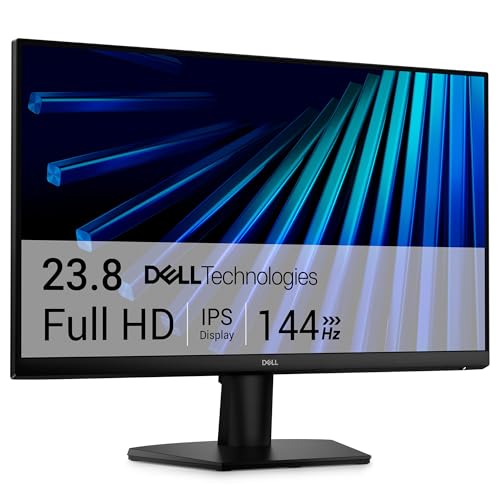
Dell SE2426H 23.8-inch IPS 144Hz Monitor
This Dell monitor combines a 144Hz refresh rate and 1ms MPRT for fluid motion across work and gaming. Its IPS panel provides wide 178-degree viewing angles and consistent color, while TUV 3-star certification reduces blue light without sacrificing color quality.
Pros
- High 144Hz refresh rate for smooth motion
- Fast 1ms MPRT reduces motion blur
- IPS panel delivers accurate colors
- TUV certified low blue light eye comfort
- Thin bezels for immersive viewing
Cons
- Only 1920x1080 resolution
- No built-in speakers
- Limited ergonomic adjustability (tilt only)
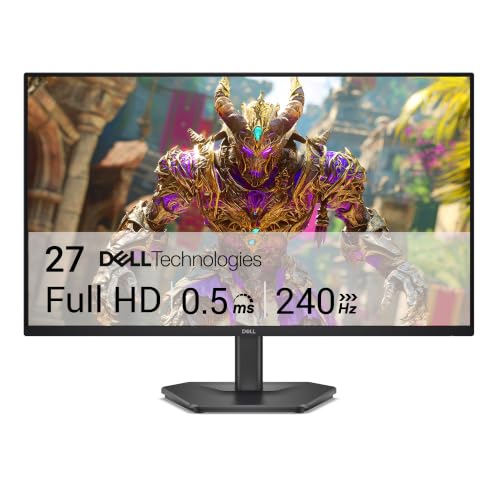
Dell SE2726HG 27-inch FHD 240Hz IPS Gaming Monitor
This 27-inch gaming monitor from Dell packs a 240Hz refresh rate and 0.5ms response time for exceptionally smooth gameplay. With FreeSync Premium and 99% sRGB coverage, it's a solid choice for competitive gamers who value both speed and color accuracy.
Pros
- Excellent 240Hz performance for competitive gaming
- Fast 0.5ms response time reduces motion blur
- FreeSync Premium works with PC and console
- Accurate colors with 99% sRGB coverage
- Eye comfort certification without sacrificing color
Cons
- Only FHD resolution on a 27-inch panel
- Limited ergonomics (tilt only, no height adjust)
- No built-in speakers or USB hub

Dell S2425HSM 24-inch 144Hz FHD Monitor
The Dell S2425HSM combines a smooth 144Hz refresh rate with a 1500:1 contrast ratio for clear, tear-free visuals. Integrated dual 3W speakers and a versatile stand with height, tilt, pivot, and swivel adjustments make it a solid mid-range choice for work and entertainment.
Pros
- 144Hz refresh rate for smooth motion
- 1ms MPRT reduces motion blur
- Integrated dual 3W speakers
- Fully adjustable stand (height, tilt, pivot, swivel)
- TUV-certified low blue light without color shift
Cons
- Only FHD resolution (1080p)
- Limited connectivity (HDMI only)
- No USB ports or built-in USB hub

Samsung Odyssey G5 G51F 27" QHD 1440p Monitor
This 27-inch QHD gaming monitor from Samsung delivers sharp 1440p visuals with a fast 180Hz refresh rate and 1ms response time, making it a solid choice for competitive gamers. Its HDR10 support and AMD FreeSync help reduce screen tearing and enhance contrast for more immersive gameplay.
Pros
- Sharp QHD resolution with high pixel density
- Fast 180Hz refresh rate and 1ms response
- HDR10 for more vivid contrast
- AMD FreeSync for smooth, tear-free gameplay
- Fully adjustable ergonomic stand
Cons
- No built-in speakers
- Limited connectivity options
- HDR performance may not match premium models

Samsung LS34C502GANXZA 34-Inch Ultra-WQHD Monitor
For multitaskers, the 34-inch ViewFinity S50GC uses a 21:9 Ultra-WQHD panel to give you room for side-by-side work without a second screen. A 100Hz refresh rate and AMD FreeSync make motion smoother in games and video, while HDR10 support adds more than 1 billion colors. Eye care features adjust brightness to your room, and PIP/PBP let you monitor two inputs at once.
Pros
- Wide 21:9 screen with minimal bezel
- 100Hz refresh rate keeps motion smooth
- HDR10 delivers over a billion colors
- FreeSync reduces tearing in games
- PIP/PBP support two inputs at once
Cons
- 5ms response is not the fastest for competitive gaming
- 300 cd/m² brightness limits HDR impact

Dell S2725QC 27" 4K 120Hz Monitor
For those seeking a 4K monitor that handles both productivity and casual gaming, the Dell S2725QC offers a compelling mix: a sharp 27-inch IPS panel with 120Hz refresh rate and FreeSync Premium. Its USB-C connectivity with 65W power delivery keeps your desk tidy, while the improved audio system and low blue light feature add to all-day comfort.
Pros
- Low blue light ComfortView Plus reduces eye strain
- 120Hz refresh rate with FreeSync Premium for smooth visuals
- Vivid 4K UHD IPS with 99% sRGB and 1500:1 contrast
- Improved sound quality with deeper frequency response
- Single USB-C cable with 65W power delivery simplifies setup
Cons
- 4ms response time may not suit competitive gaming
- 99% sRGB coverage limits color-critical tasks
- Stand does not appear to offer height adjustment

Acer KB272 G0bi 27" 120Hz IPS Monitor
This 27-inch IPS monitor from Acer delivers a 120Hz refresh rate and 1ms response time, making it a solid budget-friendly choice for casual gamers. FreeSync compatibility helps reduce screen tearing, though the 250-nit brightness is average for indoor use. It's a straightforward option for smooth motion without premium extras.
Pros
- 120Hz refresh rate for smooth motion
- 1ms response time minimizes ghosting
- Adaptive-Sync (FreeSync) reduces tearing
- IPS panel provides wide viewing angles
- Full HD resolution is sharp for everyday use
Cons
- 250-nit brightness is modest
- No built-in speakers

Samsung S36GD 27-Inch 1800R Curved FHD Monitor
This 27-inch curved FHD monitor from Samsung wraps around your field of vision to enhance depth perception and minimize distractions. With a 100Hz refresh rate and Game Mode, it delivers smooth performance for gaming and video, while TUV-certified eye comfort technology reduces strain during long sessions.
Pros
- Curved screen enhances immersion
- 100Hz refresh rate for smooth motion
- Game Mode improves gaming visuals
- Eye care technology reduces strain
- Flexible connectivity options
Cons
- Only FHD resolution, not 4K
- No built-in speakers mentioned

Dell S2725HSM 27-inch FHD 144Hz Monitor
For gamers and multimedia enthusiasts seeking a smooth, tear-free experience, the Dell S2725HSM delivers with a 144Hz refresh rate and 1ms response. Its integrated dual 3W speakers provide clear sound, while the ergonomic stand allows easy adjustments. A TÜV-certified eye comfort feature reduces blue light without sacrificing color quality.
Pros
- 144Hz refresh rate with 1ms MPRT
- AMD FreeSync support
- Built-in dual 3W speakers
- Fully adjustable stand
- TÜV certified eye comfort
Cons
- Only 1920x1080 resolution
- Speakers lack bass depth
- Limited to HDMI connectivity

Alienware AW3425DWM 34-inch WQHD Gaming Monitor
This ultrawide monitor delivers smooth 180Hz performance with WQHD resolution and a 1500R curve for immersive gaming. It supports AMD FreeSync Premium and VESA AdaptiveSync to minimize screen tearing. The hardware-based low blue light solution helps reduce eye strain during long sessions.
Pros
- Excellent color accuracy with DCI-P3 95% coverage
- Smooth 180Hz refresh rate with 1ms response
- Immersive 1500R curve for ultrawide gaming
- AMD FreeSync Premium and VESA AdaptiveSync support
- Hardware-based low blue light reduces eye strain
Cons
- No built-in speakers

Philips 241V8LB 24-inch FHD 100Hz Monitor
The Philips 241V8LB is a 24-inch Full HD monitor with a VA panel, offering strong contrast and wide viewing angles. Its 100Hz refresh rate and virtually bezel-free design make it a practical choice for office work or multi-monitor setups. The EasyRead mode is a nice addition for document-heavy tasks.
Pros
- Full HD resolution with crisp clarity
- VA panel for deep blacks and contrast
- 178/178 degree wide viewing angle
- Virtually bezel-free for multi-monitor
- EasyRead mode mimics paper for documents
Best Monitor Buying Guide
Panel Type: IPS vs. VA vs. OLED
The panel technology inside a monitor largely determines its color accuracy, viewing angles, and contrast ratio. In-plane switching (IPS) panels offer wide viewing angles and consistent colors, making them a favorite for photo editing, office work, and general productivity.
Many of our top picks, including several from Dell and Acer, use IPS technology for its reliable performance across different lighting conditions.
If you prioritize deep blacks and high contrast for movies or dark-room gaming, a vertical alignment (VA) panel, like the one found in the Samsung Essential S3, provides better shadow detail and richer colors from a direct viewing angle.
OLED panels deliver the best contrast and response times, but they come at a premium and may be prone to burn-in over extended use.
For most users, an IPS monitor strikes the best balance between cost and quality. However, if you’re a competitive gamer who values the fastest possible pixel response, a high-refresh-rate IPS display is ideal.
For media consumption and casual gaming, VA panels offer excellent value without sacrificing visual depth. When choosing between them, consider what you’ll be doing most often: productivity tasks benefit from IPS, while immersive entertainment shines on VA or OLED.
Resolution and Screen Size
Resolution determines how sharp and detailed the image appears. Full HD (1920×1080) remains the most common and affordable option, ideal for 24- to 27-inch screens where pixel density is still acceptable.
For larger displays or users who work with fine text and graphics, QHD (2560×1440) offers a noticeable step up in clarity without demanding as much GPU power as 4K.
Ultrawide QHD monitors, like the Samsung 34″ ViewFinity and the Alienware AW3425DWM, provide immersive horizontal space that boosts multitasking and gaming field of view.
4K UHD (3840×2160) is the gold standard for creative professionals and anyone who wants the sharpest possible image, especially on 27-inch and larger screens.
Screen size should match your desk depth and viewing distance. A 24-inch monitor is comfortable for smaller desks or dual-screen setups, while 27-inch models offer a sweet spot of immersive size without overwhelming a typical desk.
Ultrawide 34-inch panels require a deeper desk (at least 30 inches) to avoid eye strain. Pairing a high-resolution monitor with a capable graphics card ensures smooth performance, especially in games and design software.
Refresh Rate and Response Time
Refresh rate, measured in Hertz (Hz), indicates how many times the screen updates per second. A standard 60Hz monitor is fine for office work and casual browsing, but gamers and power users will appreciate higher rates.
100Hz to 144Hz panels deliver noticeably smoother motion in games and scrolling, reducing eye fatigue during long sessions. For competitive esports, 240Hz displays, like the Dell SE2726HG, provide the fluidity needed to track fast-moving targets.
Response time (gray-to-gray) should be 5ms or lower to minimize ghosting; 1ms is ideal for fast-paced gaming.
Variable refresh rate technologies like AMD FreeSync and NVIDIA G-Sync eliminate screen tearing by synchronizing the monitor’s refresh rate with the GPU’s frame output. Most modern monitors support FreeSync, which works with both AMD and compatible NVIDIA cards.
If you build or upgrade a desktop PC for gaming, choosing a monitor with adaptive sync ensures a tear-free experience without sacrificing input lag.
Connectivity and Ergonomics
A monitor’s ports determine how easily it connects to your devices. HDMI 2.0 or higher is standard for most modern laptops and consoles, while DisplayPort 1.4 is preferred for high refresh rates at higher resolutions.
USB-C with power delivery is increasingly common on premium models, allowing a single cable to carry video, data, and charging to a compatible laptop.
For multi-device setups, Picture-in-Picture (PIP) and Picture-by-Picture (PBP) modes, available on the Samsung ViewFinity, let you display two sources simultaneously.
Ergonomics matter just as much as specs. A fully adjustable stand, with height, tilt, swivel, and pivot, lets you position the screen for optimal posture, reducing neck and eye strain.
VESA mount compatibility (usually 100x100mm) gives you the flexibility to attach the monitor to an adjustable monitor arm or wall mount, freeing up desk space and improving ergonomics.
Built-in speakers are a convenient bonus for casual use, though dedicated desktop speakers or headphones will provide better audio quality.
Eye Care and Color Accuracy
Long hours in front of a screen can lead to digital eye strain. Look for monitors with flicker-free technology and low blue light modes, which reduce eye fatigue during extended use.
TÜV Rheinland certification, found on several Dell models, indicates the display meets strict standards for eye comfort. For creative work, color accuracy is critical: a monitor covering 99% sRGB or higher ensures that photos and videos look true to life.
The Dell S2725QC, with its 99% sRGB coverage and 4K resolution, is an excellent choice for photo editing and design tasks.
If you work with color-critical projects, consider a monitor that supports hardware calibration or comes factory-calibrated. For general use, even a good IPS panel with decent sRGB coverage will produce pleasing colors out of the box.
Pairing your monitor with a well-lit workspace and taking regular breaks further reduces eye strain.
Budget and Value
Monitor prices vary widely, from under $100 for basic 1080p models to over $1,000 for professional-grade 4K or high-refresh-rate ultrawides. In 2026, you can find excellent monitors at every price tier.
Budget-friendly options, like the Philips 241V8LB and Acer KB272 G0bi, deliver solid performance for everyday tasks without breaking the bank.
Mid-range picks, such as the Dell S2725QC and Samsung Odyssey G5, offer premium features like high resolution or fast refresh rates at a reasonable cost.
High-end models like the Alienware AW3425DWM justify their price with superior build quality, advanced gaming features, and immersive ultrawide formats.
When setting a budget, consider what features matter most to you. A gamer might prioritize a high refresh rate and low response time, while a professional may value color accuracy and ergonomic adjustability.
Investing in a quality display is worthwhile, as it’s the component you interact with most. For those on a tight budget, a computers & office setup can still achieve great results with a well-chosen entry-level monitor.
Why You Should Trust Us
At BestProducts, we are committed to providing independent, honest, and thoroughly researched recommendations. Our team of editors evaluates each monitor against a consistent set of criteria, including specifications, expert review consensus, and verified buyer feedback.
We do not conduct our own product trials; our evaluations are grounded in research, published data, expert review consensus, and verified buyer feedback.
Every product in this roundup has been scored on our 0-to-10 BP Score, which reflects its overall performance, value, and reliability in its category.
Our affiliate partnerships allow us to operate independently and keep our content free for readers. When you purchase through our links, we may earn a commission at no extra cost to you. This compensation never influences our rankings or recommendations.
For more details, you can review our full editorial policy and methodology.
Final Thoughts
After evaluating dozens of models across multiple price points and use cases, we’re confident that the monitors listed above represent the best choices for most shoppers in 2026.
Whether you’re looking for a budget-friendly upgrade or a premium gaming setup, each pick has been vetted for performance, reliability, and value. Here are our top recommendations:
- Best Overall: Dell 24 Monitor, SE2426H, With a 144Hz IPS panel, AMD FreeSync, and a competitive price, this 23.8-inch monitor delivers outstanding performance for both productivity and casual gaming, earning the highest BP Score in our lineup.
- Best for Gaming: Dell 27 240Hz Gaming Monitor, SE2726HG, A 240Hz refresh rate and IPS technology make this 27-inch display a top choice for competitive gamers who demand silky-smooth motion and low input lag.
- Best for Creatives: Dell 27 Monitor S2725QC, This 4K UHD IPS monitor offers 99% sRGB coverage, 120Hz refresh rate, and FreeSync Premium, making it an excellent all-rounder for design work and media consumption.
- Best Ultrawide: Alienware 34 Curved Gaming Monitor, AW3425DWM, With a WQHD resolution, 180Hz refresh rate, and 1ms response time, this 1500R curved display delivers an immersive gaming and multitasking experience.
- Best Budget Pick: Philips 24 Inch Computer Monitor 241V8LB, At an affordable price, this 100Hz VA panel offers great value for everyday use, with VESA compatibility and flicker-free technology.
No matter which monitor you choose, you can trust that our selections are backed by thorough research and a commitment to helping you find the right display for your needs.
For more guidance, explore our other monitor buying guides or check out our recommendations for QHD monitors and reading-focused displays.
Frequently Asked Questions
What is the best monitor for office work?
For office productivity, look for a monitor with a 27-inch IPS panel at QHD or 4K resolution for crisp text and wide viewing angles.
Models like the Dell S2725QC or the Samsung ViewFinity S50GC offer excellent color accuracy, ergonomic stands, and features like PIP/PBP for multitasking. A 100Hz or higher refresh rate also makes scrolling through documents and spreadsheets feel smoother.
Is a curved monitor better than a flat one?
Curved monitors, especially ultrawide models like the Samsung Odyssey G5 and Alienware AW3425DWM, can reduce eye strain by matching the natural curvature of your field of view, making them more immersive for gaming and media.
However, for tasks like photo editing or design work where straight lines and consistent brightness are critical, a flat monitor is generally preferred. The choice ultimately depends on your primary use case and personal comfort.
How important is VESA mount compatibility?
VESA mount compatibility gives you the flexibility to attach your monitor to an adjustable arm, wall mount, or multi-monitor stand. This is extremely valuable for freeing up desk space, improving ergonomics, and creating a clean, professional setup.
Most monitors in our roundup, including budget-friendly options like the Philips 241V8LB, support VESA mounting, making them versatile for any workspace.
Can I use a gaming monitor for work?
Absolutely. Many gaming monitors, such as the Dell SE2426H and the Acer KB272 G0bi, feature high refresh rates and fast response times that also benefit general productivity by making cursor movement and scrolling feel more responsive.
They often include features like low blue light modes and good color accuracy, making them suitable for both work and play. Just ensure the resolution and screen size match your productivity needs.
What is the difference between FreeSync and G-Sync?
FreeSync and G-Sync are variable refresh rate technologies that eliminate screen tearing and stuttering. FreeSync is an open standard that works with both AMD and many modern NVIDIA graphics cards, making it more widely available and often more affordable.
G-Sync is NVIDIA’s proprietary technology, which typically requires a dedicated module and commands a higher price. For most users, a FreeSync monitor offers excellent performance and broader compatibility.
Do I need a 4K monitor for everyday use?
For everyday tasks like web browsing, email, and document editing, a 1080p or QHD monitor is perfectly adequate and more budget-friendly.
4K becomes beneficial if you work with high-resolution photos or video, need to view multiple windows side by side, or simply want the sharpest possible image for media consumption.
If you have a powerful enough GPU, 4K also enhances gaming immersion, though it requires more graphics horsepower. For most users, a good QHD monitor strikes the best balance between clarity and cost.
About the author
Irene reviews desktop PCs and monitors for BestProducts, weighing performance, upgradability, and panel quality for work and home. She helps readers build a desk setup that stays fast and comfortable for years.