The Best 9 Volt Pedal Power Supply
From simple adapters to isolated 10-output units, our expert picks deliver clean, reliable power for your effects pedals. Find the right balance of current, noise control, and budget for your setup.
 By Irene Hopkins
Updated September 12, 2026
By Irene Hopkins
Updated September 12, 2026
Whether you’re a gigging musician or a home studio enthusiast, a clean and reliable power source is the backbone of your pedalboard.
The best 9 volt pedal power supply eliminates hum, delivers consistent voltage, and keeps your effects chain running without interruption.
Our team researched specifications, expert reviews, and verified buyer feedback to bring you a curated list of top performers, scored with our BP Score system. Below you’ll find our picks for every need and budget.
In this roundup, we highlight models that excel in current output, isolation, build quality, and value.
Whether you need a simple adapter for a single pedal or a multi-output supply for a complex board, there’s an option that balances performance and cost.
For a broader look at power solutions, see our favorite 9 volt supply for guitar pedals.
| Award | Product | BP Score About BP ScoreThe BP Score is our own rating from 0 to 10, based on performance, design and build, ease of use, and value. It reflects independent research and is never influenced by manufacturers, retailers, or affiliate commissions. Learn more › | Price | |
|---|---|---|---|---|
| Best Overall |
 JOYO 9V Guitar Pedal Power Supply 800mA
|
9.8/10 | $12.99 | Buy |
| Best Premium |
 Coda Music 9V 1.7A Pedal Power Supply
|
9.7/10 | $13.95 | Buy |
| Best Budget |
 JOYO 9V 500mA Guitar Pedal Power Supply
|
9.6/10 | $9.99 | Buy |
| Best Value |
 D'Addario PW-CT-9V 9V DC Power Adapter 800mA
|
9.6/10 | $12.99 | Buy |
 JOYO 9V 1.2A Guitar Pedal Power Supply with Daisy
|
9.5/10 | $12.99 | Buy | |
 AZOR 9V 1A Guitar Pedal Power Supply
|
9.5/10 | $6.90 | Buy | |
 Donner DP-1 10 Output Isolated Power Supply
|
9.5/10 | $36.99 | Buy | |
 Pigtone 9V 1A Guitar Pedal Power Supply
|
9.4/10 | $11.37 | Buy |
JOYO 9V Guitar Pedal Power Supply 800mA
This wall charger adapter from JOYO delivers a steady 9V DC output with up to 1A of current and a 4-way daisy chain, letting you run up to four effects pedals from a single outlet. Its noise-reducing IC chip helps keep your signal clean, making it a practical choice for pedalboards on a budget.
Pros
- Supplies up to 1A for power-hungry pedals
- Includes 4-way daisy chain cable
- Integrated noise reduction and safety protection
- Compatible with most center-negative effect pedals
Cons
- Only offers one 9V output via daisy chain
- 8.8-foot cord may be short for some setups
Coda Music 9V 1.7A Pedal Power Supply
This power supply delivers a robust 1700mA output, enough to run multiple pedals via the included daisy chain. Its ferrite ring reduces facility-induced noise for cleaner signal. Best suited for pedalboards needing a single high-current source.
Pros
- High 1700mA output powers many pedals
- Includes 5-way daisy chain cable
- 6.5-foot cable for flexible placement
- Noise reduction ferrite ring
- Universal center negative tip fits most pedals
Cons
- No isolated outputs per pedal
- Single output requires daisy chain for multiple pedals
JOYO 9V 500mA Guitar Pedal Power Supply
A reliable single-output adapter for powering most 9V tip-negative guitar pedals. It features a noise-reduction IC chip and pure copper wire for clean power delivery, with a 4.92-foot cord and universal input voltage.
Pros
- Noise reduction design
- Compatible with most 9V pedals
- Universal voltage input
- Low-impedance pure copper wire
Cons
- Only 500mA output limits pedal choice
- Short 4.9-foot cord
- Single output, no daisy chain
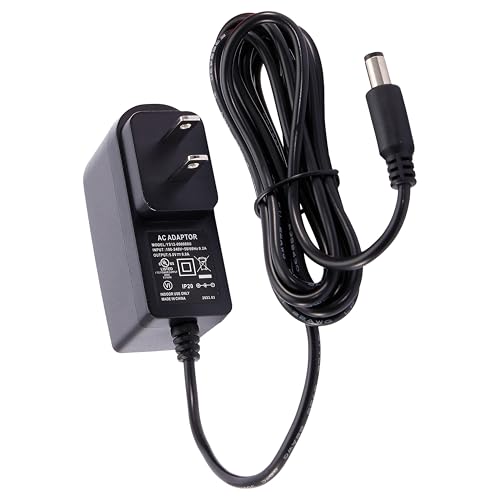
D'Addario PW-CT-9V 9V DC Power Adapter 800mA
This adapter delivers a steady 9V DC output at up to 800mA, making it a reliable battery-free option for powering guitar pedals and other tip-negative devices. Its universal input voltage ensures compatibility worldwide, and the 72-inch cord offers flexible placement on any pedalboard.
Pros
- Universal voltage input works worldwide
- Long 72-inch cord for easy routing
- Consistent power without battery changes
- Compact and lightweight design
Cons
- Only 800mA output may limit high-current pedals
- Fixed tip-negative polarity not adjustable
- No daisy-chain or multi-output capability
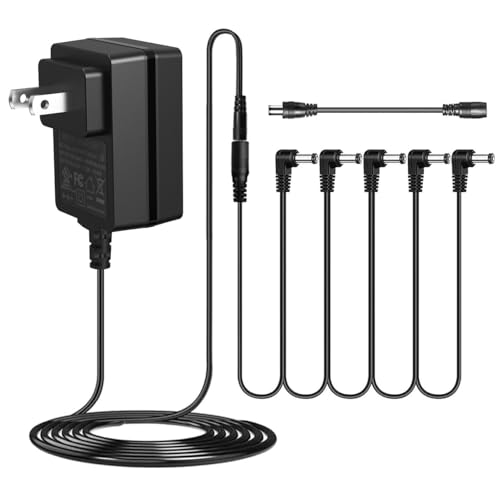
JOYO 9V 1.2A Guitar Pedal Power Supply with Daisy
This JOYO power adapter delivers a clean 9V DC output at 1.2A, and its included 5-way daisy chain cable lets you run up to five pedals from a single wall outlet. The reverse polarity cable adds flexibility for different pedal types, making it a practical choice for budget-conscious guitarists.
Pros
- Powers up to five pedals at once
- Includes reverse polarity cable
- Low impedance copper wire reduces noise
- Compact and lightweight design
Cons
- Only one isolated output for the chain
- Short individual daisy chain cable lengths
- No LED indicator for power status
AZOR 9V 1A Guitar Pedal Power Supply
This AZOR adapter delivers a clean 9V DC 1A supply for guitar effect pedals. Its noise isolation design and 5.9-foot cable offer flexibility, while the copper wire build promises durability. It also works with other compatible electronics.
Pros
- Professional noise isolation performance
- High-quality copper wire for durability
- 5.9-foot long cable for flexibility
- Compatible with most guitar effect pedals
- Can be used with other electronics
Cons
- Single output only (no daisy-chain capability)
- Fixed center-negative polarity
- No adjustable voltage or current
Donner DP-1 10 Output Isolated Power Supply
This compact aluminum power supply provides 10 isolated DC outputs for pedalboards, including 9V, 12V, and 18V options. It features independent short-circuit protection and a noise reduction circuit to minimize hum.
Pros
- Offers 10 isolated outputs for versatile pedal setups
- Includes short-circuit protection per output
- Compact aluminum alloy build is lightweight and portable
- Noise reduction circuit helps maintain clean signal
- Blue LED indicates power and short-circuit status
Cons
- Isolation is not absolute; uses circuit simulation technology
- Only 500mA on one 9V output, others at 100mA
- Logo may vary between production batches
Pigtone 9V 1A Guitar Pedal Power Supply
This Pigtone power supply provides 9V DC at up to 1A and includes a daisy chain cable to power up to eight guitar pedals. Its noise reduction and isolation safety features help maintain a clean signal path, making it a practical option for expanding pedalboards without breaking the bank.
Pros
- Up to 1000mA output suitable for high-current pedals
- Includes 1-to-8 way daisy chain cable
- Built-in noise reduction and isolation safety
- Wide input voltage (100-240V) for international use
- Compatible with center-negative pedals and keyboards
Cons
- Single daisy chain lacks isolated outputs for each pedal
- Cable length (43 inches) may be too short for larger setups
Best 9 Volt Pedal Power Supply Buying Guide
Current Output and Headroom
Each pedal has a current draw, typically measured in milliamps (mA). A digital delay or reverb might need 100, 300 mA, while a simple overdrive could require as little as 10 mA.
Choosing a supply with enough total current for all your pedals, plus 20, 30 percent headroom, prevents voltage sag and noise. Many modern supplies offer multiple outputs with different amperage ratings, so you can match each pedal’s requirement.
For most boards, a supply with at least 2,000 mA total (combined across outputs) is a safe starting point. High-current digital models benefit from dedicated ports that can deliver 300, 500 mA.
If you plan to expand, look for a scalable option that lets you add more outputs later.
Our power supply guide for every build covers current ratings in more depth. For pedalboards specifically, the “Best for High Current” pick in this article offers a robust 1,700 mA output.
Isolation vs. Daisy Chaining
Isolated outputs use separate transformer windings or DC-to-DC converters to eliminate ground loops and cross-channel noise. Daisy-chaining multiple pedals from a single output often introduces hum, especially when mixing analog and digital circuits. Isolated supplies are the gold standard for clean gain staging and recording.
If you’re on a tight budget, a quality daisy chain with adequate current can work for low-power analog pedals. But for digital delays, pitch shifters, and multi-effects, isolation is strongly recommended.
Many affordable supplies now include a mix of isolated and non-isolated ports to balance cost and performance.
For a deeper dive into isolation, see our multi-outlet power supply for keyboards guide, which explains similar noise reduction concepts.
Number of Outputs and Expandability
Count your current and future pedals before buying. A 10-output supply like the Donner DP-1 gives room for a full board, while a 5-output adapter might suffice for a compact setup.
Some supplies allow daisy-chain expansion on a single output to add more pedals, but that sacrifices isolation.
If you gig frequently, a modular system with swappable cables or interchangeable power modules can be a wise investment. Smaller units are easier to mount under a board, but make sure the connectors don’t block your patch cables.
Build Quality and Portability
A pedal power supply that’s built for the road needs a sturdy case, strain-relieved cables, and quality jacks. Look for metal enclosures and reinforced DC plugs. Lightweight plastic adapters are fine for home use but may not survive drops or transport.
Consider the physical footprint: the supply should fit under your pedalboard or leave room for other gear. Some models come with detachable power cords and mounting brackets, which simplify installation.
Compatibility and Polarity
The vast majority of guitar effects use a 2.1 mm barrel connector with center negative polarity. Always verify that your supply matches this standard (most do). A few older or boutique pedals require center positive or 2.5 mm plugs; check individual specs.
For unconventional pedals, look for supplies that include reversible polarity cables or adjustable voltage outputs (9V/12V/18V). This flexibility allows you to power vintage gear or utility devices like volume pedals without a second adapter.
If you need more on compatibility, our best 9 volt power supply for every device article covers polarity and voltage variations in detail.
Why You Should Trust Us
BestProducts is an independent review site that evaluates products through comprehensive research. We assign each product a BP Score from 0 to 10 based on specifications, expert review consensus, verified buyer feedback, and published data.
We do not conduct our own product trials; our evaluations are grounded in research, published data, expert review consensus, and verified buyer feedback.
Our team has years of experience covering music gear and electronics. We analyze dozens of professional reviews from sound engineers, guitarists, and product teardowns. By cross-referencing multiple sources, we ensure our recommendations are balanced and reliable.
Every product on this list earns its place through consistent positive feedback and solid technical performance.
We earn an affiliate commission on qualifying purchases, which helps fund our research. This does not influence our scoring or editorial decisions. For more on how we rate products, see our power supplies category page.
Final Thoughts
After weighing specs, expert consensus, and user feedback, these are our top recommendations for the best 9 volt pedal power supply in 2026.
- Best Overall: JOYO DC 9V 800mA Guitar Pedal Power Supply, With the highest BP Score in our roundup, this supply offers excellent current output and a 4-way daisy chain, making it a versatile choice for most pedalboards.
- Best for High Current: Coda 9V 1.7A DC Adapter, Its 1,700 mA capacity handles power-hungry digital pedals without breaking a sweat, earning a near-perfect rating.
- Best Budget: AZOR 9V 1A Power Adapter, At under $10, this adapter provides reliable 9V power for single pedals, ideal for beginners or simple setups.
- Best Isolated Outputs: Donner DP-1 10 Isolated DC Supply, Its fully isolated outputs eliminate noise, making it a favorite for gigging musicians and studio work.
- Reliable Standard Adapter: D’Addario PW-CT-9V, A trusted name in accessories, this 800 mA adapter delivers consistent voltage for single-pedal applications.
Frequently Asked Questions
How many milliamps do I need for my pedals?
Add up the mA ratings of every pedal you plan to connect simultaneously. Most analog overdrives draw under 20 mA, while digital delays and reverbs can need 100, 300 mA or more.
Choose a supply whose total current exceeds your total draw by at least 20% to avoid voltage drop and noise.
For a typical board with 5, 8 pedals, a supply delivering 1,000, 2,000 mA total is usually sufficient. If you run multiple high-current digital effects, consider a supply with multiple dedicated high-amp ports.
Can I daisy chain analog and digital pedals together?
It’s possible but risks introducing noise. Digital pedals often create high-frequency interference that can couple into analog circuits through shared power. Isolated outputs prevent this.
If you must daisy chain, keep analog and digital pedals on separate daisy chains or use a supply with isolated sections.
What is the difference between isolated and non-isolated power?
Isolated power supplies use separate transformers or DC-DC converters for each output, breaking ground loops. Non-isolated supplies share a common ground, which can cause hum and crosstalk. For clean signal paths, especially with high-gain or digital effects, isolated supplies are strongly recommended.
Are all 9V pedal power supplies center negative?
Most are, but always check the polarity symbol on both the supply and your pedal. The standard for guitar effects is center negative (tip positive). Some vintage or specialized pedals may require center positive. Reversible polarity cables or adjustable supplies can handle these exceptions.
Can I use a standard wall wart for my pedalboard?
A simple wall adapter can power one or two low-draw pedals if the mA rating matches. However, most wall warts are not designed for multiple pedals and lack isolation, leading to noise.
For a clean, expandable setup, a dedicated pedal power supply is a better investment. See our rechargeable 9 volt supply for pedals guide for portable alternatives.
What voltage options do I need?
Most pedals run on 9V DC, but some analog delays, preamps, or buffer pedals may benefit from 12V or 18V for increased headroom. Several supplies in our list offer selectable voltage outputs (9V/12V/18V) on certain ports.
Check your pedal specs before raising voltage, as exceeding the rated voltage can damage components.
For more on voltage requirements, refer to our best 12 volt power supply roundup and best 24 volt DC power supply guide (for non-pedal applications).
About the author
Irene reviews desktop PCs and monitors for BestProducts, weighing performance, upgradability, and panel quality for work and home. She helps readers build a desk setup that stays fast and comfortable for years.