The Best Food Processor for Dough
We reviewed the top food processors for dough, scoring each on power, capacity, blade design, and ease of cleaning. Find the best model for your baking routine.
 By Russell Howell
Updated September 12, 2026
By Russell Howell
Updated September 12, 2026
Making dough from scratch can be a labor of love, but a dedicated food processor with a powerful motor and a sturdy dough blade can turn kneading from a shoulder-aching chore into a quick, hands‑free task.
Whether you are shaping pizza bases, brioche, or whole‑wheat loaves, the right machine saves time and delivers consistent results every time.
In this guide, BestProducts reviews the top-rated food processors for dough, scoring each on our 0‑to‑10 BP Score based on published specs, expert review consensus, and verified buyer feedback.
We analyzed each model against a consistent set of criteria, motor power, bowl capacity, dough‑blade design, ease of cleaning, and overall durability, to help you pick the perfect companion for your baking routine.
Below you will find our top picks, followed by a detailed buying guide and answers to frequently asked questions.
| Award | Product | BP Score About BP ScoreThe BP Score is our own rating from 0 to 10, based on performance, design and build, ease of use, and value. It reflects independent research and is never influenced by manufacturers, retailers, or affiliate commissions. Learn more › | Price | |
|---|---|---|---|---|
| Best Overall |
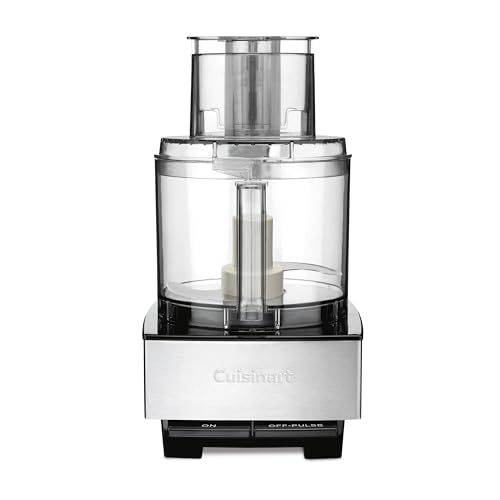 Cuisinart DFP-14BCNY 14-Cup Food Processor
|
9.8/10 | $299.91 | Buy |
| Best Premium |
 Cuisinart Pro Custom 11 11-Cup Food Processor
|
9.7/10 | $219.95 | Buy |
| Best Budget |
 FOHERE 12-Cup Food Processor
|
9.5/10 | $62.58 | Buy |
| Best Value |
 Ninja BL770 Mega Kitchen System, 1500W
|
9.5/10 | $179.99 | Buy |
 Hamilton Beach Stack & Snap 14 Cup Food Processor
|
9.4/10 | $79.99 | Buy | |
 Ninja BZ601 9-Cup Food Processor
|
9.4/10 | $109.99 | Buy | |
 Ninja BN601 9-Cup Food Processor
|
9.4/10 | $129.99 | Buy |
Cuisinart DFP-14BCNY 14-Cup Food Processor
A 14-cup workhorse with a 720-watt motor, the Cuisinart DFP-14BCNY handles chopping, dicing, shredding, pureeing, and dough kneading in one unit. Its dishwasher-safe accessories and extra-large feed tube make it a practical choice for home cooks who regularly prep large batches.
Pros
- 720-watt motor handles tough tasks
- 14-cup capacity suits large batches
- Includes slicing, shredding, and chopping discs
- Dishwasher-safe parts simplify cleanup
- Extra-large feed tube reduces prep time
Cons
- Blades are not adjustable
- Heavy at 18 pounds
- Large footprint takes counter space
Cuisinart Pro Custom 11 11-Cup Food Processor
This Cuisinart 11-cup food processor handles chopping, slicing, shredding, and pureeing with reliable power. Its dishwasher-safe parts and sturdy build make it a practical choice for home cooks who need a versatile workhorse for everyday meal prep and entertaining.
Pros
- Powerful motor for tough ingredients
- 11-cup capacity suits family meals
- Multi-functional: chops, slices, shreds, purees
- Dishwasher-safe parts simplify cleanup
- Sturdy construction with mess-free cover
Cons
- Heavy at nearly 17 pounds
- Large footprint may not suit small kitchens
FOHERE 12-Cup Food Processor
A versatile 12-cup machine with a 500W motor, stainless steel S-blade for meat, and a plastic S-blade for dough. It includes two feed chutes, a reversible shredding disc, and five functions: chopping, mixing, slicing, grating, and pureeing.
Pros
- Large 12-cup bowl
- Stainless steel blade for meat
- BPA-free construction
- Dishwasher-safe parts
- Multiple functions included
Cons
- Plastic S-blade may wear over time
- Limited to 500W motor power
- Only two speed settings
Ninja BL770 Mega Kitchen System, 1500W
This all-in-one system combines a 1500-watt blender, 8-cup food processor, and two 16-oz single-serve cups, making it a versatile choice for home cooks who want to blend, chop, and mix without multiple appliances. The powerful motor handles frozen fruits and dough up to 2 pounds.
Pros
- Multi-function versatility saves counter space
- Powerful motor blends frozen fruit and crushes ice
- Large pitcher ideal for family-size recipes
- Includes dough blade for up to 2 pounds of dough
- Single-serve cups with lids for smoothies on the go
Cons
- Blades require extra caution when cleaning
- Motor base may be heavy for some users
- Durable bowls but not glass or extra large
Hamilton Beach Stack & Snap 14 Cup Food Processor
This food processor offers two bowls (14 cup and 4 cup) for both large batches and small tasks, with a snap-together assembly that eliminates twisting. It includes multiple blades for slicing, shredding, chopping, and kneading, and all removable parts are dishwasher safe.
Pros
- Two bowls for versatility (14 cup and 4 cup)
- Easy Stack & Snap assembly
- Dishwasher safe parts
- Includes slicing, shredding, chopping, and dough blades
- 500 watt motor handles tough ingredients
Cons
- Only 1 year warranty
- Large countertop footprint
- Limited to pulse speed control
Ninja BZ601 9-Cup Food Processor
This 1000-peak-watt machine handles tough ingredients and dough with ease. Its Auto-iQ presets simplify chopping, slicing, and shredding for large batches or weekly meal prep.
Pros
- Strong motor for tough ingredients
- One-touch presets reduce guesswork
- Large capacity for family meals
- Versatile reversible disc and dough blade
- Easy cleanup with dishwasher-safe parts
Cons
- No variable speed control
- Heavy and takes up counter space
- Some reports of blade dulling over time
Ninja BN601 9-Cup Food Processor
This food processor combines a 1000-peak-watt motor with Auto-iQ presets for chopping, slicing, pureeing, and dough making. The 9-cup bowl handles large batches, and the stainless steel blades deliver consistent results. It's a versatile choice for family meals or weekly meal prep.
Pros
- Powerful 1000-peak-watt motor
- Auto-iQ one-touch presets
- 9-cup capacity for large batches
- Includes dough blade for bread and pizza
- Dishwasher-safe parts for easy cleanup
Cons
- Heavy at 7.65 pounds
- Large footprint takes up counter space
Best Food Processor for Dough Buying Guide
Motor Power and Performance
Kneading stiff dough requires sustained torque. Look for a machine with at least 600 watts of continuous power; models around 700, 1,000 watts can handle heavy doughs without slowing down or overheating.
A motor that maintains a consistent speed under load produces better gluten development and a more elastic dough. For extra‑heavy batches, a unit with a thermal cut‑off switch offers added protection during long mixing sessions.
If you frequently work with large quantities, consider a heavy‑duty model like those we cover in our heavy‑duty food processor guide.
Bowl Capacity
Capacity determines how much dough you can mix at once.
A 9‑cup work bowl is sufficient for a single pizza dough or a batch of cookies, while a 14‑cup bowl lets you double recipes or prepare bread dough for the whole week.
Small households may prefer a compact 7‑cup model, but for regular bread baking, a 12‑ to 14‑cup machine is more versatile. The home food processor roundup includes options suited to different kitchen sizes.
Dough Blade Design
A dedicated dough blade, typically made of heavy‑duty plastic or stainless steel, is essential for effective kneading.
Unlike a standard S‑blade, a dough blade is wider and has a curved shape that folds the dough rather than chopping it. This mimics hand‑kneading and prevents overworking.
Some processors include a pulse function that lets you control the kneading time precisely. Check the manufacturer’s instructions for maximum dough weight, and always avoid exceeding the recommended capacity to protect the motor.
Ease of Cleaning
Dough residue can stick to blades and bowls, so dishwasher‑safe parts are a major convenience. Most modern food processors have bowls, lids, and blades that can go on the top rack; some even have a dishwasher‑safe dough blade.
For machines that require hand‑washing, look for sealed‑lock bowls that minimize crevices where dough can hide. A smooth, wipe‑down exterior also speeds up cleanup.
For small countertop appliances that are particularly easy to maintain, see our small food processor recommendations.
Build Quality and Durability
A food processor that kneads dough regularly needs a sturdy base, a secure locking mechanism, and die‑cast metal or reinforced plastic parts.
Models with a metal drive shaft and a heavy‑base are less likely to wobble or walk on the counter. Check that the feed tube is wide enough to add ingredients without stopping the machine.
Warranty length (often 2, 5 years) and brand reputation also indicate long‑term reliability. For a deeper look at professional‑grade options, refer to our professional food processor guide.
Why You Should Trust Us
At BestProducts, every product earns a BP Score on a 0‑to‑10 scale based on a methodical analysis of published specifications, consensus among expert reviewers, feedback from verified buyers, and data from credible sources.
We do not conduct our own product trials; our evaluations are grounded in research, published data, expert review consensus, and verified buyer feedback. Our team of editors continuously monitors the market to ensure recommendations remain current and relevant.
This transparent approach helps you make an informed purchasing decision without bias.
We also disclose that this article contains affiliate links, which may earn us a small commission at no extra cost to you. This does not affect our scoring or editorial independence.
If you are curious about how we evaluate other kitchen appliances, read our best food processor overview.
Final Thoughts
After weighing all the criteria, we have selected these award‑winning models to simplify your decision. Each pick excels in specific areas and carries a BP Score that reflects its overall value.
- Best Overall: Cuisinart 14‑Cup Food Processor (DFP‑14BCNY), With a 720‑watt motor, generous 14‑cup capacity, and an excellent dough blade, this model delivers reliable kneading for even the stiffest bread doughs. Its robust build and straightforward controls make it a top choice for serious bakers. (BP Score: 9.8/10)
- Best for Small Batches: Ninja Professional Plus Food Processor (BN601), This 9‑cup machine packs 1000 watts of power and a compact footprint, perfect for singles or couples who bake occasionally but still want a powerful kneader. Its stacked blade design works dough efficiently. (BP Score: 9.4/10)
- Best Budget Pick: FOHERE 12‑Cup Food Processor, Offering a large work bowl and a capable 500‑watt motor at an affordable price, this model includes a dedicated dough blade and a stainless steel construction that resists stains. It is an excellent value for cost‑conscious bakers. (BP Score: 9.5/10)
- Most Versatile: Ninja Mega Kitchen System (BL770), With a 1500‑watt motor, a 72‑ounce pitcher, and a separate 8‑cup work bowl, this system handles dough, smoothies, and more. Its powerful motor can knead heavy doughs quickly, and the multiple attachments reduce countertop clutter. (BP Score: 9.5/10)
Frequently Asked Questions
Can I knead dough in a food processor?
Yes, most full‑size food processors with a dedicated dough blade can knead bread, pizza, and pastry doughs. The motor must be powerful enough (at least 600 watts) to handle the resistance.
Always follow the manufacturer’s recommended dough weight and avoid overfilling to prevent strain. For more details on food processor capabilities, check our food processor for vegetables guide.
What size food processor is best for dough?
For regular bread baking, a 12‑ to 14‑cup bowl is ideal because it can handle a standard loaf recipe (2, 3 cups of flour). Smaller bowls (7‑9 cups) work for single‑batch pizza dough or small pastries.
If you bake in bulk, a larger capacity machine is more efficient. The inexpensive food processor roundup includes models that balance size and cost.
Is it better to knead dough by hand or in a food processor?
Kneading by hand gives you full control over dough temperature and texture, but it is time‑consuming and tiring. A food processor kneads faster (often in 30, 60 seconds) and produces consistent results, especially for wet or sticky doughs.
However, over‑processing can warm the dough and affect rise. For most home bakers, a food processor offers a convenient alternative to hand‑kneading. See our food processor for chicken article for more versatile uses.
How do I clean dough residue from a food processor?
After kneading, let the dough‑blade and bowl soak in warm, soapy water for a few minutes to loosen stuck particles. Use a soft brush or sponge to wipe the crevices around the blade hub.
Many parts are top‑rack dishwasher safe, check your manual. For best results, rinse immediately after use to prevent dough from hardening. The Kitchen & Dining category has more cleaning tips for kitchen tools.
Can I use a food processor to knead gluten‑free dough?
Yes, gluten‑free doughs (which often rely on gums and starches) can be quickly mixed in a food processor. A shorter kneading time helps prevent the dough from becoming too sticky or dense.
Be careful not to over‑process; stop as soon as the ingredients come together. For more specialized appliances, explore our blenders category for high‑speed blending options.
About the author
Russell writes about stand mixers and food processors for BestProducts, comparing motor strength, attachment range, and stability under heavy dough. He helps bakers and cooks buy once and keep it for decades.