The Best Android Obd2 Scanner
Looking for an OBD2 scanner that works with your Android phone? We evaluated top models from BlueDriver, OBDLink, ANCEL, and more, scoring them on diagnostics depth, app quality, and value.
 By Glen Allen
Updated September 11, 2026
By Glen Allen
Updated September 11, 2026
If you own an Android phone and want to diagnose car troubles without relying on a mechanic, a dedicated Android OBD2 scanner turns your device into a powerful diagnostic tool.
These Bluetooth adapters communicate directly with your vehicle’s onboard computer, reading engine codes, monitoring live data, and even resetting warning lights, all from an app on your phone.
With dozens of models on the market, choosing the right one depends on compatibility, software quality, and the depth of diagnostics you need.
BestProducts evaluated the top Android OBD2 scanners by analyzing specifications, expert review consensus, verified buyer feedback, and published data.
We scored each model on our 0-to-10 BP Score to help you find a reliable, affordable scanner that fits your skill level and vehicle. Below are our top picks.
| Award | Product | BP Score About BP ScoreThe BP Score is our own rating from 0 to 10, based on performance, design and build, ease of use, and value. It reflects independent research and is never influenced by manufacturers, retailers, or affiliate commissions. Learn more › | Price | |
|---|---|---|---|---|
| Best Premium |
 OBDLink CX Bimmercode Bluetooth 5.1 Adapter
|
9.9/10 | $79.95 | Buy |
| Best Overall |
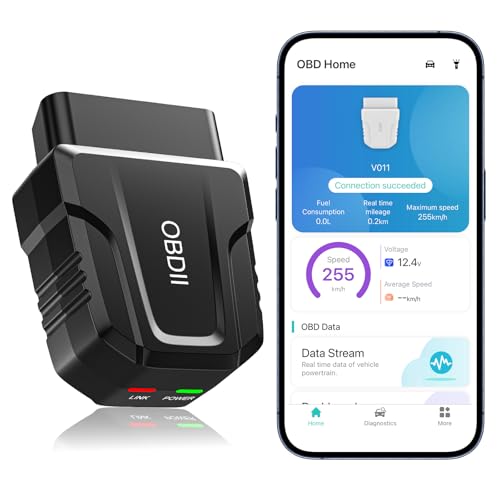 UMEIJA V011 OBD2 Scanner Bluetooth 5.4
|
9.9/10 | $29.99 | Buy |
| Best Budget |
 ANCEL AD410 Enhanced OBD2 Scanner
|
9.9/10 | $39.99 | Buy |
 BlueDriver Pro OBD2 Bluetooth Scanner
|
9.9/10 | $139.95 | Buy | |
 OBDLink MX+ OBD2 Bluetooth Scanner
|
9.9/10 | $139.95 | Buy | |
 ANCEL AD310 OBD II Scanner
|
9.8/10 | $29.99 | Buy | |
| Best Value |
 Veepeak OBDCheck BLE+ Bluetooth OBD II Scanner
|
9.8/10 | $41.98 | Buy |
 FOXWELL NT301 OBD2 Scanner
|
9.8/10 | $55.95 | Buy | |
 LJPXHHU OBD2 Bluetooth Scanner
|
9.6/10 | $14.98 | Buy | |
 UJS Rocco OBD2 Scanner Bluetooth
|
9.6/10 | $39.99 | Buy |
OBDLink CX Bimmercode Bluetooth 5.1 Adapter
This adapter is designed specifically for BimmerCode on BMW and Mini vehicles, offering seamless in-app pairing and a rock-solid Bluetooth 5.1 connection that prevents data corruption. It also includes the OBDLink app for live diagnostics and clearing check-engine lights, making it a versatile tool for coding and scanning.
Pros
- Optimized for BimmerCode with full feature support
- Stable Bluetooth 5.1 connection prevents ECU issues
- Can be left plugged in thanks to sleep mode and protection
- Includes OBDLink app for general diagnostics
- Easy pairing with both iOS and Android
Cons
- BimmerCode app sold separately
- Vehicle compatibility must be verified via the guide
UMEIJA V011 OBD2 Scanner Bluetooth 5.4
This Bluetooth 5.4 OBD2 scanner works with iOS and Android via a free dedicated app, offering comprehensive diagnostics like reading DTCs, live data, and clearing check engine lights. Its intuitive charts and broad vehicle compatibility make it a practical tool for both beginners and experienced DIYers.
Pros
- Supports over 96% of car makes and models
- Easy-to-read charts for live data
- Free dedicated app for iOS and Android
- Advanced Bluetooth 5.4 for fast connection
- User-friendly with video tutorials
Cons
- Requires car ignition to be on
- Must unplug after use to avoid battery drain
- Fault codes only clear after repair is done
ANCEL AD410 Enhanced OBD2 Scanner
This OBD2 scanner reads and clears engine-related codes, shows live data like RPM and coolant temperature, and includes a built-in DTC library with over 42,000 definitions. It is a practical tool for DIYers to check the check engine light and verify smog readiness without needing a phone or app.
Pros
- Built-in 42,000+ DTC definitions
- Live data display for engine parameters
- No Bluetooth or app required
- Wide vehicle compatibility (OBD2 1996+)
Cons
- Only covers engine and emission codes
- No ABS, SRS, or transmission support
- No bidirectional control or service reset functions
BlueDriver Pro OBD2 Bluetooth Scanner
The BlueDriver Pro turns your smartphone into a professional-grade diagnostic tool with no subscription required. It reads and clears enhanced codes for ABS, SRS, TPMS, and transmission, and provides technician-verified repair reports. Its Bluetooth connectivity and broad vehicle compatibility make it a versatile choice for DIYers and professionals.
Pros
- No ongoing subscription costs
- Enhanced diagnostics beyond basic OBD2
- Verified repair reports with fixes
- Wireless Bluetooth eliminates cables
- Strong support for many vehicle brands
Cons
- Requires a smartphone or tablet
- Only works with 1996+ gas vehicles in North America
- Enhanced diagnostics may vary by model
OBDLink MX+ OBD2 Bluetooth Scanner
The OBDLink MX+ transforms your smartphone or Windows PC into a professional-grade diagnostic tool. It offers enhanced support for major automakers and works seamlessly with popular apps like FORScan, Torque, and BimmerCode.
Pros
- Professional diagnostics on your phone
- Wide app compatibility
- Enhanced OEM support for many brands
- Accesses ABS, SRS, TPMS parameters
- Over-voltage and battery drain protection
Cons
- Vehicle compatibility may require pre-purchase check
- Limited to scanning; no repair instructions
ANCEL AD310 OBD II Scanner
A compact and sturdy code reader designed to diagnose check-engine lights on 1996 and newer OBD2 vehicles. It delivers fast, accurate readings and supports all major OBDII protocols, making it a practical choice for DIYers.
Pros
- Accurate and fast code reading
- Sturdy build with thick cable
- Easy to use without car knowledge
- Wide vehicle compatibility
Cons
- Only diagnoses emission-related issues
- Not compatible with OBD1 vehicles
Veepeak OBDCheck BLE+ Bluetooth OBD II Scanner
This Bluetooth OBD II scanner enables basic diagnostic functions like reading and clearing engine trouble codes, viewing freeze frame data, and monitoring live sensor data. It pairs with iOS and Android devices via Bluetooth LE but requires a compatible third-party app and has limited support for advanced diagnostics and certain vehicle models.
Pros
- Wireless Bluetooth LE connection for iOS and Android
- Reads and clears generic OBD-II trouble codes
- Accesses freeze frame, I/M readiness, and live data
- Works with popular apps like Torque, OBD Fusion, and Car Scanner
- Compact and lightweight design
Cons
- Requires separate third-party app to operate
- Advanced diagnostics (ABS, SRS, TPMS) not directly supported
- Not compatible with Carly, MHD, xHP, or ProTool apps
- MS-CAN not supported in FORScan and AlfaOBD apps
FOXWELL NT301 OBD2 Scanner
For DIYers who want to decode check engine lights without a mechanic, the FOXWELL NT301 offers instant code reading, live data graphing, and I/M readiness checks. Its EVAP and O2 sensor checks add value beyond basic scanners.
Pros
- Instant one-click code reading and clearing
- I/M readiness check with LED and audio feedback
- Live data graphing for real-time sensor monitoring
- Includes EVAP leak and O2 sensor checks
- Compatible with 10,000+ vehicles (1996+ OBDII)
Cons
- No bidirectional control for component actuation
- Limited to OBDII compliant vehicles (1996+ only)
LJPXHHU OBD2 Bluetooth Scanner
This OBD2 scanner works with most 1996 and newer OBDII-compliant vehicles, including popular brands like BMW, Audi, and Ford. It reads and clears trouble codes, displays live sensor data, and pairs with free diagnostic apps on iOS, Android, and Windows. Ideal for DIYers who want to diagnose engine issues and monitor vehicle performance without a trip to the mechanic.
Pros
- Broad vehicle support across major brands
- Free app compatibility for multiple platforms
- Reads and clears check engine light quickly
- Live sensor data for performance monitoring
- Compact and easy to use
Cons
- Not compatible with motorcycles or 24V diesel
- Does not support hybrid or new energy vehicles
- iOS requires app connection, not direct Bluetooth
UJS Rocco OBD2 Scanner Bluetooth
This compact OBD2 scanner uses AI to translate diagnostic codes into plain-language health reports and repair advice. Its wireless design stays in the port for continuous monitoring, making it a convenient choice for drivers who want to understand check-engine lights without a mechanic.
Pros
- AI simplifies complex diagnostic codes
- Wireless and stays in OBD2 port
- Real-time data visualization
- Works with iOS and Android
- Lifetime warranty and free app updates
Cons
- Limited to OBD2 protocol vehicles only
- App quality not assessed independently
Android OBD2 Scanner Buying Guide
Compatibility and App Support
Not every OBD2 scanner works seamlessly with every Android device or app.
Most modern scanners use Bluetooth Classic or BLE, but some require specific companion apps, like Torque Pro, OBDLink, or BlueDriver, to unlock advanced features like live data graphing, ABS/SRS diagnostics, or TPMS reset functions.
Before buying, verify that the scanner supports your car’s protocol (OBD-II compliant since 1996) and that the app is actively updated for Android 14 and beyond.
Some scanners, such as the OBDLink MX+, include proprietary apps that offer enhanced bi-directional control and coding capabilities.
Others rely on universal apps that work across brands. Dedicated Bluetooth OBD2 scanners for Android often strike the best balance between cost and functionality, giving you access to both generic and manufacturer-specific codes.
Live Data and Advanced Diagnostics
A basic code reader can pull and clear check-engine lights, but a high-end scanner provides real-time sensor data, engine RPM, coolant temperature, oxygen sensor readings, that helps you diagnose intermittent problems.
For DIY mechanics, a live data OBD2 scanner is essential for monitoring vehicle performance during evaluation drives. Look for units that offer freeze frame data, mode 6 evaluation results, and support for multiple PIDs (parameter IDs).
The more data streams available, the easier it is to pinpoint issues without guesswork.
Scanners with bi-directional control go a step further, letting you actuate components like fans, injectors, or solenoids.
This feature is invaluable for verifying repair work and is typically found in midrange to premium models. A bidirectional OBD2 scanner can save hours of diagnostic time, though it often requires a subscription-free app to avoid recurring fees.
Ease of Use and Build Quality
Since the scanner lives in your glovebox and gets plugged in regularly, build quality matters. Hard plastic housings can crack, while compact models with reinforced connectors handle repeated insertion better.
Most Bluetooth scanners are pint-sized, but larger OBDLink-like units protrude slightly from the port; if clearance is tight, a right-angle design might be needed. Wireless OBD2 scanners reduce cable clutter, but ensure the Bluetooth range and connection stability suit your workspace.
App interface is another critical factor. A confusing app can make even a capable scanner frustrating.
Ideally, the app clearly displays trouble codes with plain-English definitions, offers graph views for live data, and saves diagnostic logs. iOS OBD2 scanner apps are often similar, but Android users enjoy a wider selection of third-party apps like Car Scanner ELM OBD2 and Torque, which add custom dashboards and performance tracking.
Subscription Costs and Hidden Fees
Some budget-friendly scanners appear cheap upfront but require an annual subscription for advanced features like enhanced diagnostic reports or system-specific scans (ABS, SRS, TPMS). Others, like the BlueDriver or OBDLink MX+, include the full feature set without subscription fees.
When budgeting, factor in whether the scanner’s app is free or requires a one-time purchase. A scanner that covers ABS, SRS, and transmission without extra charges often offers better long-term value than one with incremental paywalls.
We recommend prioritizing no-subscription models for casual and semi-professional use. Many highly-rated Android scanners provide ample diagnostic power without monthly costs, making them more affordable over time.
Why You Should Trust Us
BestProducts is an independent review site that scores products using the BP Score (0, 10), a consistent framework built on rigorous research.
We analyze published specifications, read expert review consensus from trusted automotive sources, collate verified buyer feedback from major retailers, and cross-check data from manufacturer disclosures.
We do not conduct our own product trials; our evaluations are grounded in research, published data, expert review consensus, and verified buyer feedback.
Our goal is to provide transparent, actionable recommendations so you can confidently choose an Android OBD2 scanner that matches your needs and budget.
For more background, you can read about our overall OBD2 scanner guide and explore our automotive category page for related tools and accessories.
Final Thoughts
- Best Overall: BlueDriver OBD2 Scanner Bluetooth, With a near-perfect BP Score, this no-subscription scanner offers professional-grade diagnostics including ABS, SRS, and TPMS, backed by an intuitive app and strong expert consensus.
- Best for Budget-Conscious DIYers: ANCEL AD310 Classic Enhanced Universal OBD II Scanner, An affordable, straightforward code reader that reliably reads and clears check-engine lights for under $30, making it a great entry point.
- Best for Advanced Live Data: OBDLink MX+ OBD2 Bluetooth Scanner, Delivers fast, detailed live data streams and supports manufacturer-specific PIDs, ideal for enthusiasts who want deep diagnostics without a subscription.
- Best for BMW/Mini Owners: OBDLink CX Bimmercode Bluetooth 5.1 OBD2 Adapter, Tailored for coding and diagnostics on BMW and Mini vehicles, this adapter works flawlessly with the BimmerCode app, earning top marks from owners.
Each of these picks earned a BP Score of 9.6 or higher, reflecting strong performance in their respective categories. For more specialized diagnostics, check out our guide to Dodge-specific OBD2 scanners or scanners for the Mercedes ML350.
Frequently Asked Questions
Can any OBD2 scanner work with an Android phone?
Most modern OBD2 scanners use Bluetooth (Classic or BLE) and are compatible with Android 4.0 and later. However, some proprietary scanners only work with their own apps, and a few require an internet connection for certain features.
Always check the product’s Android compatibility and app download links before purchasing.
Do I need a subscription to use an Android OBD2 scanner?
Not always. Many scanners like BlueDriver and OBDLink MX+ include their full feature set without a subscription. Budget models may offer basic code reading for free but charge for enhanced diagnostics (ABS, SRS, transmission). Read the product description carefully to avoid surprise fees.
Can an Android OBD2 scanner clear airbag or ABS codes?
Yes, if the scanner supports those systems. Most advanced scanners, such as the BlueDriver and ANCEL AD410, can read and clear ABS and SRS codes. Basic code readers only handle engine-related codes.
For a comprehensive option, see our roundup of OBD2 scanners with ABS and SRS capability.
What is the difference between an OBD2 code reader and a scan tool?
A code reader simply retrieves and clears diagnostic trouble codes (DTCs), while a scan tool provides live data, bidirectional controls, and advanced functions like component evaluation. For most home mechanics, a midrange scanner with live data is a better investment than a basic code reader.
How do I update the software on an Android OBD2 scanner?
Firmware updates vary by brand. Many Bluetooth scanners update automatically through the companion app when a new version is available.
For older models, you may need to download update files from the manufacturer’s website and transfer them via a USB cable. Always keep the app and firmware current to ensure compatibility with newer vehicles.
Can an OBD2 scanner drain my car battery?
OBD2 scanners draw a small amount of power from the data link connector, but most enter a low-power sleep mode when the vehicle is off.
However, leaving a scanner plugged in for weeks can slowly drain the battery, especially in older cars. It’s good practice to disconnect the scanner when not in use for extended periods.
About the author
Glen covers jump starters and OBD2 scanners for BestProducts, weighing peak amps, safety protection, and how much diagnostic detail each tool unlocks. He helps drivers handle a dead battery or a check engine light without calling a tow truck.