The Best Handheld Belt Sander
Find the best handheld belt sander for fast material removal, from budget picks to cordless models, with expert research on power, dust control, and durability.
 By Michelle Mendoza
Updated September 10, 2026
By Michelle Mendoza
Updated September 10, 2026
When a project calls for rapid material removal, no handheld tool keeps pace with a belt sander.
Unlike orbital or detail sanders that focus on fine finishing, a handheld belt sander drives a continuous loop of abrasive at high speed, making it the preferred choice for flattening rough lumber, stripping old paint, shaping edges, and leveling joints.
Whether you are building furniture, refinishing deck boards, or restoring a workbench, the right belt sander can save hours compared to manual sanding.
If you are still deciding between tool types, our handheld sander guide compares belt sanders with other portable sanding options.
In this guide, we evaluated the most popular handheld belt sanders on the market, weighing factors like motor amperage, belt size, dust collection, tracking stability, and ergonomics.
Our recommendations come from a blend of manufacturer specifications, expert review consensus, and verified buyer feedback, so you can shop with confidence.
For broader context on finishing tools, our roundup of electric sanders for wood covers how belt models fit into a complete workshop setup. Below, you will find our top picks ranked for different needs and budgets.
| Award | Product | BP Score About BP ScoreThe BP Score is our own rating from 0 to 10, based on performance, design and build, ease of use, and value. It reflects independent research and is never influenced by manufacturers, retailers, or affiliate commissions. Learn more › | Price | |
|---|---|---|---|---|
| Best Overall |
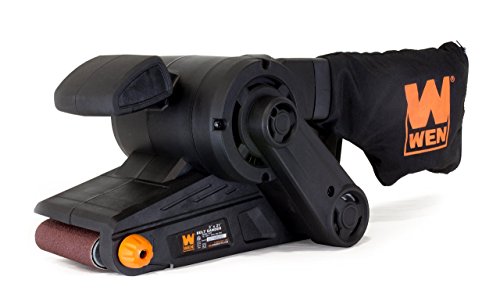 WEN 6321 7-Amp 3x21 Belt Sander
|
9.9/10 | $38.79 | Buy |
| Best Budget |
 Skil 7510-01 6 Amp 3x18 Belt Sander
|
9.9/10 | $54.00 | Buy |
| Best Premium |
 DEWALT DCM200B 20V MAX XR Belt Sander
|
9.8/10 | $209.21 | Buy |
 DEWALT DCM200E1 Cordless Bandfile Sander
|
9.8/10 | $299.99 | Buy | |
| Best Value |
 Jellas 7Amp 3x21 Inch Belt Sander
|
9.8/10 | $69.99 | Buy |
 WEN HB321V 7.5-Amp Belt Sander
|
9.7/10 | $46.48 | Buy | |
 Makita 9903 3x21 Belt Sander
|
9.6/10 | $319.00 | Buy | |
 VEVOR 3x21 6-Speed Belt Sander
|
9.6/10 | $53.90 | Buy | |
 SHALL 8.4-Amp 3" x 21" Belt Sander
|
9.5/10 | $59.99 | Buy | |
 CRAFTSMAN CMEW213 3x21-Inch Belt Sander
|
9.5/10 | $91.44 | Buy | |
 DEWALT DCW220B 20V Max Cordless Belt Sander
|
9.5/10 | $227.00 | Buy |
WEN 6321 7-Amp 3x21 Belt Sander
This compact belt sander from WEN combines a 7-amp motor with a lightweight 6.2-pound design, making it easy to maneuver for extended sanding sessions. The lock-in safety feature allows continuous operation without holding the trigger, and the detachable dust bag helps keep the work area clean. Backed by a two-year warranty, it's a solid choice for DIYers and occasional users.
Pros
- Powerful 7-amp motor for efficient sanding
- Lightweight at 6.2 pounds
- Lock-in switch reduces hand fatigue
- Includes dust bag
- Two-year warranty
Cons
- Corded operation limits mobility
- Handheld only, no benchtop use
Skil 7510-01 6 Amp 3x18 Belt Sander
For woodworkers who want precise control, the Skil 7510-01 belt sander uses pressure control technology to indicate when you're pressing too hard. It also features automatic belt tracking and a micro-filtration dust system that works with standard vacuum hoses.
Pros
- Pressure control prevents over-sanding
- 6.0A motor handles tough sanding
- Micro-filtration captures fine dust
- Auto-tracking keeps belt centered
- Flush edge sanding for edges
DEWALT DCM200B 20V MAX XR Belt Sander
This cordless bandfile from DEWALT brings brushless motor power comparable to pneumatic tools, with a 104° rotating arm for flexible positioning and storage. Tool-free belt changes and a variable speed trigger offer precise control, making it a practical choice for pros who want a portable sander without cords.
Pros
- Powerful brushless motor
- Rotating arm for flexibility and storage
- Tool-free belt changes
- Variable speed trigger
- Lightweight and portable
Cons
- Bare tool - battery and charger sold separately
- Requires DEWALT 20V battery system
DEWALT DCM200E1 Cordless Bandfile Sander
This cordless bandfile sander from DEWALT offers the power of a brushless motor with variable speed control for precise material removal. Its 104-degree rotating arm and tool-free belt change make it versatile for tight spaces and quick adjustments, ideal for auto body or metalworking tasks.
Pros
- Brushless motor for more power than pneumatic
- 104-degree rotating arm for flexibility
- Tool-free belt change for convenience
- Changeable contact arm for multiple applications
- Variable speed dial and trigger for user control
Jellas 7Amp 3x21 Inch Belt Sander
This 7Amp belt sander doubles as a bench sander with included C-clamps, offering variable speed from 120-400rpm. It comes with 10 sanding belts and a detachable dust bag, making it a versatile choice for woodworking projects.
Pros
- Dual-mode handheld and bench sander
- Variable-speed knob with 6 dial settings
- Includes 10 assorted grit sanding belts
- Detachable dust bag with vacuum adapter
- 10-foot power cord for extended reach
Cons
- Belt installation requires arrow alignment
WEN HB321V 7.5-Amp Belt Sander
A variable-speed belt sander with a 7.5-amp motor that offers speed adjustment from 620 to 1200 FPM. Its lightweight 6.4-pound design and lock-on switch reduce fatigue during extended use, and the quick-release lever simplifies belt changes.
Pros
- Variable speed range accommodates different materials
- Lock-on switch improves comfort during long sanding sessions
- Quick belt change saves time
- Lightweight design reduces arm fatigue
- Dust bag helps keep work area clean
Makita 9903 3x21 Belt Sander
The Makita 9903 belt sander combines a strong 8.8 AMP motor with variable speed control, allowing you to match the sanding speed to the material. Its auto-tracking system keeps the belt aligned without fiddling, and the flush-to-wall design lets you sand right up to edges. Weighing 9.5 pounds, it's built for durability but may be tiring for long sessions.
Pros
- Powerful 8.8 AMP motor
- Variable speed control (690-1440 ft/min)
- Auto-tracking belt system
- Flush sanding capability
- Comfortable front grip
Cons
- Heavy at 9.5 pounds for extended use
VEVOR 3x21 6-Speed Belt Sander
This belt sander combines a 7-amp motor with six speed settings, making it suitable for both heavy stock removal and delicate finishing. Its 2-in-1 design allows handheld use or benchtop mounting for more controlled sanding. The package includes ten sanding belts of various grits and two dust collection bags.
Pros
- Powerful 7-amp motor for efficient sanding
- Six speed settings for different tasks
- Handheld and benchtop dual use
- Includes 10 sanding belts and dust bags
Cons
- Heavy at 8.77 pounds for handheld use
- Corded design limits portability
SHALL 8.4-Amp 3" x 21" Belt Sander
This belt sander from SHALL pairs an 8.4-amp motor with variable speed control (six settings from 656 to 1247 FPM) for versatile sanding on wood and metal. Its 2-in-1 design with included C-clamps lets you mount it to a table as a benchtop unit, and the bundled 13 sanding belts across six grits cover everything from coarse removal to fine finishing.
Pros
- Variable speed suits both rough and detailed work
- Converts to benchtop sander with included clamps
- Generous belt assortment covers many grits
- Dust bag and vacuum adapter keep workspace cleaner
Cons
- Brand less established than competitors
CRAFTSMAN CMEW213 3x21-Inch Belt Sander
This Craftsman belt sander features an angled belt design that lets you sand closer to adjoining surfaces. With a maximum belt speed of 800 feet per minute, it removes material quickly. The tool-free belt release and onboard dust bag add convenience, while the three-position over-molded handle improves comfort during use.
Pros
- Angled belt sands closer to edges
- Fast material removal at 800 fpm
- Tool-free belt changes
- Onboard dust bag included
- Comfortable three-position handle
Cons
- Corded design limits portability
- No variable speed control
DEWALT DCW220B 20V Max Cordless Belt Sander
This cordless belt sander delivers power comparable to corded models thanks to its brushless motor, with up to 22% more power. It features efficient dust collection (95% efficiency) via a tool-free airlock-compatible system, a larger sanding surface than competing models, and a variable speed trigger with 25-speed dial for precise control. Quick belt changes and an overmolded auxiliary handle make it suitable for demanding jobs, especially when paired with a DEWALT vacuum for wireless dust extraction.
Pros
- Brushless motor for power and runtime
- 95% dust collection efficiency with airlock
- 16.7% larger sanding surface than Milwaukee M18
- Variable speed trigger with 25-speed dial
- Tool-free quick belt change system
Cons
- Tool only: battery and charger sold separately
- Dust collection system (airlock) sold separately
- No carrying case included
Best Handheld Belt Sander Buying Guide
Motor Power and Speed
The motor is the heart of any belt sander, and amperage is the most reliable indicator of grunt. Most handheld models fall between 6 and 8.4 amps.
A higher amp rating means the motor can maintain belt speed under heavy load, which translates into faster stock removal and fewer stalls when you press into a rough surface.
For occasional DIY use, a 6 amp motor is usually sufficient, but frequent woodworkers will appreciate the extra headroom of a 7 or 8 amp unit.
Speed, measured in surface feet per minute (SFPM), also matters. Fixed speed machines in the 1,000 to 1,200 SFPM range are common and work well for most tasks.
A variable speed motor gives you more control over the aggressiveness of the cut, letting you slow down for soft woods or delicate work and speed up for heavy material removal.
This is especially useful if you want the flexibility of a variable speed orbital sander but need the aggression of a belt machine.
Belt Size and Tracking
Belt size dictates both the reach and the balance of the sander. The two most common formats are 3 by 18 inch and 3 by 21 inch.
A 3 by 21 inch belt offers a larger contact patch, which helps keep the tool stable on wide boards and removes material more efficiently across big surfaces.
The smaller 3 by 18 inch format is lighter and easier to control in confined spaces or when working vertically.
While a 5 inch orbital sander remains the better choice for finish work, a belt sander with the right belt size is unmatched for fast flattening.
Tracking adjustment is another part of belt maintenance. A small knob, usually near the front wheel, lets you center the belt while the machine is running.
Good tracking keeps the belt from walking off the rollers, which not only prevents damage to your workpiece but also extends belt life. Models with smooth, precise tracking adjustments are noticeably easier to live with over time.
Dust Collection
Belt sanders generate an enormous amount of sawdust, so dust management should be high on your priority list.
Many machines come with a cloth dust bag that captures the coarser particles, but the bag fills quickly and does little for fine dust.
A more effective setup is a dust port that connects to a shop vacuum or dust extractor, which keeps the air cleaner and the work area visible.
Pay attention to the port size and orientation. A well placed port at the rear or side of the sander keeps the hose out of the way and does not interfere with your grip.
Some budget models have a port that is awkward to attach or that leaks air, reducing suction. Checking verified owner feedback for mentions of dust bag durability and hose compatibility is a smart way to avoid disappointment.
Ergonomics and Weight
Because a belt sander demands two hands and a fair amount of upper body effort, ergonomics can make or break a long session.
Look for a rear handle that fits your grip comfortably and a front knob or handle that gives you solid control over the nose of the tool.
Soft grip overlays reduce vibration fatigue, while a well balanced weight distribution keeps the sander from tipping forward or backward.
Weight ranges from about 6 to 12 pounds depending on the motor and build. Heavier machines feel more stable but tire your arms faster, especially when sanding overhead or on vertical surfaces.
If you frequently work in tight spaces, a compact model paired with a small electric hand sander can cover a wider range of tasks than a single heavy unit alone.
Corded vs. Cordless
The biggest decision for many buyers is whether to go corded or cordless. Corded belt sanders deliver unlimited runtime and consistent power, which is ideal for long sanding sessions or heavy stock removal.
They also tend to be cheaper for the same level of performance. The downside is the cord, which can snag on corners or limit your reach around a large workpiece.
Cordless models have improved dramatically with brushless motors and higher capacity batteries. A cordless orbital sander has long been a favorite for finish work, and now cordless belt sanders are viable for real material removal too.
If you already own a battery system, look for compatibility with your existing cordless drill models, because sharing batteries makes the premium for cordless easier to justify.
Why You Should Trust Us
BestProducts is an independent review site, and we approach every category without ties to manufacturers. We do not accept sponsored placements, and our recommendations reflect the research we gather from public sources.
Each product is scored on our 0 to 10 BP Score scale based on a consistent set of criteria that applies across the category.
We do not conduct our own product trials; our evaluations are grounded in research, published data, expert review consensus, and verified buyer feedback.
We analyze specifications, compare features across models, and look for patterns in what real owners report after weeks and months of use.
This approach helps us identify which handheld belt sanders deliver reliable performance, which ones cut corners, and which ones offer the best value for your money.
If you are interested in how we approach other product categories, our tools and home improvement hub is a good place to start.
Final Thoughts
Choosing the right handheld belt sander comes down to the work you plan to do.
For most woodworkers, a solid corded model with a 3 by 21 inch belt is the most versatile setup, while finish focused projects may benefit from a variable speed machine.
If you prefer the freedom to move around a job site, a cordless version keeps you untethered without sacrificing too much runtime.
When you need both aggression and accuracy in one tool, a belt sander is hard to beat, especially when paired with a precision oriented sander for precision and power for the final passes.
Here are our top recommendations for every type of user:
- Best Overall: WEN 6321 Belt Sander combines verified owner satisfaction with a strong 7 amp motor and a 3 by 21 inch belt, making it the most balanced pick for everyday woodworking.
- Best for Pressure Control: SKIL 7510-01 Belt Sander helps prevent gouging with a pressure control system that is ideal for softer woods and detailed work.
- Best Cordless: DEWALT 20V MAX Belt Sander delivers freedom from outlet hunting while keeping brushless motor efficiency for steady material removal.
- Best for Detail Work: DEWALT 20V MAX XR Bandfile is a compact bandfile design that reaches tight spots and contours that a large belt sander cannot handle.
- Best Variable Speed: WEN HB321V Belt Sander lets you dial in the exact speed for different materials, from fast stock removal to gentler finishing passes.
Frequently Asked Questions
What is a handheld belt sander used for?
A handheld belt sander is built for rapid material removal. It excels at flattening rough lumber, leveling uneven joints, removing old paint or varnish, and shaping wood edges.
Because it removes material so aggressively, it is not the best tool for fine finishing. For that, you would switch to an orbital sander with a finer grit paper.
In a typical woodworking workflow, the belt sander gets the surface close and the orbital sander takes it the rest of the way.
Should I choose a 3×18 or 3×21 belt sander?
The 3 by 21 inch size is the most common and offers a larger sanding surface, which makes it better for wide boards and long edges. It also tends to have more powerful motors.
The 3 by 18 inch size is lighter and easier to control, making it a good choice for smaller projects or for users who want a more maneuverable tool.
Think about the size of the pieces you normally work on; for cabinets, furniture, and trim, the smaller belt is often enough, while 3 by 21 suits deck work and larger panels.
Can a belt sander remove paint?
Yes, a belt sander is one of the fastest ways to remove paint from flat wood surfaces.
Start with a coarse grit around 60 to 80, keep the sander moving to avoid gouging, and be mindful of lead based paint, which requires special containment and cleanup.
Along with sanding, you may need to finish edges by hand or with a detail tool.
If the project also involves cutting new wood, having a good circular saw and a belt sander can handle most of the work in one session.
How do I keep the sanding belt tracking straight?
Most belt sanders have a tracking adjustment knob near the front roller. With the sander running, turn the knob a small amount in the direction that centers the belt on the rollers.
Check frequently, because a belt that has worn unevenly can drift even after adjustment. If the belt keeps walking off, inspect the belt for damage and make sure the rollers are clean and free of debris.
Are cordless belt sanders as powerful as corded models?
Modern cordless belt sanders with brushless motors come close to corded performance for most tasks, but corded models still deliver the most consistent power over long sessions.
Cordless is a better fit when you move around a lot or work in places without easy access to an outlet. Just remember that runtime depends on the battery, so you may want a spare battery on hand.
If your jobsite already relies on a portable generator, a corded sander can be the simpler and more economical choice.
What grit sandpaper should I use with a belt sander?
Start with a coarse grit like 60 or 80 when you need to remove material quickly or strip old finishes. Move to 100 or 120 grit for smoothing the surface, and finish with 150 or higher if the piece will be stained or painted.
Always let the sander do the work and avoid pressing down hard, which can create waves or burn marks.
If you are also cutting joinery for a project, a quality miter saw plus a belt sander gives you a solid setup for trim work.
About the author
Michelle is BestProducts's saw writer, weighing cut accuracy, blade quality, dust control, and safety features. She helps woodworkers get clean, repeatable cuts at every budget.